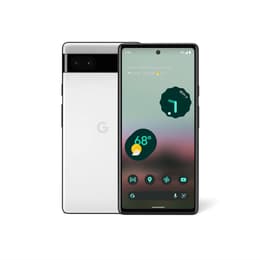

Galaxy Z Fold6 vs Google Pixel 6a

Galaxy Z Fold6
Galaxy Z Fold6
Starting at

Refurbished price:A$1,088.24

Versus A$2,749.00 new

See options
Google Pixel 6a
Google Pixel 6a
Starting at

Refurbished price:A$235.00

Versus A$569.00 new

See options

Ratings

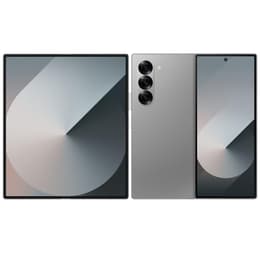
The Samsung Galaxy Z Fold6 (2024) is a foldable smartphone, representing a premium and innovative form factor, while the Google Pixel 6A (2022) is a traditional slab-style device designed for a more conventional smartphone experience. The primary distinctions between these two models lie in their unique designs, release timelines, and the resulting differences in display technology, processing power, and overall user interaction. Both devices operate on the Android platform, providing access to a broad ecosystem of applications and services.

Scores

Durability

The release timelines of these two devices significantly impact their expected practical lifespan and software support. The Galaxy Z Fold6, launched in July 2024, benefits from a more recent introduction compared to the Google Pixel 6A, which debuted in July 2022.

  • Software Longevity: The Galaxy Z Fold6 is designed to receive an extended period of software support, with Samsung promising seven years of OS upgrades and security updates from its release. This means it will continue to receive major Android versions and security patches for a considerable time. The Pixel 6A, having been released earlier, received three years of major Android updates (up to Android 15 by July 2025) and five years of security updates (until July 2027), meaning its major OS update cycle has concluded.
  • Build Materials: The Galaxy Z Fold6 features a more advanced construction, incorporating Corning Gorilla Glass Victus 2 on its cover screen and back panel, along with ultra-thin flexible glass for its inner display, and an IP48 rating for dust and water resistance. The Pixel 6A utilizes a plastic back and an older generation of protective glass, Corning Gorilla Glass 3, on its display, offering IP67 water and dust resistance.
  • Repairability: Foldable devices like the Galaxy Z Fold6 generally involve more complex repair procedures due to their intricate hinge mechanisms and dual-screen design. The Pixel 6A, with its more conventional and less complex structure, may offer a more straightforward repair experience for common component issues.

Release year

2024

2022

Compatible with latest Update

Yes

Yes

Foldable

Yes

No

Performance

The performance capabilities of the Galaxy Z Fold6 and Google Pixel 6A reflect their different market positioning and hardware generations. The Galaxy Z Fold6, as a newer flagship device, offers a more robust hardware configuration compared to the Pixel 6A's mid-range specifications.

  • Processing Power: The Galaxy Z Fold6 is equipped with a current-generation processor, the Qualcomm Snapdragon 8 Gen 3 for Galaxy, which is engineered to handle demanding applications, intensive multitasking, and graphically rich games with high efficiency and responsiveness. The Pixel 6A, powered by the first-generation Google Tensor chip, capably manages everyday tasks, web browsing, and most applications, though it may exhibit limitations with the most resource-intensive operations.
  • Multitasking and Storage: The Galaxy Z Fold6 typically includes 12 GB of RAM and offers multiple internal storage options, ranging from 256 GB to 1 TB, facilitating smoother transitions between numerous open applications and providing ample space for files and media. The Pixel 6A comes with 6 GB of RAM and a single 128 GB storage configuration, which is suitable for average usage but does not support expandable storage.
  • Battery Behavior: The Galaxy Z Fold6 features a 4400 mAh battery, which is optimized for good endurance despite its capacity, even with its larger, high-refresh-rate foldable display and powerful processor. The Pixel 6A has a 4410 mAh battery, which provides good battery life and can last a full day with heavy use for many users.

Memory (GB)

12 GB

6 GB

Screen quality

The display experience is a primary differentiator between these two smartphones, largely due to the Galaxy Z Fold6's innovative foldable design and more advanced panel technology.

  • Display Technology and Form Factor: The Galaxy Z Fold6 features a large, 7.6-inch foldable Dynamic AMOLED 2X main display that transforms the device into a tablet-like screen when unfolded, complemented by a 6.3-inch Dynamic AMOLED 2X cover display. The Pixel 6A utilizes a traditional flat 6.1-inch OLED display, offering a consistent viewing experience on a single screen.
  • Resolution and Refresh Rate: The Galaxy Z Fold6's displays offer higher resolutions (2160 x 1856 pixels for the main screen and 2376 x 968 pixels for the cover screen) and adaptive refresh rates up to 120Hz, resulting in sharper images, smoother scrolling, and more fluid animations. The Pixel 6A's OLED display provides clear visuals with a 1080x2400 pixel (FHD+) resolution and a standard 60Hz refresh rate, which is suitable for general use but does not offer the same level of visual fluidity.
  • Brightness and Clarity: The Galaxy Z Fold6's screens typically achieve higher peak brightness levels of up to 2600 nits, enhancing visibility in bright outdoor conditions and improving HDR content playback. Both devices offer vibrant colors and deep blacks characteristic of OLED technology, providing an engaging visual experience.

Resolution

1856 x 2160

1080 x 2400

Screen type

Foldable Dynamic LTPO AMOLED 2X

OLED

Audiovisual

Both smartphones offer distinct capabilities in their camera systems and overall media consumption experiences, catering to different user priorities.

  • Camera System Versatility: The Galaxy Z Fold6 typically features a comprehensive triple-camera setup on its rear, including a 50 MP wide-angle sensor with optical image stabilization (OIS), a 12 MP ultrawide lens, and a 10 MP telephoto lens with 3x optical zoom, providing a wide range of photographic options. The Pixel 6A relies on a dual-camera system with a 12.2 MP main sensor (OIS) and a 12 MP ultrawide lens, leveraging Google's advanced computational photography to produce high-quality images.
  • Photography Performance: The Galaxy Z Fold6 excels in offering hardware versatility for various shooting scenarios, including detailed close-ups and distant subjects, and includes AI-based image processing. The Pixel 6A is renowned for its consistent image processing, delivering natural colors and excellent dynamic range, making it a strong performer for everyday point-and-shoot photography, particularly in challenging lighting conditions.
  • Video Recording and Audio: The Galaxy Z Fold6 supports advanced video recording features, including 8K video recording, suitable for high-resolution content creation. The Pixel 6A is capable of 4K video recording at 30 or 60 frames per second. Both devices offer stereo speakers for media playback, with the Galaxy Z Fold6 often providing a richer audio experience due to its larger form factor. Microphone quality for calls and recordings is generally clear on both devices.

Main camera

50 megapixels

12.2 megapixels

Front camera

4 megapixels

8 megapixels

Miscellaneous

Beyond the core specifications, several practical elements contribute to the overall user experience and differentiate these two devices.

  • Connectivity and Ports: The Galaxy Z Fold6 supports the latest Wi-Fi standards (Wi-Fi 6E/7) and Bluetooth 5.3, along with advanced 5G capabilities, ensuring faster and more reliable wireless connections. The Pixel 6A supports Wi-Fi 6/6E and Bluetooth 5.2, also offering 5G connectivity. Both devices feature a USB-C port for charging and data transfer, but neither includes a traditional 3.5mm headphone jack.
  • Biometric Security: The Galaxy Z Fold6 typically integrates a side-mounted fingerprint sensor and advanced facial recognition for secure unlocking and authentication. The Pixel 6A uses an in-display fingerprint sensor, providing a convenient method for biometric security.
  • Physical Design and Handling: The Galaxy Z Fold6's unique foldable design means it is thicker and heavier when folded (12.1 mm thick, 239 g), offering a compact yet substantial feel, and expands into a larger, thinner device when unfolded (5.6 mm thick). The Pixel 6A maintains a more conventional, lighter (178 g), and slimmer profile (8.7 mm thick), making it easier for one-handed use and pocketability.

Weight

239 oz

250 oz

Screen size (in)

7.6

6.1

SIM card

Dual Physical SIM + eSIM

Physical SIM + eSIM

Carrier compatibility

Unlocked

Unlocked

The Samsung Galaxy Z Fold6 and Google Pixel 6A cater to distinct user needs, reflecting their different design philosophies and target markets. Users often praise the Galaxy Z Fold6 for its innovative foldable display, which offers a versatile large screen experience for productivity and immersive media consumption, alongside its powerful performance and advanced camera system. Some common considerations for the Fold6 include its increased weight and thickness when folded, and the unique care required for a foldable screen. Conversely, the Google Pixel 6A is frequently lauded for its exceptional camera performance, particularly its computational photography capabilities that deliver impressive results for its segment. Its clean Android experience and consistent software updates (within its support window) are also often highlighted. Criticisms sometimes point to its standard refresh rate display and more modest processing power compared to flagship devices.

Users prioritizing a cutting-edge, versatile device for multitasking, immersive media, and advanced photography, who appreciate the innovation of a foldable screen, may find the Galaxy Z Fold6 well-suited to their needs. Those who value a compact, reliable smartphone with an outstanding camera for everyday photography, a pure Android experience, and solid performance for general use, might lean towards the Google Pixel 6A. Both devices offer compelling features for their respective audiences, and considering a quality-assured refurbished option for either model can be an eco-friendly alternative to purchasing new.
See all articles

Our recent comparisons