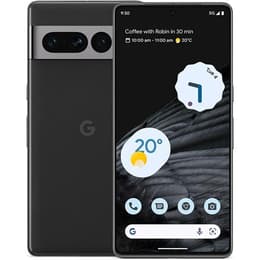

Galaxy Z Fold4 vs Google Pixel 7 Pro

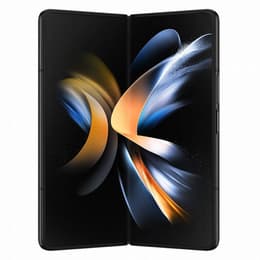
Galaxy Z Fold4
Galaxy Z Fold4
Starting at

Refurbished price:A$734.00

Versus A$3,628.00 new

See options
Google Pixel 7 Pro
Google Pixel 7 Pro
Starting at

Refurbished price:A$520.00

Versus A$1,219.00 new

See options

Ratings

The Samsung Galaxy Z Fold4 (released August 2022) and the Google Pixel 7 Pro (released October 2022) represent distinct approaches to high-end smartphones. The Galaxy Z Fold4 offers a unique foldable design that transforms from a traditional smartphone into a tablet-like experience, while the Pixel 7 Pro provides a more conventional smartphone form factor with a focus on an optimized Android experience and advanced computational photography. Both devices run on the Android operating system, but they offer different user interfaces and software philosophies.

Scores

Durability

When considering the long-term usability of these devices, their release timelines and software support policies are key factors. The Galaxy Z Fold4 was released in August 2022, and the Pixel 7 Pro followed in October 2022.

  • Software Support: Samsung typically provides four major Android OS updates and five years of security updates for its flagship devices, including the Galaxy Z Fold4. Google generally offers three major Android OS updates and five years of security updates for its Pixel phones. This means the Galaxy Z Fold4 may receive one additional major OS update compared to the Pixel 7 Pro.
  • Durability: The Pixel 7 Pro features IP68 dust and water resistance, offering robust protection against environmental elements. The Galaxy Z Fold4 has an IPX8 water resistance rating, meaning it can withstand submersion in water but lacks official dust resistance. User reports suggest the Pixel 7 Pro's camera bar can be prone to scratches, and some durability tests indicated a degree of flex in the device, potentially impacting water resistance over time. The Galaxy Z Fold4's foldable screen introduces a different set of durability considerations, though many long-term users report no issues with the inner display or hinge.
  • Expected Lifespan: Both devices are built with premium materials, including Gorilla Glass Victus on the Pixel 7 Pro's front and back, and Gorilla Glass Victus+ on the Galaxy Z Fold4's cover screen and back. The longer software update commitment for the Z Fold4 could translate to a slightly extended practical lifespan in terms of receiving the latest Android features.

Release year

2022

2022

Compatible with latest Update

Yes

Yes

Foldable

Yes

No

Performance

The performance of both the Galaxy Z Fold4 and the Pixel 7 Pro is designed to handle demanding applications and multitasking, though they achieve this with different underlying hardware and optimization strategies.

  • Processing Power: The Galaxy Z Fold4 is equipped with a processor known for its efficient handling of intensive tasks and gaming. The Pixel 7 Pro features a processor developed by Google, which is optimized for artificial intelligence and machine learning tasks, contributing to a smooth overall user experience.
  • Multitasking and Responsiveness: Both devices offer ample RAM, typically 12GB, ensuring smooth transitions between applications and efficient multitasking. The Galaxy Z Fold4's foldable design inherently lends itself to advanced multitasking with multiple apps open simultaneously on its larger inner display.
  • Battery Behavior: The Galaxy Z Fold4 has a 4400 mAh battery, which users generally report as lasting through a full day of moderate to heavy use, benefiting from power-efficient components. The Pixel 7 Pro comes with a larger 5000 mAh battery. However, some user experiences and tests indicate that its battery life can be inconsistent, with some reporting it struggles to last a full day with heavy usage, particularly on 5G, while others find it sufficient after the device optimizes to usage patterns.

Memory (GB)

12 GB

12 GB

Screen quality

The display experience is a primary differentiator between these two smartphones, with the Galaxy Z Fold4 offering a unique foldable panel and the Pixel 7 Pro providing a high-quality traditional screen.

  • Display Technology and Size: The Galaxy Z Fold4 features two Dynamic AMOLED 2X displays: a 6.2-inch cover screen and a 7.6-inch foldable inner screen. The inner display provides a tablet-like canvas when unfolded. The Pixel 7 Pro has a single 6.7-inch LTPO AMOLED display.
  • Resolution and Clarity: The Z Fold4's inner display has a resolution of 2176 x 1812 pixels, offering a sharp viewing experience. The cover screen has a resolution of 2316 x 904 pixels. The Pixel 7 Pro boasts a QHD+ resolution of 3120 x 1440 pixels, resulting in a high pixel density and clear visuals.
  • Refresh Rate and Brightness: Both devices feature adaptive refresh rates up to 120Hz, contributing to smooth scrolling and fluid animations. Both displays offer good brightness levels, suitable for outdoor visibility.

Resolution

1812 x 2176

1440 x 3120

Screen type

Foldable Dynamic AMOLED 2X

LTPO AMOLED

Audiovisual

Both the Galaxy Z Fold4 and the Pixel 7 Pro offer advanced camera systems, but they excel in different aspects, catering to varying user preferences for photography and videography.

  • Rear Camera System: The Galaxy Z Fold4 features a triple camera setup with a 50MP main sensor, a 12MP ultrawide, and a 10MP telephoto lens with 3x optical zoom. The Pixel 7 Pro also has a triple camera system, including a 50MP main sensor, a 12MP ultrawide, and a 48MP telephoto lens with a more powerful 5x optical zoom.
  • Photography Performance: The Pixel 7 Pro is widely praised for its computational photography, producing detailed and color-accurate still images, particularly in various lighting conditions. The Galaxy Z Fold4's camera system offers good performance for everyday photography, with improvements over its predecessor.
  • Video Recording and Audio: Both phones are capable of recording high-resolution video, with the Galaxy Z Fold4 supporting up to 8K at 24fps and the Pixel 7 Pro up to 4K at 60fps. User feedback suggests the Pixel 7 Pro's video quality can be inconsistent, especially in low light or with the selfie camera. The Galaxy Z Fold4 offers clear stereo speakers for media consumption.

Main camera

50 megapixels

50 megapixels

Front camera

4 megapixels

10.8 megapixels

Miscellaneous

Beyond the core features, several practical elements contribute to the overall user experience and differentiate the Galaxy Z Fold4 and the Pixel 7 Pro.

  • Connectivity and Ports: Both devices support 5G connectivity, Wi-Fi 6E, and Bluetooth 5.2, ensuring fast and reliable wireless communication. Both utilize a USB-C port for charging and data transfer.
  • Biometric Security: The Galaxy Z Fold4 incorporates a side-mounted fingerprint sensor for secure unlocking. The Pixel 7 Pro features an in-display optical fingerprint scanner and also offers face unlock.
  • Design and Handling: The Galaxy Z Fold4, when folded, is more compact but thicker and heavier (263g) than the Pixel 7 Pro (212g). When unfolded, the Z Fold4 offers a large screen for productivity and media. The Pixel 7 Pro has a more traditional smartphone form factor, with a premium aluminum finish. The Z Fold4 also supports S Pen (Fold Edition) for enhanced productivity.

Weight

263 oz

212 oz

Screen size (in)

7.6

67

SIM card

Physical SIM + eSIM

Physical SIM + eSIM

Carrier compatibility

Unlocked

Unlocked

The Samsung Galaxy Z Fold4 and the Google Pixel 7 Pro cater to different user needs and preferences, each excelling in distinct areas. User sentiment for the Galaxy Z Fold4 often highlights the transformative experience of its large, foldable inner display, making it ideal for multitasking and media consumption. Many appreciate the ability to have a compact phone that unfolds into a tablet. Criticisms sometimes revolve around its bulk when folded and the inherent durability concerns associated with a foldable screen, though many long-term users report positive experiences.

The Google Pixel 7 Pro is frequently praised for its exceptional camera capabilities, particularly for still photography, and its clean, optimized Android software experience. Users often value its smooth performance and the integration of Google's AI features. Common concerns include inconsistent battery life for some users, especially with heavy 5G usage, and some reports of the device running warm.

Users prioritizing a versatile device that can switch between a traditional smartphone and a larger tablet-like screen for productivity and immersive content will find the Galaxy Z Fold4 well-suited to their needs. Its unique form factor and multitasking capabilities are key decision factors. Conversely, users who value a top-tier camera system, a streamlined Android experience, and consistent software updates will likely prefer the Google Pixel 7 Pro. Its strengths lie in its photographic prowess and software optimization.

For those considering either device, exploring quality-assured refurbished options can provide an eco-friendly alternative to purchasing new, allowing for informed and sustainable choices.

See all articles

Our recent comparisons