
Compare models
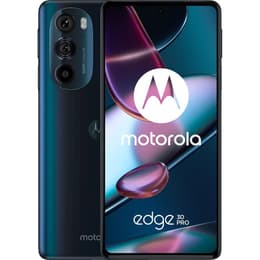
Galaxy Z Flip7 vs Motorola Edge 30 Pro
- 1-year warranty
- Free standard shipping
- Free 30-day returns
Differences at a glance
The Samsung Galaxy Z Flip7 (2025) and Motorola Edge 30 Pro (2022) represent two completely distinct smartphone form factors and design philosophies within the Android ecosystem. While the Galaxy Z Flip7 features a modern clamshell foldable design with an expansive cover screen, the Motorola Edge 30 Pro adopts a traditional candybar layout with a heavy focus on high refresh-rate viewing. They run on different iterations of the Android operating system out of the box, tailoring their respective software experiences to their hardware styles.
Available Models
Colour
Storage
Scores
Durability
Differences in release timelines and mechanical design significantly shape the long-term outlook and durability profiles of both devices.
- Release timeline and software support: The Galaxy Z Flip7 benefits from a much newer release year, allowing it to receive operating system updates and security patches further into the future compared to the older Motorola Edge 30 Pro.
- Build and mechanical longevity: The Motorola Edge 30 Pro relies on a traditional rigid glass and plastic construction with basic splash resistance, whereas the Galaxy Z Flip7 utilizes a complex folding hinge mechanism that requires careful handling over years of daily use.
- Expected practical lifespan: Users choosing the quality-assured refurbished option for either model can expect solid multi-year utility, though the newer Samsung device retains a broader window for ongoing software compatibility.
Release year
2025
2022
Operating system
Android
Android
Foldable
Yes
No
Performance
Under everyday conditions, both smartphones handle standard tasks smoothly, though they approach multitasking, resource management, and battery longevity through different internal configurations.
- Multitasking and system fluidity: Both devices manage daily app switching, web browsing, and streaming without noticeable lag, supported by ample memory configurations that keep background processes active.
- Battery behavior and endurance: The Galaxy Z Flip7 manages power efficiency through newer hardware optimizations, whereas the Motorola Edge 30 Pro relies on a traditional battery capacity coupled with high-wattage wired charging support for rapid replenishment.
- Storage and demanding applications: Generous internal storage tiers on both models accommodate extensive media libraries, while current-generation processors handle intensive mobile applications and casual gaming reliably.
Screen quality
Viewing experiences differ fundamentally due to screen geometry, display technology choices, and physical dimensions.
- Display technology and clarity: The Galaxy Z Flip7 features a foldable AMOLED main display alongside a functional exterior cover screen for quick glances, while the Motorola Edge 30 Pro employs a flat, traditional OLED panel with high color accuracy.
- Smoothness and refresh rates: Both devices offer high refresh rate capabilities that ensure fluid scrolling through menus, web pages, and supported applications.
- Outdoor visibility: Peak brightness levels on both screens allow for comfortable outdoor legibility, though reflective properties vary between the flexible polymer surface of the foldable and the rigid glass of the traditional display.
Resolution
1080x2520
1080 x 2400
Audiovisual
Media creation and consumption capabilities reflect distinct sensor arrays and audio setups tailored to different user preferences.
- Camera system versatility: The Galaxy Z Flip7 pairs its primary sensor with an ultra-wide option and leverages its folding design for versatile angles, while the Motorola Edge 30 Pro emphasizes high-resolution main and front-facing sensors.
- Low-light and video performance: Both models capture detailed everyday photographs and stable video clips, with software image processing handling challenging lighting conditions automatically.
- Audio and media output: Stereo speaker configurations on both smartphones deliver clear sound for hands-free calls, casual video viewing, and audio playback.
Miscellaneous
Physical dimensions, connectivity standards, and daily handling characteristics set these two devices apart in practical use.
- Portability and form factor: The Galaxy Z Flip7 folds compactly to fit easily into smaller pockets or bags, whereas the Motorola Edge 30 Pro maintains a standard slab footprint that requires standard pocket space.
- Connectivity and ports: Both devices support modern 5G networks, fast Wi-Fi standards, and Bluetooth pairing, utilizing reversible Type-C ports for charging and wired data transfers.
- Authentication and sensors: Security is handled via biometric options, with the Samsung model offering advanced facial recognition and the Motorola unit featuring a side-mounted fingerprint scanner.
Weight
188 oz
196 oz
Screen size (in)
6.9
6,7
Network
5G
5G
SIM card
Physical SIM + eSIM
Dual Physical SIM
Carrier compatibility
Unlocked
Unlocked
What the community thinks
User feedback from online communities highlights distinct preference patterns for each device. Owners of the Galaxy Z Flip7 frequently praise its compact pocketability, versatile cover screen utility, and modern aesthetic. Conversely, users of the Motorola Edge 30 Pro often highlight its clean software interface, rapid charging speeds, and traditional candybar reliability as key strengths. At the same time, some owners note that the folding mechanism requires mindful handling, while others point out that the older Motorola model has fewer remaining software updates ahead.
Users prioritizing a compact, easily storable device with modern software longevity will find the Galaxy Z Flip7 well-suited to their daily routine. Meanwhile, users preferring a traditional rigid smartphone layout with rapid power replenishment may lean toward the Motorola Edge 30 Pro. Exploring a quality-assured refurbished model provides an eco-friendly path to acquiring either device while supporting more sustainable consumption habits.