
Galaxy S25 Ultra vs Google Pixel 9

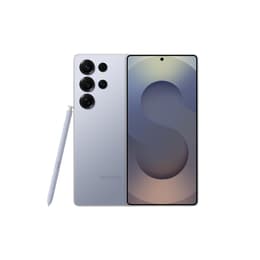
Galaxy S25 Ultra
Galaxy S25 Ultra
Starting at

Refurbished price:A$1,122.00

Versus A$2,149.00 new

See options
Google Pixel 9
Google Pixel 9
Starting at

Refurbished price:A$717.00

Versus A$1,349.00 new

See options

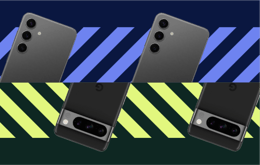
The Samsung Galaxy S25 Ultra, released in early 2025, and the Google Pixel 9, launched in late 2024, represent distinct approaches to the premium smartphone experience. While both devices operate on the Android platform, the Galaxy S25 Ultra focuses on a comprehensive feature set with a large display and advanced camera system, whereas the Pixel 9 emphasises a streamlined user experience, computational photography, and deep software integration.

Scores

Durability

When considering the long-term usability of a smartphone, factors like software support and physical resilience are key. The Galaxy S25 Ultra and Pixel 9 offer robust commitments to software longevity, though their physical designs present different aspects of durability.

  • Software Support: Both the Samsung Galaxy S25 Ultra and the Google Pixel 9 are designed for extended use, with both manufacturers promising seven years of operating system and security updates. This means the Galaxy S25 Ultra, released in early 2025, is expected to receive updates until 2032, while the Pixel 9, released in late 2024, will be supported until 2031.
  • Build Materials: The Galaxy S25 Ultra features a titanium frame and Gorilla Glass Armor 2 on both the front and back, contributing to its overall structural integrity. The Pixel 9 utilises an aluminium frame and Gorilla Glass Victus 2 for its display and rear panel.
  • Durability and Repairability: Both devices carry an IP68 rating for dust and water resistance, indicating protection against immersion. User reports suggest the Galaxy S25 Ultra's display, while featuring advanced glass, may show scratches at a similar level to other flagship phones, and some durability tests noted detachable camera rings. The Pixel 9 has been noted for improved drop test performance compared to its predecessor, with Google claiming enhanced durability.

Release year

2025

2024

Operating system

Android

Android

Foldable

No

No

Performance

The performance of these devices is influenced by their respective processors, impacting everything from daily tasks to demanding applications and battery efficiency.

  • Processing Power: The Galaxy S25 Ultra is equipped with an advanced current-generation processor, designed to handle intensive tasks, high-fidelity gaming, and complex AI computations with efficiency. The Pixel 9 features Google's own processor, which is optimised for the Android operating system and excels in AI-driven features and smooth daily operation.
  • Multitasking and Responsiveness: With 12GB or 16GB of RAM, the Galaxy S25 Ultra offers substantial capacity for seamless multitasking and quick app switching, catering to users who frequently run multiple applications simultaneously. The Pixel 9 comes with 12GB of RAM, providing a responsive experience for general use and ensuring smooth navigation through the operating system.
  • Battery Performance: The Galaxy S25 Ultra houses a 5000mAh battery, which, combined with its efficient processor, generally provides extended usage, often lasting more than a full day for many users. The Pixel 9 features a 4700mAh battery, and user feedback indicates a significant improvement in battery life compared to previous Pixel models, often lasting a full day with moderate to heavy use.

Memory (GB)

12 GB

12 GB

Screen quality

The visual experience on both smartphones is a key differentiator, with each offering distinct display technologies and characteristics that cater to different user preferences.

  • Display Technology and Size: The Galaxy S25 Ultra features a large 6.9-inch Dynamic LTPO AMOLED 2X display, offering vibrant colours, deep blacks, and excellent contrast. The Pixel 9 comes with a 6.3-inch OLED panel, providing rich colours and good viewing angles in a more compact form factor.
  • Resolution and Clarity: The Galaxy S25 Ultra boasts a QHD+ resolution of 1440x3120 pixels, resulting in a very sharp and detailed image, particularly noticeable on its larger screen. The Pixel 9 offers a Full HD+ resolution of 1080x2424 pixels, which provides clear visuals for everyday content consumption.
  • Brightness and Refresh Rate: Both devices feature a 120Hz adaptive refresh rate for smooth scrolling and responsive interactions. The Galaxy S25 Ultra can reach a peak brightness of 2600 nits, with an anti-reflective coating for improved outdoor visibility. The Pixel 9 can achieve a peak brightness of up to 2700 nits, offering strong visibility even in bright conditions.

Resolution

1440x3120

1080 x 2424

Audiovisual

Both the Galaxy S25 Ultra and the Pixel 9 are designed to deliver high-quality photographic and videographic results, though they approach imaging with different hardware configurations and processing philosophies.

  • Rear Camera Systems: The Galaxy S25 Ultra features a versatile quad-camera setup, including a 200MP main sensor, a 50MP ultrawide lens, a 10MP 3x telephoto lens, and a 50MP 5x telephoto lens, providing extensive zoom capabilities and detailed imagery. The Pixel 9 is equipped with a dual-camera system, comprising a 50MP main camera and a 48MP ultrawide camera, focusing on computational photography to enhance image quality.
  • Photography Performance: The Galaxy S25 Ultra is noted for its ability to capture highly detailed photos, especially with its high-megapixel main sensor, and offers strong performance across various lighting conditions. The Pixel 9 is praised for its consistent image quality, particularly in everyday scenarios and low-light environments, leveraging its software processing for natural-looking results.
  • Video and Audio: Both devices offer advanced video recording capabilities, with the Galaxy S25 Ultra supporting 8K video recording. The Pixel 9 provides stable video capture and clear audio recording. The Galaxy S25 Ultra also features multiple microphones for enhanced audio capture.

Miscellaneous

Beyond core performance, several practical features and design elements contribute to the overall user experience of the Galaxy S25 Ultra and Pixel 9.

  • Connectivity and Ports: Both smartphones support 5G connectivity for fast mobile data and feature USB-C ports for charging and data transfer. The Galaxy S25 Ultra supports Wi-Fi 7 and Bluetooth 5.4, while the Pixel 9 also supports Wi-Fi 7 and offers satellite SOS functionality for emergency situations.
  • Biometric Security: Both devices incorporate ultrasonic in-screen fingerprint sensors for secure and convenient unlocking.
  • Design and Handling: The Galaxy S25 Ultra has a larger form factor, measuring 162.80 x 77.60 x 8.20mm and weighing 218g, and includes an integrated S Pen stylus. The Pixel 9 is more compact at 152.8 x 72.0 x 8.5mm and 198g, offering a design that some users find more comfortable for one-handed use.

Weight

218 oz

198 oz

Screen size (in)

6.9

6.3

Network

5G

5G

SIM card

Physical SIM + eSIM

Physical SIM + eSIM

Carrier compatibility

Unlocked

Unlocked

The Samsung Galaxy S25 Ultra and Google Pixel 9 cater to different user priorities within the premium smartphone market. Users frequently praise the Galaxy S25 Ultra for its expansive and vibrant display, its versatile camera system with extensive zoom capabilities, and its robust overall performance for demanding applications. The integrated S Pen is also a consistent highlight for those who value productivity and creative input. However, some users have noted its larger size and weight as a potential drawback for one-handed use, and some durability tests have raised minor concerns regarding scratch resistance.

The Google Pixel 9 receives commendation for its exceptional camera performance, particularly its computational photography and consistent image quality in various conditions. Its streamlined Android experience and long-term software support are also frequently cited as strong advantages. Criticisms sometimes point to its processor not matching the raw benchmark scores of some competitors, and the absence of a dedicated telephoto lens on the base model.

Users prioritising a large, feature-rich display, advanced zoom photography, and stylus functionality may find the Galaxy S25 Ultra well-suited to their needs. Conversely, users who value a more compact device, a pure Android experience with strong AI integration, and excellent point-and-shoot photography without needing extreme zoom capabilities may lean towards the Pixel 9. Both devices offer a quality-assured refurbished option, providing a sustainable choice for consumers.


See all articles

Our recent comparisons