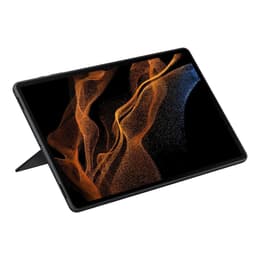
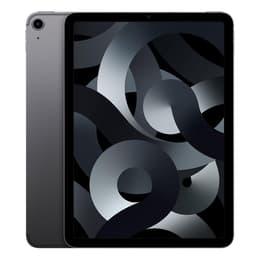
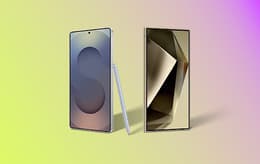
Galaxy Tab S8 Ultra (14.6", 2022) vs iPad Air 5 (2022, M1 series)

Galaxy Tab S8 Ultra (14.6", 2022)
Starting at

Refurbished price:A$1,027.00

Versus A$3,349.00 new

See options
iPad Air 5 (2022, M1 series)
Starting at

Refurbished price:A$649.00

Versus A$1,249.00 new

See options

The Samsung Galaxy Tab S8 Ultra and the Apple iPad Air (2022 M1 Series) both launched in 2022, offering distinct tablet experiences. While the Galaxy Tab S8 Ultra runs on Android and features a notably larger display, the iPad Air operates on iPadOS and emphasizes a more compact design. These devices cater to different user preferences, primarily diverging in their screen dimensions and software ecosystems.

Scores

Durability

Both tablets, released in 2022, are designed for sustained use, though their software support timelines differ based on their respective operating systems.

  • Software Longevity: The Galaxy Tab S8 Ultra is expected to receive up to four major Android OS updates and five years of security updates, extending its software support until approximately 2026 for OS updates and 2027 for security patches. The iPad Air (2022 M1 Series), running iPadOS, typically benefits from a longer period of major OS updates, often spanning five to six years from its release.
  • Physical Durability: Both devices feature aluminum frames, contributing to their structural integrity. The Galaxy Tab S8 Ultra incorporates Corning Gorilla Glass 5 for screen protection. The iPad Air features a fully-laminated display with an anti-reflective coating.
  • Practical Lifespan: Users can expect both tablets to remain functional and capable for several years beyond their official software support, particularly for general tasks, though access to the latest features and security enhancements will eventually cease.

Release year

2022

2022

Compatible with latest Update

Yes

Yes

Operating system

Android

iPadOS

Performance

The performance of these two tablets is influenced by their internal components and how their operating systems optimize resource allocation for various tasks.

  • Processing Power: The Galaxy Tab S8 Ultra handles demanding applications and multitasking smoothly, providing a responsive experience for productivity and entertainment. The iPad Air, equipped with a powerful processor, delivers desktop-class performance, making it suitable for intensive creative work, advanced gaming, and seamless multitasking.
  • Multitasking Capabilities: Both tablets are designed to manage multiple applications simultaneously. The Galaxy Tab S8 Ultra's larger display enhances the multi-window experience, while the iPad Air's efficient software architecture ensures fluid transitions and app responsiveness.
  • Battery Behavior: The Galaxy Tab S8 Ultra features a substantial 11,200 mAh battery, providing ample power for extended usage, though real-world battery life can vary with screen brightness and usage patterns. The iPad Air, with its efficient processor, offers up to 10 hours of web browsing or video playback on Wi-Fi, balancing performance with power consumption.

Memory (GB)

8 GB

8 GB

Screen quality

The visual experience on these tablets is a primary differentiator, largely due to their display technologies and sizes.

  • Display Technology and Size: The Galaxy Tab S8 Ultra boasts a large 14.6-inch Super AMOLED display, offering deep blacks, vibrant colors, and high contrast. The iPad Air features a 10.9-inch Liquid Retina IPS LCD, known for its color accuracy and wide viewing angles.
  • Resolution and Clarity: The Tab S8 Ultra's display has a resolution of 2960 x 1848 pixels, providing sharp images and text across its expansive screen. The iPad Air offers a resolution of 2360 x 1640 pixels, resulting in clear and detailed visuals on its smaller panel.
  • Refresh Rate and Brightness: The Galaxy Tab S8 Ultra features a 120Hz refresh rate, contributing to smoother scrolling and more fluid animations. The iPad Air maintains a standard 60Hz refresh rate. Both displays offer good brightness levels for various lighting conditions, with the iPad Air reaching 500 nits.

Resolution

1848 x 2960

2360 x 1640

Screen type

Super AMOLED

Liquid Retina display

Pixel density

240ppp

264ppp

Audiovisual

Both tablets include camera systems suitable for video calls, document scanning, and casual photography, with some key differences in their configurations.

  • Camera Systems: The Galaxy Tab S8 Ultra features a dual-camera setup on the rear (13MP wide and 6MP ultrawide) and a dual-front camera system (two 12MP sensors, wide and ultrawide), which is beneficial for high-quality video calls and selfies. The iPad Air has a single 12MP wide camera on the rear and a 12MP ultrawide front camera with Center Stage, which automatically adjusts to keep subjects in frame during video calls.
  • Photography and Video Quality: Both devices are capable of recording 4K video. The Tab S8 Ultra's dual front cameras offer versatility for different video conferencing scenarios. The iPad Air's rear camera is suitable for everyday photos and document capture.
  • Audio Experience: The Galaxy Tab S8 Ultra is equipped with quad stereo speakers tuned by AKG with Dolby Atmos support, providing a rich audio experience. The iPad Air also features stereo speakers, offering clear audio for media consumption and calls.

Miscellaneous

Beyond core performance and display, several practical elements differentiate these two tablets in daily use.

  • Connectivity: The Galaxy Tab S8 Ultra supports Wi-Fi 6E and Bluetooth 5.2, offering advanced wireless capabilities. The iPad Air supports Wi-Fi 6 and Bluetooth 5.0. Both offer optional 5G connectivity for cellular models.
  • Ports and Sensors: Both tablets feature a USB-C port for charging and data transfer, with the Tab S8 Ultra supporting USB 3.2 and the iPad Air supporting USB 3.1 Gen 2. The Galaxy Tab S8 Ultra includes an optical under-display fingerprint sensor, while the iPad Air integrates Touch ID into its top button.
  • Dimensions and Weight: The Galaxy Tab S8 Ultra is a larger and heavier device, measuring 326.4 x 208.6 x 5.5 mm and weighing around 726g (Wi-Fi model). The iPad Air is more compact and lighter at 247.6 x 178.5 x 6.1 mm and approximately 461g (Wi-Fi model).
  • Stylus Inclusion: The Galaxy Tab S8 Ultra comes with the S Pen included in the box. The Apple Pencil 2nd Gen is supported by the iPad Air but is sold separately.

Weight

728 oz

462 oz

Screen size (in)

14.6

10.9

Network

Wi-Fi + 5G

Wi-Fi + 5G

Carrier compatibility

Unlocked

Unlocked

User feedback often highlights the Galaxy Tab S8 Ultra's expansive display as a major draw, making it ideal for immersive media consumption and detailed creative work. Its included S Pen and DeX mode are frequently praised for enhancing productivity, allowing it to function closer to a laptop. Some users, however, find its large size less portable and note that Android's tablet app ecosystem, while improving, can sometimes feel less optimized than iPadOS for certain applications.

The iPad Air (2022 M1 Series) is consistently lauded for its powerful performance, enabling smooth operation across demanding tasks like video editing and graphic design. Its compact form factor and robust app ecosystem are often cited as key advantages for users seeking a balance of portability and capability. Criticisms sometimes point to its standard 60Hz display refresh rate, which some users accustomed to higher refresh rates might notice.

Users prioritizing a large, vibrant display for entertainment and a versatile Android-based productivity experience with an included stylus may find the Galaxy Tab S8 Ultra well-suited to their needs. Conversely, individuals seeking a highly portable tablet with exceptional processing power for creative and professional applications within the Apple ecosystem will likely lean toward the iPad Air. Both devices offer quality-assured refurbished options, providing an eco-friendly alternative for consumers.

See all articles

Our recent comparisons