
Compare models

Galaxy Tab Active4 Pro (10.1", 2022) vs iPad Pro (2021, M1 series)

  • 1-year warranty
  • Free standard shipping
  • Free 30-day returns
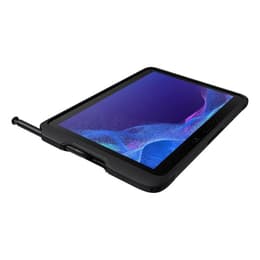
Galaxy Tab Active4 Pro (10.1", 2022)
Starting at

Refurbished price:A$470.00

Versus A$1,337.00 new

See options
iPad Pro (2021, M1 series)
Starting at

Refurbished price:A$1,009.00

Versus A$2,089.00 new

See options

Differences at a glance

The Samsung Galaxy Tab Active4 Pro (2022) and the Apple iPad Pro (2021) represent two distinct approaches to tablet engineering, catering to completely different operational environments. While the Galaxy Tab Active4 Pro is built as a rugged, field-ready device with enterprise-focused features like a replaceable battery and physical navigation buttons, the iPad Pro focuses on high-performance desktop-class computing wrapped in a sleek, media-centric aluminium chassis. Operating on Android and iPadOS respectively, these devices prioritize different workflows, making a close look at their practical attributes essential for prospective buyers.

Available Models

Colour

Storage

Scores

Durability

When examining longevity and hardware endurance, both tablets offer distinct paths regarding software support schedules, physical durability, and repair potential over several years of regular usage.

  • Software Support and Updates: The iPad Pro benefits from long-term operating system support cycles typical of Apple devices, ensuring security patches and feature updates arrive consistently. The Galaxy Tab Active4 Pro offers an extended enterprise-grade update schedule, making it reliable for long-term deployment in demanding work settings.
  • Physical Maintenance and Repair: The Galaxy Tab Active4 Pro features a user-swappable battery design, allowing field workers to replace power cells easily and extend the hardware's lifespan without specialized tools. Conversely, the iPad Pro utilizes a sealed construction that requires professional service for internal repairs, though its sturdy metal frame holds up well under standard handling.
  • Expected Practical Lifespan: Both tablets are engineered to remain functional for many years, with the Galaxy Tab Active4 Pro excelling in physically harsh conditions and the iPad Pro maintaining high processing overhead for future software demands.

Release year

2022

2021

Compatible with latest Update

No

Yes

Operating system

Android

iPadOS

Performance

System responsiveness and day-to-day multitasking capabilities vary significantly due to internal hardware architectures, storage configurations, and thermal designs tailored to each tablet's intended audience.

  • Multitasking and App Loading: The iPad Pro handles intensive creative applications, heavy web browsing, and multi-window workflows with exceptional speed, utilizing advanced processing architecture designed for high-performance computing. The Galaxy Tab Active4 Pro manages everyday business apps, document editing, and standard web tasks smoothly, though it focuses more on energy efficiency and stability than raw processing velocity.
  • Storage and Memory Options: The iPad Pro offers expansive internal storage tiers and high memory configurations well-suited for professionals handling large media files. The Galaxy Tab Active4 Pro provides standard storage capacities paired with expandable storage via microSD cards, giving users flexibility to swap out physical cards for additional data room.
  • Battery Behavior: The iPad Pro delivers a full day of mixed media use on a single charge, while the Galaxy Tab Active4 Pro offers the unique advantage of operating without a battery entirely when connected to a dedicated power source in fixed installations, alongside its swappable power pack.

Screen quality

Display characteristics differ notably between the two models, directly influencing visual clarity, media consumption comfort, and legibility under varying lighting conditions.

  • Display Technology and Panel Type: The iPad Pro features a high-resolution liquid crystal or mini-LED panel depending on the size variant, delivering exceptional contrast, deep brightness levels, and color accuracy suited for visual media editing. The Galaxy Tab Active4 Pro utilizes a standard LCD panel protected by reinforced glass, prioritizing durability and glove-touch sensitivity over extreme visual fidelity.
  • Outdoor Visibility and Brightness: The Galaxy Tab Active4 Pro includes a dedicated high-brightness outdoor mode that makes text and interfaces legible under direct sunlight. The iPad Pro counters with high peak brightness capabilities and anti-reflective coatings that perform reliably in bright office spaces or outdoor environments.
  • Refresh Rate and Smoothness: The iPad Pro incorporates high-refresh-rate display technology for fluid scrolling and responsive stylus interaction. The Galaxy Tab Active4 Pro relies on a standard refresh rate that handles general navigation and productivity tasks with adequate visual stability.

Resolution

1920 x 1200

2732 x 2048

Screen type

TFT LCD

Liquid Retina XDR

Pixel density

230ppp

264ppp

Audiovisual

Media capture capabilities, audio output quality, and video conferencing features reflect the contrasting enterprise and consumer design philosophies of these two devices.

  • Camera System Performance: The iPad Pro features a versatile multi-lens rear camera setup alongside an ultra-wide front-facing camera equipped with software tracking for video calls. The Galaxy Tab Active4 Pro carries a single rear sensor and a functional front camera designed primarily for barcode scanning, document capture, and basic video communication in professional settings.
  • Speaker Output and Sound: The iPad Pro incorporates a multi-speaker audio array that delivers rich, balanced sound for media playback and entertainment. The Galaxy Tab Active4 Pro features single-channel or basic stereo sound output tuned for clear voice reproduction in loud work environments rather than immersive media consumption.
  • Microphone Clarity: Both tablets include multiple microphones capable of filtering background ambient noise effectively during conference calls, online lectures, or voice recording sessions.

Miscellaneous

Physical dimensions, connectivity standards, and accessory ecosystems define how easily each tablet integrates into daily travel, field work, or stationary setups.

  • Port Selection and Connectivity: The iPad Pro relies on a versatile high-speed Thunderbolt and USB-C port alongside modern wireless standards, while the Galaxy Tab Active4 Pro includes physical Pogo pins for docking stations, a dedicated programmable hardware key, and optional cellular connectivity variants.
  • Handling and Build Profile: The Galaxy Tab Active4 Pro comes encased in a ruggedized shell with drop-resistance certifications straight out of the box, resulting in a heavier and thicker profile. The iPad Pro maintains a slim, minimalist aluminium profile that prioritizes portability and lightweight handling over heavy-duty physical drop protection.
  • Biometrics and Authentication: The iPad Pro utilizes secure facial recognition technology for quick unlocking, whereas the Galaxy Tab Active4 Pro integrates a physical fingerprint sensor embedded into the home button, which remains accessible when wearing certain types of work gloves.

Weight

675 oz

685 oz

Screen size (in)

10.1

12.9

Network

Wi-Fi

Wi-Fi + 5G

Carrier compatibility

Without SIM Port

Unlocked

What the community thinks

Choosing between the Samsung Galaxy Tab Active4 Pro and the Apple iPad Pro depends heavily on the user's daily environment and functional priorities. Users prioritizing a rugged physical build, drop resistance, glove-touch capabilities, and a replaceable battery for field work will find the Galaxy Tab Active4 Pro well-suited to their needs. Conversely, users prioritizing advanced processing power, creative software compatibility, high-end display fidelity, and media consumption will lean toward the iPad Pro.

Ultimately, prospective buyers seeking a sustainable acquisition can explore quality-assured refurbished options for both models on Back Market, providing an eco-friendly alternative that extends electronic lifecycles without compromising functionality. Reviewing specific software ecosystem preferences and physical durability requirements will help clarify the most appropriate choice for long-term usage.


Our recent comparisons