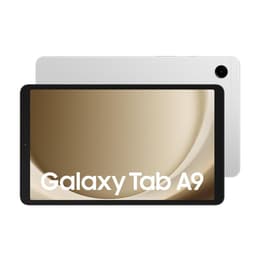
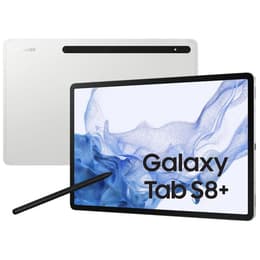

Galaxy Tab A9+ (11.0", 2023) vs Galaxy Tab S8 (11.0", 2022)

Galaxy Tab A9+ (11.0", 2023)
See options
Galaxy Tab S8 (11.0", 2022)
Starting at

Refurbished price:A$631.00

Versus A$639.00 new

See options

The Samsung Galaxy Tab A9+ (released in October 2023) and the Samsung Galaxy Tab S8 (released in February 2022) are Android tablets from different tiers of Samsung's lineup. While both offer an 11-inch display and run on the Android operating system, the Tab S8 is positioned as a more performance-oriented device with advanced features, whereas the Tab A9+ focuses on delivering a balanced experience for everyday use.

Scores

Durability

The longevity of a tablet is influenced by its build quality, software support, and the demands of typical usage over time. Both devices benefit from Samsung's commitment to software updates, though their respective release dates and product categories impact their expected support timelines.

  • Software Support: The Galaxy Tab S8, as a more premium device, was promised four major Android OS updates and five years of security updates from its 2022 release, ensuring extended software relevance, with updates expected until Android 16 and security patches until 2027. The Galaxy Tab A9+, released in 2023, is expected to receive three major Android OS upgrades (up to Android 16) and four years of security patches, extending its support until 2027.
  • Build Materials: The Galaxy Tab S8 features an Armor Aluminum body, designed for enhanced resistance to scratches and bending, contributing to its physical durability. The Galaxy Tab A9+ features a smooth metal body, providing a sturdy feel for its category.
  • Repairability: The Galaxy Tab S8 has a repairability score of 5.5 out of 10, indicating that while some components are accessible, screen removal can be a delicate process due to adhesive. The Galaxy Tab A9+ also involves a delicate screen removal process due to adhesive and the use of plastic covers internally, suggesting moderate repairability.

Release year

2023

2022

Compatible with latest Update

Yes

Yes

Operating system

Android

Android

Performance

Performance varies significantly between these two tablets, reflecting their intended use cases and internal hardware. The choice between them depends on the user's need for processing power and multitasking capabilities.

  • Processing Power: The Galaxy Tab S8 is equipped with a powerful, current-generation processor that handles demanding applications, intensive multitasking, and graphic-heavy gaming smoothly. The Galaxy Tab A9+ features a processor capable of managing everyday tasks like web browsing, streaming videos, and light multitasking without significant slowdowns. It can also run moderately intensive games.
  • Multitasking and Responsiveness: With 8GB of RAM as standard (and options for more in some configurations), the Galaxy Tab S8 offers robust multitasking capabilities, allowing users to switch between numerous applications and run productivity suites with ease. The Galaxy Tab A9+ typically comes with 4GB or 8GB of RAM, with the 8GB variant offering smoother performance for multitasking.
  • Battery Behavior: The Galaxy Tab S8, with its 8000 mAh battery, offers excellent battery life, capable of lasting through a full day of heavy use or nearly 13 hours of continuous web surfing. The Galaxy Tab A9+ includes a 7040 mAh battery, providing solid battery life for streaming videos, web browsing, and casual gaming, often lasting a full day for typical users.

Memory (GB)

4 GB

8 GB

Processor

Qualcomm SM6375 Snapdragon 695 5G

Snapdragon 8 Gen 1

Screen quality

The visual experience is a key differentiator, with both tablets offering distinct display technologies and characteristics that cater to different viewing preferences and usage scenarios.

  • Display Technology and Resolution: The Galaxy Tab S8 features an 11-inch TFT LCD with a high resolution of 2560 x 1600 pixels, providing sharp images and clear text. The Galaxy Tab A9+ also has an 11-inch TFT LCD panel, offering a resolution of 1920 x 1200 pixels, which is suitable for general content consumption.
  • Refresh Rate and Smoothness: The Galaxy Tab S8 boasts a 120Hz refresh rate, resulting in exceptionally smooth scrolling, fluid animations, and a more responsive touch experience. The Galaxy Tab A9+ features a 90Hz refresh rate, which provides a smoother visual experience compared to standard 60Hz displays, enhancing scrolling and animations.
  • Brightness and Viewing Experience: The Galaxy Tab S8's display is bright enough for use in various lighting conditions, including outdoors, though reflections can be noticeable in direct sunlight. The Galaxy Tab A9+ offers good brightness for indoor use, with colors that are generally pleasing, though some users might find it less bright in direct sunlight compared to higher-end displays.

Resolution

1200 x 1920

1600x2560

Pixel density

210ppp

280ppp

Audiovisual

While tablets are not typically primary photography devices, their camera systems are important for video calls, document scanning, and casual capture. Both tablets offer capable camera setups for their respective segments.

  • Rear Camera System: The Galaxy Tab S8 features a dual rear camera setup, including a 13MP wide-angle lens and a 6MP ultra-wide-angle lens, capable of recording 4K video. The Galaxy Tab A9+ comes with a single 8MP rear camera with autofocus, suitable for scanning documents and casual photography in good lighting.
  • Front Camera and Video Calls: For video conferencing, the Galaxy Tab S8 includes a 12MP ultra-wide front-facing camera with auto-framing features that help keep the user centered during calls. The Galaxy Tab A9+ has a 5MP front camera that provides clear image quality for video calls in well-lit environments.
  • Audio Experience: Both tablets feature quad stereo speakers with Dolby Atmos support, delivering a rich and immersive audio experience for media consumption. The microphone quality on the Tab S8 is noted for noise reduction, enhancing call clarity.

Miscellaneous

Beyond core specifications, several practical elements contribute to the overall user experience, including connectivity, physical design, and unique features that enhance usability.

  • Connectivity Options: The Galaxy Tab S8 supports advanced connectivity, including Wi-Fi 6E for very fast wireless speeds and Bluetooth 5.2. The Galaxy Tab A9+ offers Wi-Fi 5 and Bluetooth 5.1 connectivity, providing standard modern wireless connections.
  • Ports and Sensors: The Galaxy Tab S8 includes a USB-C 3.2 port for faster data transfer and supports an optical under-display fingerprint sensor for secure unlocking. The Galaxy Tab A9+ features a USB-C 2.0 port and relies on face recognition for biometric security, lacking a fingerprint sensor. Both tablets include a 3.5mm headphone jack.
  • Stylus and Accessories: The Galaxy Tab S8 comes with the S Pen included, offering precise input for note-taking, drawing, and navigation. The Galaxy Tab A9+ does not support the S Pen, though it is compatible with third-party styluses.
  • Design and Handling: The Galaxy Tab S8 has a premium aluminum build, with dimensions of 253.8 x 165.3 x 6.3 mm and a weight of 503g (Wi-Fi model). The Galaxy Tab A9+ features a slim metal build, measuring 257.1 x 168.7 x 6.9 mm and weighing 480g (Wi-Fi model), making it slightly lighter.

Weight

480 oz

507 oz

Screen size (in)

11.0

11.0

Network

Wi-Fi + 5G

Wi-Fi + 5G

Carrier compatibility

Unlocked

Unlocked

Connector

USB Type-C

USB Type-C

User feedback for the Galaxy Tab S8 often praises its bright, high-refresh-rate display, robust performance for demanding tasks, excellent battery life, and the inclusion of the S Pen, making it a strong contender for productivity and creative work. Common criticisms sometimes point to its performance not quite matching the absolute top-tier tablets in some benchmarks, though it remains highly capable for Android. For the Galaxy Tab A9+, users frequently highlight its value for money, comfortable screen for streaming, and solid battery life for everyday use. Criticisms often mention the lower base storage, the absence of a fingerprint sensor, and cameras that are functional but not exceptional for photography.

Users prioritizing a powerful tablet for intensive applications, advanced multitasking, and creative work with stylus input will find the Galaxy Tab S8 well-suited to their needs. Its superior display and processing power make it ideal for professionals or students requiring a high-performance device. Conversely, users seeking a reliable tablet for media consumption, web browsing, casual gaming, and video calls will find the Galaxy Tab A9+ to be a practical choice. It offers a balanced experience for everyday tasks without the need for flagship-level performance.

Both tablets offer a gateway to the Android ecosystem, and for those considering a more sustainable option, quality-assured refurbished models of either device provide an eco-friendly alternative to purchasing new.


See all articles

Our recent comparisons