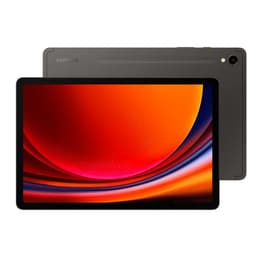
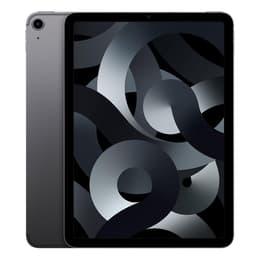

Galaxy Tab S9 (11.0", 2023) vs iPad Air 5 (2022, M1 series)

Galaxy Tab S9 (11.0", 2023)
Starting at

Refurbished price:A$869.00

Versus A$2,427.00 new

See options
iPad Air 5 (2022, M1 series)
Starting at

Refurbished price:A$649.00

Versus A$1,249.00 new

See options

The Samsung Galaxy Tab S9, released in August 2023, and the Apple iPad Air (M1 Series), launched in March 2022, are both prominent tablets designed for a range of uses from productivity to entertainment. While the Tab S9 operates on Android with Samsung's One UI, the iPad Air runs on Apple's iPadOS, offering distinct software experiences. A primary difference lies in their display technologies and the inclusion of a stylus, providing users with varied options right from the start.

Scores

Durability

When evaluating the long-term usability of these tablets, their release timelines and software support are key considerations. Both devices are built with premium materials, but they differ in their protective features and expected software longevity.

  • Release Timeline: The Galaxy Tab S9, released in August 2023, is a newer device compared to the iPad Air (M1 Series), which launched in March 2022. This difference typically means the Tab S9 will receive software updates for a slightly longer period.
  • Software Support: Samsung generally provides four generations of OS upgrades and five years of security updates for its flagship tablets. Apple is known for offering extensive software support, often extending for five to six years or more from the release date, with security updates potentially lasting even longer.
  • Durability Features: The Galaxy Tab S9 boasts an IP68 rating for dust and water resistance, offering an additional layer of protection against environmental elements. The iPad Air, while featuring a durable aluminum construction, does not carry an official IP rating.

Release year

2023

2022

Compatible with latest Update

Yes

Yes

Operating system

Android

iPadOS

Performance

Both the Galaxy Tab S9 and the iPad Air are equipped with powerful internal components capable of handling demanding tasks, though they achieve this through different architectural approaches and offer varying storage flexibility.

  • Processing Power: The Galaxy Tab S9 features a high-performance processor optimized for Android, ensuring smooth operation for everyday applications, multitasking, and graphically intensive games. The iPad Air utilizes a chip originally designed for desktop computers, providing substantial raw power that excels in tasks like video editing, 3D rendering, and professional-grade applications.
  • Multitasking and Responsiveness: Users report that the Galaxy Tab S9 feels fast and snappy, handling app switching and gaming smoothly. The iPad Air's powerful chip also ensures a highly responsive experience, particularly beneficial for professional applications and heavy multitasking.
  • Storage and Memory: The Galaxy Tab S9 offers storage options of 128GB and 256GB, with the added flexibility of expandable storage via a microSD card up to 1TB. The iPad Air comes with fixed storage configurations of 64GB or 256GB and does not support expandable storage. Both devices typically feature 8GB of RAM, contributing to efficient multitasking.
  • Battery Performance: The Galaxy Tab S9 is equipped with an 8400 mAh battery, with user reports indicating around 7-10 hours of screen-on time with mixed usage. The iPad Air has a 30.2-watt-hour battery, generally providing up to 10 hours of Wi-Fi usage or video playback.

Memory (GB)

12 GB

8 GB

Screen quality

The visual experience is a significant aspect of any tablet, and these two devices offer distinct display technologies that cater to different preferences and usage scenarios.

  • Display Technology: The Galaxy Tab S9 features an 11-inch Dynamic AMOLED 2X display, known for its deep blacks, vibrant colors, and excellent contrast. The iPad Air sports a 10.9-inch Liquid Retina IPS LCD display, offering accurate color reproduction and wide viewing angles.
  • Resolution and Clarity: The Tab S9 has a resolution of 2560 x 1600 pixels, providing sharp images and text. The iPad Air offers a resolution of 2360 x 1640 pixels, also delivering clear and crisp visuals.
  • Refresh Rate and Brightness: The Galaxy Tab S9 features a 120Hz refresh rate, contributing to smoother scrolling and a more fluid visual experience. The iPad Air has a standard 60Hz refresh rate. Both tablets offer good brightness levels, with the iPad Air reaching 500 nits, suitable for various lighting conditions.
  • Viewing Experience: The AMOLED display of the Tab S9 is often preferred for media consumption due to its vibrant colors and true blacks. The iPad Air's Liquid Retina display provides consistent color accuracy, which is beneficial for creative work.

Resolution

1600 x 2560

2360 x 1640

Screen type

Dynamic AMOLED 2X

Liquid Retina display

Pixel density

280ppp

264ppp

Audiovisual

Both tablets include capable camera systems for everyday use, video calls, and casual photography, though with some differences in their configurations and features.

  • Rear Camera: The Galaxy Tab S9 is equipped with a 13MP wide rear camera. The iPad Air features a 12MP wide rear camera. Both are capable of recording 4K video.
  • Front Camera: For video calls and selfies, both tablets feature a 12MP front-facing camera. The iPad Air's front camera is an ultrawide lens with Center Stage, which automatically keeps the subject in frame during video calls. The Tab S9 also has a 12MP ultrawide front camera.
  • Audio Quality: The Galaxy Tab S9 features a quad-speaker system tuned by AKG, providing a rich audio experience for media consumption. The iPad Air also offers good speaker output, suitable for video playback and calls.
  • Photography Features: Both devices offer features like digital zoom and various photography modes. The iPad Air includes Smart HDR 4 and wide color capture for photos.

Miscellaneous

Beyond core performance and display, several practical elements differentiate these two tablets, influencing their overall user experience and suitability for various tasks.

  • Connectivity: The Galaxy Tab S9 supports Wi-Fi 6E and Bluetooth 5.3, offering advanced wireless capabilities. The iPad Air supports Wi-Fi 6 and Bluetooth 5.0. Both offer 5G connectivity in their cellular models.
  • Ports and Accessories: Both tablets utilize a USB-C port for charging and data transfer. The Tab S9 supports USB 3.2 Gen 1, while the iPad Air supports USB 3.1 Gen 2. A significant difference is that the Galaxy Tab S9 includes the S Pen stylus in the box, offering a pen-on-paper feel with low latency. The Apple Pencil 2nd Gen, compatible with the iPad Air, is sold separately. The Tab S9 also supports microSD card expansion.
  • Biometric Security: The Galaxy Tab S9 features an in-display fingerprint sensor for secure authentication. The iPad Air incorporates Touch ID integrated into its power button.
  • Design and Handling: The Tab S9 measures 5.9mm in thickness and weighs 498g (Wi-Fi), while the iPad Air is 6.1mm thick and weighs 460g. Both feature premium aluminum builds.

Weight

129 oz

462 oz

Screen size (in)

11.0

10.9

Network

Wi-Fi

Wi-Fi + 5G

Carrier compatibility

Unlocked

Unlocked

User feedback on the Galaxy Tab S9 often highlights its vibrant AMOLED display, fast performance for everyday tasks and gaming, and the utility of the included S Pen and Samsung's One UI, particularly its DeX mode for a desktop-like experience. Some users have noted that while battery life is good, it might not always reach the highest advertised figures, and a few have reported minor software quirks or S Pen accuracy issues in specific areas of the screen.

The iPad Air (M1 Series) is frequently praised for its exceptional processing power, making it a strong contender for demanding creative and professional applications. Its robust iPadOS ecosystem, with a wide array of tablet-optimized applications, is also a significant advantage. Common criticisms include the relatively small 64GB base storage option and the absence of an official IP rating.

Users prioritizing a vibrant, high-refresh-rate AMOLED display, expandable storage, and an included stylus for note-taking and drawing may find the Galaxy Tab S9 well-suited to their needs. Those who require top-tier processing power for intensive applications, prefer the iPadOS ecosystem, and value a wide selection of optimized apps might lean towards the iPad Air. Both tablets offer a premium experience, and choosing between them often comes down to individual preferences regarding operating system, display technology, and accessory integration. For those seeking a more sustainable choice, both models are available as quality-assured refurbished options.

See all articles

Our recent comparisons