
Galaxy Tab A (8.0", 2018) vs iPad 5 (2017, A9 series)

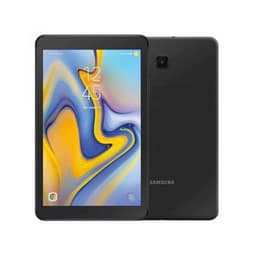
Galaxy Tab A (8.0", 2018)
See options
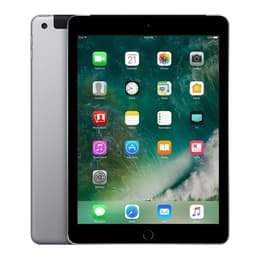
iPad 5 (2017, A9 series)
Starting at

Refurbished price:A$144.00

Versus A$559.00 new

See options

Ratings

The Samsung Galaxy Tab A 8.0 (2018) and the Apple iPad (5th generation, 2017) are both tablets released within a year of each other, offering distinct experiences based on their respective operating systems. While the Galaxy Tab A operates on Android, providing a more open ecosystem, the iPad runs on Apple's iPadOS, known for its integrated software and hardware experience. This comparison will explore their core differences to help users determine which device aligns best with their needs.

Scores

Durability

When considering the long-term usability of these tablets, their release timelines and software support are key factors. The Galaxy Tab A 8.0 (2018) was released in September 2018, while the iPad (2017) launched earlier in March 2017.

  • Software Longevity: The Galaxy Tab A 8.0 (2018) originally ran Android 8.1 Oreo and was upgradeable to Android 10. Samsung's A-series devices from this era typically received about two years of major OS updates and up to three years of security patches, meaning its official software support has concluded. The iPad (2017) shipped with iOS 10 and received updates up to iPadOS 16.7.15, with iPadOS 17 dropping support for this model. Apple generally provides a longer period of software updates, often extending to 7-10 years for security.
  • Repairability: The iPad (2017) is noted for having a display that is not fully laminated, which can make screen repairs potentially less complex compared to models where the display and digitizer are fused. However, strong adhesives are still used in its construction. Information on the repairability of the Galaxy Tab A 8.0 (2018) suggests that parts are available, and disassembly guides exist for components like the screen and battery.
  • Practical Lifespan: Both devices, being several years old, are now primarily suited for lighter tasks. The iPad may offer a slightly longer practical lifespan for basic app compatibility due to Apple's extended security update policy, even after major OS updates cease.

Release year

2018

2017

Compatible with latest Update

No

No

Operating system

Android

iPadOS

Performance

The performance of these tablets is influenced by their internal components and how their respective operating systems manage resources. Both devices are equipped with 2GB of RAM, which impacts multitasking capabilities.

  • Everyday Responsiveness: The Galaxy Tab A 8.0 (2018) features a quad-core processor, which handles everyday applications and basic multitasking adequately. Users report that apps open quickly, and basic multitasking works without issues, though performance can slow down with many apps open. The iPad (2017) is powered by a dual-core processor that was considered robust at its release, providing a smooth experience for web browsing, media consumption, and light productivity tasks.
  • Storage Options: The Galaxy Tab A 8.0 (2018) comes with 32GB of internal storage but offers expandable storage via a microSD card slot, supporting up to 400GB. The iPad (2017) is available with either 32GB or 128GB of internal storage, but it does not support external storage expansion.
  • Battery Behavior: The Galaxy Tab A 8.0 (2018) houses a 5,000mAh battery, providing good battery life, with reports of around 11 hours of video playback. The iPad (2017) has an 8610 mAh battery, and users have reported excellent battery life, often achieving around 10 hours of web surfing or video playback.

Memory (GB)

2 GB

2 GB

Screen quality

The visual experience on these tablets differs due to their display technologies and specifications, impacting clarity and viewing comfort.

  • Display Technology and Resolution: The Galaxy Tab A 8.0 (2018) features an 8-inch IPS LCD with a resolution of 1280 x 800 pixels, resulting in a pixel density of 189 ppi. The iPad (2017) offers a larger 9.7-inch IPS LCD Retina display with a higher resolution of 2048 x 1536 pixels, providing a sharper image with 264 ppi.
  • Clarity and Brightness: Text on the Galaxy Tab A can appear somewhat pixelated, though it remains readable. Its screen is not fully laminated. The iPad's Retina display offers greater clarity for text and images. While the iPad (2017) screen is brighter than its predecessor, it lacks the anti-reflective coating and full lamination found in some other iPad models, which can lead to more reflections in bright environments.
  • Viewing Experience: The Galaxy Tab A's 8-inch screen is compact and suitable for casual media consumption and browsing. The iPad's larger 9.7-inch display provides a more expansive viewing area, which can enhance the experience for reading, watching videos, and light productivity.

Resolution

800 x 1280

2048 x 1536

Screen type

IPS LCD

Retina display

Pixel density

190ppp

264ppp

Audiovisual

Tablet cameras are generally designed for casual use rather than professional photography, and both these models reflect that focus.

  • Camera System Capabilities: The Galaxy Tab A 8.0 (2018) is equipped with a 5MP rear camera and a 2MP front camera. The iPad (2017) features an 8MP rear camera capable of 1080p video recording and a 1.2MP front camera for video calls.
  • Photography Performance: The rear camera on the Galaxy Tab A is considered underwhelming, producing passable daytime photos but grainy and blurry results in low-light conditions. The iPad's 8MP rear camera can take detailed shots in good lighting, but it is not intended to compete with smartphone cameras.
  • Video and Audio: Both tablets are suitable for video calls in well-lit environments using their front-facing cameras. The iPad's front camera is particularly noted for video chat. The Galaxy Tab A's microphone quality is generally sufficient for calls but may not be ideal for high-quality audio recording. The iPad (2017) includes stereo speakers, offering a more immersive audio experience for media consumption compared to the Galaxy Tab A's single speaker, which can sound hollow at higher volumes.

Miscellaneous

Beyond core specifications, several practical elements contribute to the overall user experience of these tablets.

  • Connectivity: Both devices support dual-band Wi-Fi (802.11 a/b/g/n for the Tab A, 802.11ac for the iPad) and Bluetooth 4.2. LTE variants were available for both, offering mobile data connectivity.
  • Port Types: The Galaxy Tab A 8.0 (2018) uses a microUSB 2.0 port for charging and data transfer, alongside a 3.5mm headphone jack. The iPad (2017) features Apple's proprietary Lightning port for charging and connectivity, and also includes a 3.5mm headphone jack.
  • Sensors and Security: The Galaxy Tab A includes an accelerometer. The iPad (2017) incorporates a Touch ID fingerprint reader for secure authentication, along with an accelerometer, gyroscope, and barometer.
  • Physical Characteristics: The Galaxy Tab A 8.0 (2018) is lighter at 358g and has dimensions of 206.5 x 126.7 x 8.9mm. It features a plastic build. The iPad (2017) is heavier at 469g (Wi-Fi model) and measures 240 x 169.5 x 7.5mm. It has an aluminum unibody construction.

Weight

358 oz

478 oz

Screen size (in)

8.0

9.7

Network

Wi-Fi + 4G

Wi-Fi + 4G

Carrier compatibility

Unlocked

Unlocked

User feedback for both the Galaxy Tab A 8.0 (2018) and the iPad (2017) highlights their strengths and limitations, reflecting their positioning as entry-level to mid-range tablets at the time of their release. For the Galaxy Tab A, common praise points include its solid performance for basic tasks, good build quality for its category, and the benefit of expandable storage. Criticisms often point to its underwhelming cameras and the display's resolution not being as sharp as some competitors. Users of the iPad (2017) frequently commend its reliable performance for media consumption and web browsing, its bright display, and the overall integrated experience of iPadOS. Some common concerns include the lack of a fully laminated display, which can lead to reflections, and its cameras not being a primary selling point.

Users prioritizing an open Android ecosystem, expandable storage, and a more compact form factor may find the Galaxy Tab A 8.0 (2018) well-suited to their needs. It remains a practical choice for casual use, such as reading, light browsing, and basic app usage. Conversely, users who value a more refined software experience, a sharper display, and a longer history of software support for core functionalities may lean towards the iPad (2017). It excels as a media consumption device and for general productivity within the Apple ecosystem.

For those considering either of these models today, opting for a quality-assured refurbished option can provide access to these dependable devices while also making a sustainable choice.

See all articles

Our recent comparisons