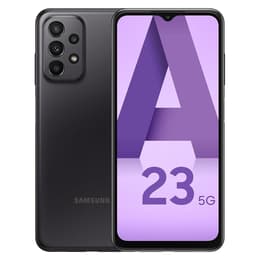
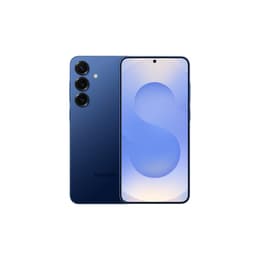
Galaxy A23 5G vs Galaxy S25+

Galaxy A23 5G
Galaxy A23 5G
Starting at

Refurbished price:A$219.00

Versus A$457.00 new

See options
Galaxy S25+
Galaxy S25+
Starting at

Refurbished price:A$919.00

Versus A$1,699.00 new

See options

The Samsung Galaxy A23 5G, released in late 2022, and the Samsung Galaxy S25 Plus, launched in early 2025, represent different segments within Samsung's smartphone lineup. While both operate on the Android platform, the S25 Plus offers a more advanced and feature-rich experience, reflecting its position as a flagship device, compared to the A23 5G's focus on essential functionality and connectivity. The primary distinctions lie in their processing power, display technology, and camera capabilities.

Scores

Durability

The expected practical lifespan and software support differ significantly between these two devices, largely due to their release timelines and product categories.

  • Release Timeline: The Galaxy A23 5G was released in late 2022, while the Galaxy S25 Plus launched in early 2025. This nearly two-and-a-half-year difference means the S25 Plus benefits from newer technology and a longer support window from its inception.
  • Software Longevity: The Galaxy A23 5G launched with Android 12 and has received updates up to Android 15 (One UI 7.0). In contrast, the Galaxy S25 Plus launched with Android 15 (One UI 7) and is promised seven years of major Android OS and security updates, extending its support well into the future, potentially up to Android 22. This extended support means the S25 Plus will remain current with the latest features and security patches for a considerably longer period.
  • Physical Durability: The Galaxy A23 5G features a plastic back and frame with Gorilla Glass 5 on the front, offering a reasonable level of protection for everyday use. The Galaxy S25 Plus, however, incorporates more robust materials, including Gorilla Glass Victus 2 on both the front and back, coupled with an aluminum frame, providing enhanced resistance to drops and scratches. Additionally, the S25 Plus carries an IP68 rating for dust and water resistance, a feature not typically found on the A23 5G, contributing to its overall resilience.

Release year

2022

2025

Operating system

Android

Android

Foldable

No

No

Performance

The performance capabilities of these two smartphones cater to different user demands, with the Galaxy S25 Plus offering a substantially more powerful experience.

  • Processing Power: The Galaxy A23 5G is equipped with a processor designed for efficient everyday tasks and 5G connectivity, handling common applications and light multitasking smoothly. The Galaxy S25 Plus, on the other hand, features a current-generation flagship processor, the Snapdragon 8 Elite, which delivers a significant leap in performance. This allows for seamless execution of demanding applications, intensive gaming, and complex AI features without noticeable slowdowns.
  • Multitasking and Storage: The A23 5G comes with various RAM configurations, typically ranging from 4GB to 8GB, which is sufficient for moderate multitasking and app switching. It also offers expandable storage via a microSD card, providing flexibility for users with large media libraries. The S25 Plus, however, comes standard with 12GB of RAM, ensuring exceptional fluidity even with numerous applications open simultaneously. Its internal storage options start at 256GB and go up to 512GB, providing ample space for high-resolution content and applications, though it does not support expandable storage.
  • Overall Responsiveness: Users will experience a noticeable difference in overall system responsiveness, with the S25 Plus offering quicker app loading times, smoother transitions, and a more immediate feel across the operating system due to its superior hardware and optimized software.

Memory (GB)

4 GB

12 GB

Screen quality

The visual experience provided by these two devices varies considerably, primarily due to differences in display technology and resolution.

  • Display Technology and Clarity: The Galaxy A23 5G features a 6.6-inch PLS LCD display with Full HD+ resolution (2408 x 1080 pixels). This display offers clear visuals suitable for general browsing and media consumption. The Galaxy S25 Plus, however, boasts a 6.7-inch Dynamic AMOLED 2X display with a sharper Quad HD+ resolution (3120 x 1440 pixels). This advanced display technology provides deeper blacks, higher contrast, and more vibrant colors, enhancing the viewing experience for photos, videos, and detailed content.
  • Brightness and Refresh Rate: Both devices offer a 120Hz refresh rate, contributing to smoother scrolling and more fluid animations. However, the S25 Plus's Dynamic AMOLED 2X panel typically achieves significantly higher peak brightness levels, making it more comfortable to view content outdoors or in brightly lit environments. The S25 Plus also features an adaptive refresh rate, which can dynamically adjust from 1Hz to 120Hz, optimizing battery usage by only using a high refresh rate when needed.
  • Viewing Experience: The larger, higher-resolution, and more vibrant display of the S25 Plus provides a more immersive and detailed viewing experience, particularly beneficial for users who consume a lot of high-quality media or engage in mobile gaming.

Resolution

1080 x 2408

1440x3120

Audiovisual

The camera systems on the Galaxy A23 5G and Galaxy S25 Plus are designed for different levels of photographic capability and versatility.

  • Rear Camera System: The Galaxy A23 5G features a quad-camera setup with a 50-megapixel main sensor that includes optical image stabilization (OIS), a 5-megapixel ultrawide lens, and two 2-megapixel sensors for macro and depth. This setup is capable of capturing clear everyday photos and offers some versatility. The Galaxy S25 Plus, on the other hand, comes with a triple-camera system that includes a 50-megapixel main sensor, a 12-megapixel ultrawide lens, and a 10-megapixel telephoto lens with 3x optical zoom. This configuration provides greater detail, better zoom capabilities, and generally superior image processing.
  • Photography Performance: While both devices can capture good photos in well-lit conditions, the S25 Plus excels in challenging scenarios such as low light, thanks to its larger sensors and advanced image processing algorithms. The dedicated telephoto lens on the S25 Plus allows for high-quality zoomed-in shots without significant loss of detail, a feature absent on the A23 5G.
  • Video Recording and Audio: The A23 5G records video at Full HD (1080p) at 30 frames per second. The S25 Plus significantly upgrades video capabilities, offering recording up to 8K resolution at 30 frames per second, providing much higher detail and flexibility for video creators. For audio, the S25 Plus typically includes stereo speakers for a more immersive media consumption experience, while the A23 5G usually features a single, mono speaker.

Miscellaneous

Beyond core specifications, several practical elements differentiate the user experience between these two Samsung smartphones.

  • Connectivity and Ports: Both devices support 5G connectivity, ensuring access to faster mobile networks. The Galaxy A23 5G includes a 3.5mm headphone jack and uses USB-C 2.0 for charging and data transfer. The Galaxy S25 Plus, reflecting a more modern flagship design, omits the headphone jack but features a faster USB Type-C 3.2 port for quicker data transfers and potentially faster charging. The S25 Plus also supports newer Wi-Fi 7 and Bluetooth 5.4 standards, offering improved wireless performance compared to the A23 5G's Wi-Fi 5 and Bluetooth 5.1.
  • Biometrics and Sensors: The A23 5G features a side-mounted fingerprint sensor for secure unlocking. The S25 Plus incorporates an ultrasonic in-screen fingerprint sensor, which is often considered more convenient and integrated into the display. The S25 Plus also includes advanced features like Ultra-Wideband (UWB) for enhanced spatial awareness and precise device tracking, along with a suite of Galaxy AI features designed to enhance user interaction and productivity.
  • Design and Handling: The Galaxy A23 5G has dimensions of 165.4 x 76.9 x 8.4 mm and weighs 197g. The S25 Plus is slightly more compact and lighter at 158.4 x 75.7 x 7.3 mm and 190g, despite its larger screen size, contributing to a more premium feel and potentially easier one-handed use for some users. The S25 Plus's use of glass and aluminum also provides a more refined tactile experience compared to the A23 5G's plastic construction.

Weight

197 oz

190 oz

Screen size (in)

6.6

6.7

Network

5G

5G

SIM card

Physical SIM

Physical SIM + eSIM

Carrier compatibility

Unlocked

Unlocked

User feedback for the Galaxy A23 5G often highlights its reliable battery life and the inclusion of a 120Hz display as strong points for its segment. Some users have noted occasional performance stutters or heating during heavy usage, and the camera performance, while adequate, may not satisfy those seeking advanced photography features. The Galaxy S25 Plus, being a more recent flagship, receives praise for its powerful performance, vibrant and bright display, and advanced camera capabilities, particularly its video recording and AI features. Common positive remarks also include its premium build quality and extended software support. Criticisms, when present, are often minor and relate to specific software nuances rather than core hardware.

Users prioritizing a long-lasting device with extensive software support, top-tier performance for demanding applications and gaming, and advanced camera features for high-quality photography and videography will find the Galaxy S25 Plus well-suited to their needs. Its premium design and enhanced durability also appeal to those seeking a robust and refined smartphone experience. Conversely, users who require a dependable smartphone for everyday communication, social media, and light media consumption, and who value expandable storage and a traditional headphone jack, may find the Galaxy A23 5G to be a practical choice. Both devices are available as quality-assured refurbished options, providing an eco-friendly alternative for consumers.

See all articles

Our recent comparisons