
Compare models
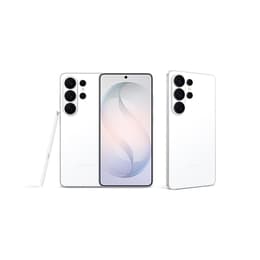
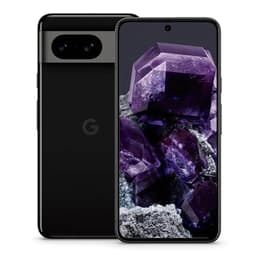
Galaxy S26 Ultra vs Google Pixel 8
- 1-year warranty
- Free standard shipping
- Free 30-day returns
Differences at a glance
The Samsung Galaxy S26 Ultra (2026) and the Google Pixel 8 (2023) represent different tiers, release windows, and philosophies within the modern smartphone landscape. While the Galaxy S26 Ultra functions as a large-format flagship featuring current-generation hardware and advanced multitasking tools, the Google Pixel 8 serves as a compact, streamlined device centered on clean software integration. Both devices operate on the Android platform, though they utilize distinct user interfaces and support schedules tailored to different styles of daily device interaction.
Available Models
Colour
Storage (GB)
Scores
Durability
When evaluating hardware longevity and software support, both devices offer extensive update commitments, though they differ significantly in release timing and physical build endurance.
- Software Support Timelines: The Google Pixel 8 includes an extended multi-year update commitment reaching well into the future, matching the long-term software lifecycle provided by the newer Galaxy S26 Ultra.
- Build Materials and Durability: The Galaxy S26 Ultra incorporates reinforced glass and advanced armor framing designed to withstand heavy wear, while the Pixel 8 relies on durable aluminum and standard protective glass suited for everyday handling.
- Expected Practical Lifespan: Both models are built to maintain reliable daily performance over several years, with robust repair frameworks that make choosing a quality-assured refurbished option an eco-friendly and sustainable choice for long-term use.
Release year
2026
2023
Operating system
Android
Android
Foldable
No
No
Performance
Underneath their exteriors, these two smartphones handle everyday tasks, app launching, and system navigation through distinct hardware architectures and memory configurations.
- Multitasking and App Handling: The Galaxy S26 Ultra includes a high capacity of system memory to run demanding professional applications and intensive games simultaneously without stuttering, while the Pixel 8 manages everyday browsing, streaming, and moderate multitasking smoothly through its balanced custom processor architecture.
- Storage and Configurations: The Galaxy S26 Ultra starts at higher baseline storage capacities with options scaling up significantly for large media libraries, whereas the Pixel 8 offers modest baseline storage tiers suited for average cloud-reliant users.
- Battery Behavior: The Galaxy S26 Ultra features a larger physical battery capacity paired with efficient power management for extended mixed usage, while the Pixel 8 relies on a smaller cell that accommodates standard daily routines but requires more frequent charges during heavy travel or navigation sessions.
Screen quality
Visual output and physical display dimensions differ considerably between the two models, impacting media consumption, reading comfort, and outdoor visibility.
- Display Technology and Size: The Galaxy S26 Ultra provides an expansive 6.9-inch AMOLED display with deep contrast and vibrant colors, whereas the Pixel 8 features a more compact 6.2-inch OLED screen that is easier to handle with one hand.
- Brightness and Outdoor Legibility: Both models deliver high peak brightness levels to ensure content remains clear and legible under direct sunlight, though the Galaxy S26 Ultra achieves higher luminance thresholds for bright environments.
- Refresh Rate and Smoothness: Both devices support an adaptive 120Hz maximum refresh rate, ensuring fluid scrolling through web pages, social media feeds, and system menus.
Resolution
1440x3120
1080 x 2400
Audiovisual
Photography and media recording capabilities vary widely, reflecting the different physical footprints and lens configurations of each smartphone.
- Camera System Versatility: The Galaxy S26 Ultra equips a comprehensive quad-lens rear array including a high-resolution main sensor, ultra-wide capabilities, and dedicated telephoto lenses with extensive optical zoom, while the Pixel 8 utilizes a streamlined dual-lens setup focused on core wide and ultra-wide shots.
- Low-Light and Computational Photography: The Pixel 8 leverages advanced computational processing to capture balanced, natural low-light images, whereas the Galaxy S26 Ultra captures fine detail and sharp clarity across challenging lighting conditions using its large primary sensor hardware.
- Audio and Video Output: Both devices offer clear stereo speakers and effective noise-canceling microphones for calls and media playback, though the Galaxy S26 Ultra supports advanced high-resolution video recording modes and extensive zoom stability.
Miscellaneous
Practical daily usability elements, physical dimensions, and connectivity standards dictate how each phone integrates into travel, work, and leisure routines.
- Physical Dimensions and Handling: The Galaxy S26 Ultra is a larger and heavier device designed for users who prefer an expansive workspace, whereas the Pixel 8 has a smaller, lighter footprint that slips easily into pockets.
- Connectivity and Ports: Both models support fast 5G cellular networks, modern Wi-Fi standards, and Bluetooth connectivity, utilizing reversible USB Type-C ports for charging and data transfer.
- Biometrics and Security: Both smartphones integrate fast in-display fingerprint sensors alongside secure facial recognition capabilities for convenient unlocking.
Weight
214 oz
187 oz
Screen size (in)
6.9
6.2
Network
5G
5G
SIM card
Physical SIM + eSIM
Physical SIM + eSIM
Carrier compatibility
Unlocked
Unlocked
What the community thinks
Choosing between the Samsung Galaxy S26 Ultra and the Google Pixel 8 depends largely on physical size preferences and daily task requirements. Users prioritizing an expansive display, extensive zoom photography, and heavy multitasking capacity will find the Galaxy S26 Ultra well-suited to their needs. Conversely, users who prefer a compact, lightweight form factor, clean software navigation, and straightforward everyday functionality will lean toward the Pixel 8.
Ultimately, both smartphones offer distinct advantages depending on whether productivity workspace or pocket-friendly portability takes priority. Exploring these models through a quality-assured refurbished option provides a sustainable pathway to acquiring dependable mobile technology while reducing environmental impact.