
Galaxy S25 vs iPhone 14 Pro Max

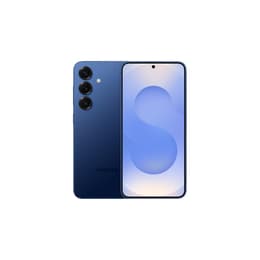
Galaxy S25
Galaxy S25
Starting at

Refurbished price:A$852.00

Versus A$1,399.00 new

See options
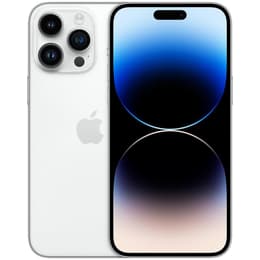
iPhone 14 Pro Max
iPhone 14 Pro Max
Starting at

Refurbished price:A$726.00

Versus A$1,899.00 new

See options

Ratings

The Samsung Galaxy S25, released in early 2025, and the Apple iPhone 14 Pro Max, launched in late 2022, represent distinct approaches to high-end smartphone design and functionality. While both devices offer premium experiences, they cater to different user preferences through their respective Android and iOS operating systems. The Galaxy S25 introduces a more recent hardware generation and extended software support, whereas the iPhone 14 Pro Max provides a robust, established ecosystem with a focus on integrated features.

Scores

Durability

When considering the longevity of these devices, several factors come into play, including their release timelines, software support, and physical durability.

  • Release Timeline and Software Support: The Galaxy S25, being a 2025 release, benefits from Samsung's commitment to seven years of operating system upgrades and security updates, extending its official support well into the future. The iPhone 14 Pro Max, released in 2022, typically receives iOS updates for approximately five to six years from its launch, meaning the Galaxy S25 is poised to receive software support for a longer duration.
  • Repairability: The Samsung Galaxy S25 has demonstrated a moderate repairability score, with some models in the series achieving scores around 8.5 out of 10 in teardowns, indicating a design that facilitates component replacement. The iPhone 14 Pro Max, while designed with precision, generally presents a more intricate repair process, though newer iPhone models have shown improvements in repairability.
  • Expected Practical Lifespan: Both devices are built with high-quality materials designed for durability. The Galaxy S25 features Gorilla Glass Victus 2 on its front and back, coupled with an aluminum frame, and boasts an IP68 rating for dust and water resistance. The iPhone 14 Pro Max utilizes Ceramic Shield for its front display and a stainless steel frame, also carrying an IP68 rating for water and dust protection. Users can expect a substantial practical lifespan from either device, with the Galaxy S25 potentially offering a longer period of official software updates.

Release year

2025

2022

Operating system

Android

iOS

Foldable

No

No

Performance

The performance of a smartphone is crucial for daily tasks, from browsing to demanding applications and gaming. Both the Galaxy S25 and iPhone 14 Pro Max deliver high levels of responsiveness, though they achieve this through different hardware and software optimizations.

  • Processor Capabilities: The Galaxy S25 is equipped with a current-generation processor, specifically a customized version designed for Galaxy devices. This hardware enables smooth handling of demanding applications, efficient multitasking, and responsive gaming experiences. The iPhone 14 Pro Max features a powerful processor that provides exceptional speed and efficiency for a wide range of tasks, ensuring applications launch quickly and run without interruption.
  • Multitasking and Responsiveness: With 12GB of RAM, the Galaxy S25 is well-suited for extensive multitasking, allowing users to switch between numerous applications seamlessly without experiencing slowdowns. The iPhone 14 Pro Max, with 6GB of RAM, is optimized by its operating system to manage memory efficiently, providing a fluid and responsive user experience even with multiple apps open.
  • Battery Behavior: The Galaxy S25 houses a 4000mAh battery, supporting 25W wired and 15W wireless charging, designed to provide a full day of typical use. The iPhone 14 Pro Max is equipped with a 4323mAh battery, offering up to 29 hours of video playback, and supports fast charging, MagSafe wireless charging, and Qi wireless charging. Both devices aim to provide reliable power for extended periods, with actual usage varying based on individual patterns.

Memory (GB)

12 GB

6 GB

Screen quality

The visual experience is a primary consideration for many users, and both smartphones offer high-quality displays with distinct characteristics.

  • Display Technology and Clarity: The Galaxy S25 features a 6.2-inch Dynamic LTPO AMOLED 2X display, offering vibrant colors, deep blacks, and excellent contrast. Its resolution of 2340 x 1080 pixels provides clear and sharp visuals for everyday viewing. The iPhone 14 Pro Max comes with a 6.7-inch Super Retina XDR OLED display, known for its exceptional color accuracy, true blacks, and high contrast ratio, with a resolution of 2796 x 1290 pixels.
  • Brightness and Outdoor Visibility: Both devices offer impressive brightness levels. The Galaxy S25 can reach a peak brightness of 2600 nits, ensuring good visibility even in bright outdoor conditions. The iPhone 14 Pro Max also achieves a high peak outdoor brightness of 2000 nits, making content easily viewable under direct sunlight.
  • Refresh Rate and Smoothness: Both smartphones incorporate adaptive refresh rate technologies for a smoother visual experience and improved power efficiency. The Galaxy S25 features a 120Hz refresh rate, which dynamically adjusts to the content being displayed. The iPhone 14 Pro Max utilizes ProMotion technology, offering adaptive refresh rates up to 120Hz, capable of scaling down to 1Hz for static content to conserve battery.

Resolution

1080x2340

1290 x 2796

Audiovisual

Photography and videography capabilities are key features for modern smartphones, and both the Galaxy S25 and iPhone 14 Pro Max offer advanced camera systems designed to capture high-quality images and videos.

  • Rear Camera Systems: The Galaxy S25 is equipped with a versatile triple-camera setup, including a 50MP wide-angle main sensor, a 12MP ultra-wide lens with a 120-degree field of view, and a 10MP telephoto lens offering 3x optical zoom. This configuration allows for detailed shots across various scenarios. The iPhone 14 Pro Max features a Pro camera system with a 48MP main sensor, a 12MP ultra-wide lens, and a 12MP 3x telephoto lens, complemented by a LiDAR scanner for enhanced depth sensing.
  • Photography Performance: The Galaxy S25 focuses on optimization to enhance image quality, delivering crisp details and accurate color reproduction, with AI-powered editing tools. The iPhone 14 Pro Max excels in capturing detailed photos with true-to-life colors, especially benefiting from its larger sensor and advanced image processing for improved low-light performance.
  • Video Recording and Audio: Both devices offer high-resolution video recording. The Galaxy S25 can record video at up to 8K resolution at 30 frames per second using its main camera, and supports 10-bit HDR for richer colors. The iPhone 14 Pro Max supports 4K video recording at various frame rates, including Cinematic mode for depth-of-field effects and Action mode for stabilized footage, along with ProRes video recording for professional workflows. Both phones provide stereo speakers for an immersive media consumption experience.

Miscellaneous

Beyond core performance, several practical elements contribute to the overall user experience and differentiate these two devices.

  • Connectivity and Ports: The Galaxy S25 supports modern connectivity standards, including 5G and Bluetooth 5.4, and typically features a USB-C port for charging and data transfer. The iPhone 14 Pro Max also offers 5G connectivity and Bluetooth 5.3, but utilizes Apple's proprietary Lightning port. It also includes satellite connectivity for emergency services in areas without cellular or Wi-Fi coverage.
  • Biometric Security: The Galaxy S25 incorporates an ultrasonic in-screen fingerprint sensor for secure and convenient unlocking. The iPhone 14 Pro Max relies on Face ID, Apple's facial recognition system, for biometric authentication.
  • Design and Handling: The Galaxy S25 features an aluminum body and glass back, with dimensions that make it marginally slimmer and lighter than its predecessor, contributing to comfortable handling. The iPhone 14 Pro Max has a glass front and back with a stainless steel frame, giving it a substantial feel. Its notable design element is the Dynamic Island, an interactive area around the front camera and sensors.

Weight

162 oz

120 oz

Screen size (in)

6.2

6.7

SIM card

Physical SIM + eSIM

Physical SIM + eSIM

Carrier compatibility

Unlocked

Unlocked

The Samsung Galaxy S25 and iPhone 14 Pro Max each offer compelling features, appealing to different user priorities. Users frequently praise the Galaxy S25 for its extended software support, vibrant display, and versatile camera system, particularly its telephoto capabilities and AI-driven enhancements. Some users, however, have noted that while its upgrades are thoughtful, they can be incremental compared to previous generations, and some desire faster charging speeds or larger battery capacity.

The iPhone 14 Pro Max is often lauded for its powerful processor, exceptional display quality with features like the Dynamic Island, and its robust video recording capabilities, including Cinematic and Action modes. Common feedback highlights its seamless integration within the Apple ecosystem and consistent performance. Criticisms sometimes revolve around its proprietary Lightning port and its weight compared to some Android counterparts.

Users prioritizing the latest Android innovations, a longer guaranteed software update timeline, and an in-screen fingerprint sensor may find the Galaxy S25 well-suited to their needs. Conversely, those deeply integrated into the Apple ecosystem, who value Face ID, ProRes video capabilities, and the unique Dynamic Island interface, may lean toward the iPhone 14 Pro Max. Both devices represent high-quality choices, and for those seeking an eco-friendly and quality-assured option, considering a refurbished model of either device can be a practical and sustainable choice.
See all articles

Our recent comparisons