Galaxy S25 Ultra vs Google Pixel 8a

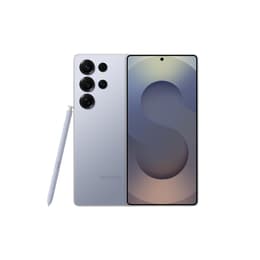
Galaxy S25 Ultra
Galaxy S25 Ultra
Starting at

Refurbished price:A$1,122.00

Versus A$2,149.00 new

See options
Google Pixel 8a
Google Pixel 8a
Starting at

Refurbished price:A$464.00

Versus A$938.69 new

See options

The Samsung Galaxy S25 Ultra, released in February 2025, and the Google Pixel 8A, launched in May 2024, represent distinct approaches to the smartphone experience. While the Galaxy S25 Ultra is a premium flagship device offering advanced hardware and extensive features, the Pixel 8A focuses on delivering a strong user experience through software optimization and artificial intelligence in a more accessible package. Both devices run on the Android operating system, with each manufacturer providing their unique software overlay and feature sets.

Scores

Durability

The longevity of a smartphone is significantly influenced by its release timeline, software support, and physical durability.

  • Release Timeline and OS Support: The Galaxy S25 Ultra, released in February 2025, and the Pixel 8A, released in May 2024, both benefit from extensive software support. Samsung guarantees seven years of Android OS upgrades and security updates for the S25 Ultra, meaning support will extend until approximately 2032. Similarly, the Pixel 8A also receives seven years of OS updates, security patches, and Pixel Feature Drops, ensuring support until at least 2031. This commitment from both manufacturers provides a long practical lifespan for software functionality and security.
  • Physical Durability: The Galaxy S25 Ultra features Corning Gorilla Armor 2 on its display, which offers enhanced scratch resistance and can withstand drops from greater heights compared to conventional glass. Its frame is constructed from titanium, contributing to overall robustness. The Pixel 8A uses Corning Gorilla Glass 3 for its display and has an aluminum frame with a plastic back. Both devices offer dust and water resistance, with the S25 Ultra rated IP68 and the Pixel 8A rated IP67, indicating strong protection against environmental elements.
  • Expected Practical Lifespan: With comparable long-term software support, both devices are designed to remain functional and secure for many years. The S25 Ultra's more advanced display protection and premium build materials may offer a slight edge in resisting physical wear and tear over an extended period.

Release year

2025

2024

Operating system

Android

Android

Foldable

No

No

Performance

Performance is a key differentiator, impacting how smoothly applications run and how efficiently the device handles demanding tasks.

  • Processor Capabilities: The Galaxy S25 Ultra is equipped with a current-generation flagship processor, specifically optimized for Samsung devices, which allows it to handle highly demanding applications, intensive multitasking, and advanced gaming with exceptional fluidity. The Pixel 8A features Google's Tensor G3 processor, providing a responsive experience for everyday tasks, efficient AI processing, and smooth navigation through the operating system.
  • Memory and Storage: The S25 Ultra typically comes with 12GB of RAM, with some configurations offering 16GB, enabling seamless switching between numerous applications and maintaining performance under heavy loads. Storage options range from 256GB up to 1TB. The Pixel 8A includes 8GB of RAM, which is sufficient for smooth multitasking for most users, and offers 128GB or 256GB of internal storage.
  • Battery Behavior: The Galaxy S25 Ultra houses a 5000 mAh battery, generally providing extended usage that can last beyond a full day for many users, even with moderate to heavy activity. It also supports faster wired and wireless charging. The Pixel 8A has a 4492 mAh battery, which is optimized for all-day use, with users often reporting it comfortably lasts through a typical day. Its charging speeds are more modest compared to the S25 Ultra.

Memory (GB)

12 GB

8 GB

Screen quality

The display is the primary interface for interaction, and differences in technology and specifications can significantly affect the visual experience.

  • Display Technology and Clarity: The Galaxy S25 Ultra features a large 6.9-inch Dynamic LTPO AMOLED 2X display with a QHD+ resolution (3120x1440 pixels), offering exceptional sharpness and detail. The Pixel 8A has a 6.1-inch OLED display with an FHD+ resolution (1080x2400 pixels), providing clear and vibrant visuals for its size.
  • Brightness and Refresh Rate: Both devices offer a smooth viewing experience with a 120Hz refresh rate. The S25 Ultra's display can reach a peak brightness of up to 2600 nits, ensuring excellent visibility even in bright outdoor conditions, and features an anti-reflective coating. The Pixel 8A's display can achieve up to 2000 nits peak brightness, also providing good outdoor legibility.
  • Viewing Experience: The S25 Ultra's larger screen and higher resolution are well-suited for immersive media consumption and detailed productivity tasks. The Pixel 8A's more compact screen size makes it easier for one-handed use and portability, while still delivering a high-quality visual experience.

Resolution

1440x3120

1080 x 2400

Audiovisual

Camera capabilities are a significant factor for many users, with both devices offering distinct strengths in photography and videography.

  • Rear Camera Systems: The Galaxy S25 Ultra boasts a versatile quad-camera setup, including a 200MP main sensor, a 50MP ultrawide lens, a 10MP telephoto lens with 3x optical zoom, and a 50MP periscope telephoto lens offering 5x optical zoom and up to 10x optical quality zoom. This configuration provides extensive flexibility for various shooting scenarios, from wide landscapes to distant subjects. The Pixel 8A features a dual-camera system with a 64MP main sensor and a 13MP ultrawide lens, relying heavily on Google's computational photography for image enhancement.
  • Photography Performance: The S25 Ultra excels in capturing highly detailed images across its multiple lenses, with advanced features like a Quad Tele System and Expert RAW mode for professional-level control. Its larger sensors and wider apertures contribute to strong low-light performance. The Pixel 8A leverages its powerful AI features, such as Magic Editor, Best Take, and Night Sight, to produce consistently good photos in various conditions, often simplifying complex edits.
  • Video Recording Quality: The S25 Ultra supports up to 8K video recording at 30 frames per second from multiple lenses and offers 10-bit HDR video, providing high-resolution and dynamic range for videographers. The Pixel 8A records video at up to 4K resolution at 60 frames per second, with features like Audio Magic Eraser to improve sound quality in recordings.

Miscellaneous

Beyond core specifications, several practical elements contribute to the overall user experience and device utility.

  • Connectivity and Ports: The Galaxy S25 Ultra supports the latest Wi-Fi 7 standard, along with 5G and advanced Bluetooth, ensuring fast and reliable wireless connections. It features a USB-C port for charging and data transfer. The Pixel 8A also offers 5G connectivity, Wi-Fi, and Bluetooth, and uses a USB-C port. Neither device includes a traditional 3.5mm headphone jack.
  • Sensors and Biometrics: Both phones incorporate in-screen fingerprint sensors for secure unlocking. The S25 Ultra uses an ultrasonic sensor, while the Pixel 8A uses an optical sensor and also offers face recognition for convenient access. The S25 Ultra also includes the integrated S Pen, providing precise input for notes, drawings, and navigation.
  • Design and Handling: The S25 Ultra features a premium design with a titanium frame and Gorilla Armor 2 glass, giving it a substantial feel. Its larger dimensions (162.8 x 77.6 x 8.2 mm) and weight (218g) are characteristic of a flagship device. The Pixel 8A has a more compact form factor (152.1 x 72.7 x 8.9 mm) and lighter weight (188g), making it easier to handle with one hand. Its design includes an aluminum frame and a plastic back, with a distinctive camera visor.

Weight

218 oz

188 oz

Screen size (in)

6.9

6.1

Network

5G

5G

SIM card

Physical SIM + eSIM

Physical SIM + eSIM

Carrier compatibility

Unlocked

Unlocked

User sentiment for the Samsung Galaxy S25 Ultra often highlights its exceptional display, powerful camera system with versatile zoom capabilities, and robust performance for demanding tasks. Users appreciate the integrated S Pen for productivity and creative work. Some common observations include its larger size and weight, which can be a consideration for those preferring a more compact device. The extensive software support is also a frequently praised aspect, offering long-term value.

For the Google Pixel 8A, users frequently commend its strong camera performance, particularly its AI-driven features that simplify photography and enhance results. The consistent software experience, timely updates, and the promise of seven years of support are also highly valued. Its more compact size and comfortable handling are often cited as positives. Some users note that while battery life is generally good for a day, charging speeds are not as fast as some competitors. The display bezels are occasionally mentioned as a design aspect that could be improved.

Users prioritizing a top-tier camera system with advanced zoom, a large and highly detailed display, and maximum raw performance for intensive applications will find the Samsung Galaxy S25 Ultra well-suited to their needs. Its premium build and integrated S Pen cater to those seeking a comprehensive flagship experience. Conversely, users who value a streamlined software experience, exceptional computational photography, and a more compact form factor will likely lean towards the Google Pixel 8A. It offers a strong balance of features and performance, particularly for those who appreciate Google's AI integrations and long-term software commitment. Both devices offer quality-assured refurbished options, providing an eco-friendly alternative for consumers.


See all articles

Our recent comparisons