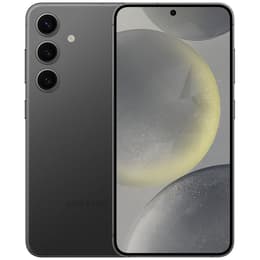

Galaxy S24 vs Google Pixel 9 Pro XL

Galaxy S24
Galaxy S24
Starting at

Refurbished price:A$622.00

Versus A$1,841.10 new

See options
Google Pixel 9 Pro XL
Starting at

Refurbished price:A$853.00

Versus A$1,849.00 new

See options

Ratings

The Samsung Galaxy S24, released in January 2024, and the Google Pixel 9 Pro XL, launched in August 2024, represent two distinct approaches to high-end Android smartphones. While both devices offer premium experiences, they differentiate themselves through their core philosophies: Samsung emphasizes a refined hardware ecosystem and broad feature set, while Google focuses on advanced computational photography and integrated artificial intelligence. Both run on the Android operating system, providing a familiar software environment with their respective custom interfaces.

Scores

Durability

Evaluating the longevity of a smartphone involves considering its software support, physical resilience, and overall build quality.

  • Software Support: Both the Samsung Galaxy S24 and the Google Pixel 9 Pro XL offer an extensive commitment to software updates. The Galaxy S24 is promised seven years of Android OS and security updates, extending its support until Android 21 in 2031. Similarly, the Google Pixel 9 Pro XL also guarantees seven years of Android OS and security updates, ensuring it receives updates until Android 22.
  • Physical Durability: The Galaxy S24 features an Armor Aluminum frame and Corning Gorilla Glass Victus 2 for screen protection, contributing to its resilience against drops and scratches. The Pixel 9 Pro XL also incorporates robust build materials, with its display protected by Corning Gorilla Glass Victus 2, and a design that includes rounded corners and flat edges. Both devices carry an IP68 rating for dust and water resistance, indicating a high level of protection against environmental elements.
  • Expected Lifespan: With identical long-term software support, both devices are designed to remain current and secure for an extended period. Users can expect a practical lifespan of several years, with the choice between them largely depending on preference for design and ecosystem rather than inherent durability differences.

Release year

2024

2024

Compatible with latest Update

Yes

Yes

Operating system

Android

Android

Foldable

No

No

Performance

Performance in modern smartphones extends beyond raw processing power, encompassing how smoothly applications run, the efficiency of multitasking, and overall system responsiveness.

  • Processing Capabilities: The Samsung Galaxy S24 is powered by either a Snapdragon 8 Gen 3 processor in some regions or an Exynos 2400 in others, both designed to handle demanding applications and provide a responsive user experience. The Google Pixel 9 Pro XL utilizes Google's Tensor G4 chip, which is optimized for artificial intelligence tasks and aims to deliver seamless performance across daily usage and advanced computational features.
  • Multitasking and Responsiveness: The Galaxy S24 typically comes with 8GB of RAM, allowing for efficient multitasking and smooth transitions between applications. The Pixel 9 Pro XL offers a more substantial 16GB of RAM, which provides considerable headroom for running numerous applications simultaneously and managing intensive background processes without slowdowns. Both devices offer fast storage options, with the S24 using UFS 4.0 for higher capacities and the Pixel 9 Pro XL also featuring ample storage configurations.
  • Battery Behavior: The Galaxy S24 is equipped with a 4000 mAh battery, generally providing around 1.5 days or 34 hours of typical use, with support for 25W wired fast charging and wireless charging. The Pixel 9 Pro XL houses a larger 5060 mAh battery, which often translates to up to two days of use or over 49 hours on a single charge, also supporting fast charging. Users report that the Pixel 9 Pro XL's battery life is a significant highlight, even for heavy users.

Memory (GB)

12 GB

16 GB

Screen quality

The display is a primary interface for smartphone interaction, and both devices offer high-quality visual experiences with distinct characteristics.

  • Display Technology and Clarity: The Samsung Galaxy S24 features a 6.2-inch Dynamic AMOLED 2X display with a Full HD+ resolution (2340x1080 pixels), providing clear and vibrant visuals. The Google Pixel 9 Pro XL boasts a larger 6.8-inch OLED display with a higher resolution of 2992 x 1344 pixels, resulting in a slightly higher pixel density for sharper images. Both utilize OLED technology, known for deep blacks and excellent contrast.
  • Brightness and Refresh Rate: The Galaxy S24's display can reach a peak brightness of 2600 nits, ensuring good visibility even in bright outdoor conditions. It also features an adaptive refresh rate ranging from 1Hz to 120Hz, optimizing smoothness and battery efficiency. The Pixel 9 Pro XL's OLED screen offers a peak brightness of 2000 nits for HDR content and up to 3000 nits for general use, making it exceptionally bright. Its refresh rate is also adaptive, ranging from 1Hz to 120Hz, contributing to fluid scrolling and power savings.
  • Viewing Experience: The S24 offers a compact viewing experience, while the Pixel 9 Pro XL provides a more expansive canvas, suitable for media consumption and productivity. Both displays are praised for their color accuracy and overall visual quality, with the Pixel 9 Pro XL's larger size and slightly higher resolution potentially offering a more immersive experience for some users.

Resolution

1080x2340

1344 x 2992

Screen type

Dynamic LTPO AMOLED 2X

LTPO OLED

Audiovisual

Both the Galaxy S24 and Pixel 9 Pro XL are equipped with advanced camera systems, each with its strengths in capturing images and videos.

  • Rear Camera Systems: The Samsung Galaxy S24 features a versatile triple-camera setup: a 50MP main sensor with optical image stabilization (OIS), a 12MP ultrawide lens, and a 10MP telephoto lens offering 3x optical zoom with OIS. The Google Pixel 9 Pro XL also comes with a triple-camera array, including a 50MP main sensor (f/1.6, OIS), a 48MP ultrawide lens (f/1.7), and a 48MP telephoto lens with 5x optical zoom and 30x Super Res Zoom, also with OIS.
  • Photography Performance: The Galaxy S24 produces detailed images with natural colors, showing improvements in image processing over previous models. Its low-light performance is strong on the main sensor, though the ultrawide lacks autofocus, and the telephoto can struggle in very dim conditions. The Pixel 9 Pro XL is known for its exceptional photos with natural colors and crisp details, particularly excelling in low-light photography across all three cameras due to its computational photography.
  • Video and Selfie Capabilities: The S24 supports 8K video recording at 30 frames per second and 4K slow-motion at 120 frames per second. Its 12MP front camera includes autofocus, providing clear selfies. The Pixel 9 Pro XL offers 4K video recording at 60 frames per second and 4K HDR at 30 frames per second, with a cloud-based Video Boost feature for upscaling to 8K. Its 42MP front camera also features autofocus, delivering sharp and bright selfies, even in challenging lighting. Both devices offer good microphone quality for calls and recording, and stereo speakers for media consumption.

Main camera

50 megapixels

50 megapixels

Front camera

12 megapixels

42 megapixels

Miscellaneous

Beyond core performance and camera, several practical elements contribute to the overall user experience of these smartphones.

  • Connectivity and Ports: Both the Galaxy S24 and Pixel 9 Pro XL support 5G connectivity for fast mobile data speeds. The S24 includes Wi-Fi 802.11 ax and Bluetooth v5.30, along with a USB Type-C port for charging and data transfer. The Pixel 9 Pro XL also features modern Wi-Fi standards, Bluetooth, and a USB-C port.
  • Sensors and Biometrics: The Galaxy S24 incorporates an ultrasonic in-display fingerprint sensor for secure unlocking and authentication. The Pixel 9 Pro XL also uses an in-display fingerprint sensor, alongside advanced face recognition for convenient access.
  • Design and Handling: The Galaxy S24 is a more compact device, measuring 147.00 x 70.60 x 7.60mm and weighing 168 grams, making it comfortable for one-handed use. It features a sleek design with an Armor Aluminum frame. The Pixel 9 Pro XL is larger, with dimensions of 162.8 x 76.6 x 8.5 mm, and a weight of 199 grams, offering a more expansive screen but a less compact feel. Its design includes rounded corners and a distinctive camera bar.

Weight

167 oz

221 oz

Screen size (in)

6.2

6.8

Network

5G

5G

SIM card

Physical SIM + eSIM

Physical SIM + eSIM

Carrier compatibility

Unlocked

Unlocked

User feedback for the Samsung Galaxy S24 often highlights its compact size, premium build, and robust performance as key strengths. Many appreciate its useful AI features and the significant commitment to seven years of software support. Some users note that while the camera system is capable, it may not always produce the most natural colors compared to some competitors, and the device can become warm during extended gaming sessions.

The Google Pixel 9 Pro XL receives praise for its top-tier camera system, consistently delivering exceptional photos with natural colors and strong low-light capabilities. Its long battery life and strong wireless connections are also frequently cited as positives. However, some initial AI features were considered underdeveloped at launch, and its larger size and weight might not appeal to all users. Occasional reports of the device warming during heavy use have also been noted.

For users prioritizing a compact form factor with a premium feel and a balanced feature set across performance and camera, the Samsung Galaxy S24 is a compelling choice. Its extensive software support ensures long-term usability. Conversely, individuals who prioritize cutting-edge computational photography, a larger display for media, and extended battery life, even in a larger device, may find the Google Pixel 9 Pro XL better suited to their needs. Both devices offer a quality-assured refurbished option, providing an eco-friendly alternative for consumers seeking to make informed and sustainable choices.

See all articles

Our recent comparisons