

Galaxy S24 vs Google Pixel 7

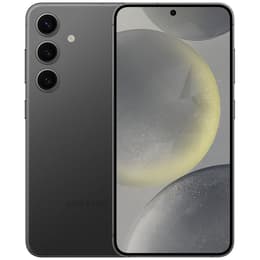
Galaxy S24
Galaxy S24
Starting at

Refurbished price:A$622.00

Versus A$1,841.10 new

See options
Google Pixel 7
Google Pixel 7
Starting at

Refurbished price:A$348.00

Versus A$879.00 new

See options

Ratings

The Samsung Galaxy S24, released in January 2024, and the Google Pixel 7, launched in October 2022, represent distinct approaches to the modern smartphone experience. While both operate on the Android platform, the Galaxy S24 emphasizes advanced hardware and a comprehensive feature set, including a longer software support commitment, while the Pixel 7 focuses on a streamlined software experience and computational photography prowess. These differences cater to varying user priorities in daily mobile usage.

Scores

Durability

When considering the longevity of these devices, several factors come into play, including their release timelines, software support, and repairability.

  • Release Timeline: The Galaxy S24 is a more recent device, launched in January 2024, giving it a significant advantage in terms of its lifecycle compared to the Google Pixel 7, which was released in October 2022.
  • Software Longevity: Samsung has committed to providing seven years of OS and security updates for the Galaxy S24, extending its software support well into the future. The Google Pixel 7, while offering a strong software experience, typically receives three major Android OS updates and five years of security patches. This means the Galaxy S24 will receive updates for a considerably longer period.
  • Repairability: The Galaxy S24 generally receives a high repairability score, with some assessments placing it around 8.0 to 9.0 out of 10, noting accessible components like the battery. The Google Pixel 7 has a moderate repairability score, often rated around 6.0 to 7.0 out of 10, with some components like the charging port being more challenging to replace.

Release year

2024

2022

Compatible with latest Update

Yes

Yes

Foldable

No

No

Performance

The performance of a smartphone is crucial for handling daily tasks, from browsing to demanding applications and gaming.

  • Processing Power: The Galaxy S24 features a more recent-generation processor, which translates to faster app loading times, smoother transitions, and more efficient handling of intensive tasks and multitasking. Users engaging in heavy gaming or complex productivity apps may notice a difference in responsiveness. The Pixel 7, powered by its custom-designed processor, delivers a fluid experience for everyday use and excels in AI-driven tasks, though it may exhibit some warming under sustained heavy loads.
  • Multitasking and Storage: Both devices typically come with 8GB of RAM, allowing for competent multitasking. The Galaxy S24 also offers a 12GB RAM option in some configurations, which can provide additional headroom for power users. Both offer 128GB or 256GB storage options, with the Galaxy S24 also having a 512GB variant.
  • Battery Behavior: The Pixel 7 has a larger battery capacity at 4355 mAh compared to the Galaxy S24's 4000 mAh. However, real-world battery life can be influenced by software optimization and display technology. Some users report the Pixel 7's battery life as sufficient for a full day of moderate use, while others note it can drain faster under heavy usage. The Galaxy S24, despite its slightly smaller battery, often achieves comparable or slightly better endurance due to its more efficient processor and display technology.

Memory (GB)

12 GB

8 GB

Screen quality

The display is a primary interface for any smartphone, impacting everything from content consumption to daily interactions.

  • Display Technology and Refresh Rate: The Galaxy S24 features a 6.2-inch Dynamic AMOLED 2X display with a dynamic refresh rate that can scale from 1Hz to 120Hz, providing smooth scrolling and adaptive power efficiency. The Pixel 7 has a 6.3-inch AMOLED display with a 90Hz refresh rate, offering a generally smooth visual experience.
  • Brightness and Clarity: The Galaxy S24 offers significantly higher peak brightness, reaching up to 2600 nits, which enhances visibility in bright outdoor conditions and improves HDR content viewing. The Pixel 7's display reaches a peak brightness of 1400 nits, which is still ample for most environments. Both displays offer crisp visuals with resolutions of 1080 x 2340 pixels for the S24 and 1080 x 2400 pixels for the Pixel 7.
  • Color Representation: While the Galaxy S24's display is known for its vibrant colors, some initial user feedback noted a more muted color profile compared to previous Samsung models, which Samsung stated was an intentional adjustment for a more natural viewing experience. The Pixel 7's display is generally praised for its accurate color calibration.

Resolution

1080x2340

1080 x 2400

Screen type

Dynamic LTPO AMOLED 2X

AMOLED

Audiovisual

Both smartphones offer capable camera systems, leveraging advanced hardware and computational photography to capture images and videos.

  • Rear Camera System: The Galaxy S24 features a versatile triple-camera setup, including a 50-megapixel main sensor, a 12-megapixel ultrawide lens, and a 10-megapixel telephoto lens with 3x optical zoom. This provides flexibility for various shooting scenarios, including zoomed-in shots. The Pixel 7 comes with a dual-camera system, comprising a 50-megapixel main sensor and a 12-megapixel ultrawide lens.
  • Photography Performance: The Pixel 7 is widely recognized for its computational photography, often producing natural-looking images with excellent dynamic range, particularly in challenging lighting conditions. The Galaxy S24 also delivers detailed and vibrant photos, with some users noting its 12MP mode can offer good noise handling and sharpening. However, some users have reported issues with the S24's camera, including jerky zoom transitions and occasional washed-out photos.
  • Video Recording and Front Camera: The Galaxy S24 supports video recording up to 8K at 30 frames per second, offering high-resolution video capabilities. The Pixel 7 records video up to 4K at 60 frames per second. For selfies, the Galaxy S24 has a 12-megapixel front camera, while the Pixel 7 features a 10.8-megapixel front camera.
  • Audio Experience: Both devices include stereo speakers, providing a more immersive audio experience for media consumption.

Main camera

50 megapixels

50 megapixels

Front camera

12 megapixels

10.8 megapixels

Miscellaneous

Beyond core features, several practical elements contribute to the overall user experience and device utility.

  • Connectivity and Ports: Both the Galaxy S24 and the Pixel 7 support 5G connectivity, ensuring access to the latest mobile network speeds. They also feature modern Wi-Fi standards and Bluetooth for wireless connections. Both devices utilize a USB-C port for charging and data transfer, and neither includes a traditional 3.5mm headphone jack.
  • Biometrics and Sensors: Both smartphones incorporate in-display fingerprint sensors for secure unlocking. The Pixel 7's fingerprint sensor initially received some criticism for its speed and reliability, though software updates have improved its performance. Both devices also offer face recognition for convenient unlocking.
  • Build Materials and Durability: The Galaxy S24 features an Armor Aluminum frame and Gorilla Glass Victus 2 on the front and back, contributing to its durability. The Pixel 7 also uses Gorilla Glass Victus for its display and back, with an aluminum frame. Both devices carry an IP68 rating for dust and water resistance, indicating protection against immersion in water.
  • Dimensions and Handling: The Galaxy S24 is slightly more compact and lighter, measuring 147.00 x 70.60 x 7.60 mm and weighing 167 grams. The Pixel 7 is a bit larger and heavier at 155.6 x 73.2 x 8.7 mm and 197 grams. These differences can impact one-handed use and pocketability.

Weight

167 oz

212 oz

Screen size (in)

6.2

6.3

SIM card

Physical SIM + eSIM

Physical SIM + eSIM

Carrier compatibility

Unlocked

Unlocked

The Samsung Galaxy S24 and Google Pixel 7 each offer compelling features, appealing to different user preferences. The Galaxy S24 is often praised for its bright, high-refresh-rate display, its more recent processor offering robust performance for demanding applications, and Samsung's extended software support commitment. Some users, however, have noted initial concerns regarding display color calibration and camera performance in specific scenarios, particularly with the Exynos variants.

The Google Pixel 7 is frequently lauded for its exceptional computational photography, delivering consistent and natural-looking images, and its clean, user-friendly Android experience. Common criticisms have included reports of inconsistent battery life for heavy users, occasional heating under load, and initial issues with the in-display fingerprint sensor.

Users prioritizing a device with the longest possible software support, a very bright and smooth display, and a powerful processor for intensive tasks may find the Galaxy S24 well-suited to their needs. Conversely, those who value a streamlined Android experience, a camera system renowned for its image processing, and a slightly larger battery capacity might lean towards the Google Pixel 7. Both devices offer a quality-assured refurbished option, providing an eco-friendly alternative for consumers.

See all articles

Our recent comparisons