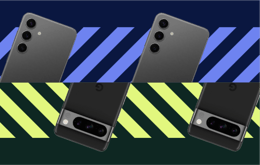

Galaxy S24 Ultra vs Google Pixel 7a

Galaxy S24 Ultra
Galaxy S24 Ultra
Starting at

Refurbished price:A$825.00

Versus A$1,899.00 new

See options
Google Pixel 7a
Google Pixel 7a
Starting at

Refurbished price:A$336.00

Versus A$749.00 new

See options

Ratings

The Samsung Galaxy S24 Ultra, released in January 2024, and the Google Pixel 7a, launched in May 2023, represent distinct offerings within the Android smartphone market. While the S24 Ultra stands as a premium device, the Pixel 7a is positioned as a more accessible option, both running on the Android operating system. The primary distinctions lie in their overall build, camera capabilities, and the level of performance they offer for different user needs.

Scores

Durability

When considering the long-term usability of these devices, their release timelines and software support policies are key factors. The Galaxy S24 Ultra, being a newer device, benefits from an extended support period compared to the Pixel 7a.

  • Software Longevity: The Samsung Galaxy S24 Ultra is set to receive seven years of OS upgrades and security updates, extending its software support until 2031. This commitment ensures a prolonged period of up-to-date features and security. The Google Pixel 7a, released earlier, is assured of OS updates until May 2026 and security updates until May 2028.
  • Physical Durability: The S24 Ultra features a robust build with a titanium frame and Corning Gorilla Glass Armor on the front, offering enhanced resistance against drops and scratches. It also boasts an IP68 rating for dust and water resistance. The Pixel 7a incorporates Corning Gorilla Glass 3 for screen protection and has an IP67 rating for dust and water resistance.
  • Repairability: The Galaxy S24 Ultra has received a high repairability score, with some assessments giving it a 9 out of 10, noting ease of battery replacement and component access. The Pixel 7a initially scored a 4/10 on the iFixit repairability scale, later uprated to 5/10 after Google provided service manuals.

Release year

2024

2022

Compatible with latest Update

Yes

Yes

Operating system

Android

Android

Foldable

No

No

Performance

The performance of a smartphone impacts everything from app responsiveness to gaming experiences. Both devices handle everyday tasks, but their underlying hardware leads to different capabilities for demanding applications.

  • Processor Capabilities: The Galaxy S24 Ultra is equipped with a current-generation processor that handles demanding apps and multitasking smoothly, providing significant performance headroom for intensive tasks like advanced gaming and video editing. The Pixel 7a features a processor designed for efficient performance in daily use and Google's computational photography, though some users have reported it can get warm during processor-intensive tasks.
  • Multitasking and Storage: The S24 Ultra typically comes with 12GB of RAM, providing ample capacity for seamless multitasking and running numerous applications simultaneously. Storage options for the S24 Ultra range from 256GB up to 1TB. The Pixel 7a features 8GB of RAM, which is sufficient for most users' multitasking needs, and comes with 128GB of internal storage as its sole option.
  • Battery Behavior: The Galaxy S24 Ultra houses a 5000 mAh battery, with users frequently praising its ability to last a full day even with heavy usage. The Pixel 7a has a 4385 mAh battery, and some users have reported rapid battery drain, especially under certain conditions or with heavy use.

Memory (GB)

12 GB

8 GB

Screen quality

The display is a primary interface for any smartphone, and both devices offer viewing experiences, though with notable differences in size, technology, and clarity.

  • Display Technology and Clarity: The Samsung Galaxy S24 Ultra features a large 6.8-inch Dynamic AMOLED 2X display with a high resolution of 3088x1440 pixels, resulting in a sharp and detailed image. The Google Pixel 7a has a more compact 6.1-inch OLED display with a resolution of 1080 x 2400 pixels, providing clear visuals for its size.
  • Brightness and Refresh Rate: The S24 Ultra's display offers high peak brightness, making it suitable for outdoor visibility, and features an adaptive refresh rate that can range from 1Hz to 120Hz for smooth scrolling and power efficiency. The Pixel 7a offers a 90Hz refresh rate, providing a smoother experience than standard 60Hz displays, and its OLED panel delivers good contrast.
  • Screen Protection: The S24 Ultra utilizes Corning Gorilla Glass Armor for enhanced scratch resistance and durability. The Pixel 7a is protected by Corning Gorilla Glass 3.

Resolution

1440 x 3120

1080 x 2400

Screen type

Dynamic LTPO AMOLED 2X

OLED

Audiovisual

Both smartphones offer capable camera systems, but they cater to different photography needs with varying sensor configurations and computational strengths.

  • Rear Camera System: The Galaxy S24 Ultra features a versatile quad-camera setup, including a 200MP main sensor, a 12MP ultrawide, a 50MP telephoto with 5x optical zoom, and a 10MP telephoto with 3x optical zoom, allowing for detailed shots across various focal lengths. The Pixel 7a has a dual-camera system with a 64MP main sensor and a 13MP ultrawide lens, known for its consistent image processing.
  • Photography Performance: The S24 Ultra excels in capturing high-resolution images and offers advanced zoom capabilities, with users noting its ability to produce detailed photos. The Pixel 7a is praised for its computational photography, delivering balanced and natural-looking photos in various conditions, particularly in everyday point-and-shoot scenarios.
  • Video Recording and Front Camera: The S24 Ultra supports up to 8K video recording and features a 12MP front camera. The Pixel 7a records video up to 4K at 60fps and includes a 13MP ultrawide front camera.

Main camera

200 megapixels

64 megapixels

Front camera

12 megapixels

13 megapixels

Miscellaneous

Beyond the core features, several practical elements contribute to the overall user experience and differentiate these two devices.

  • Connectivity and Ports: The Galaxy S24 Ultra supports the latest Wi-Fi 7 standard, 5G connectivity, and Bluetooth 5.3, along with a USB 3.2 Type-C port. The Pixel 7a supports Wi-Fi 6E, 5G, Bluetooth 5.3, and features a USB-C 3.2 port.
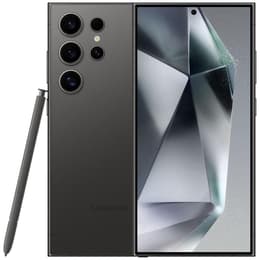
  • Biometrics and Sensors: For security, the S24 Ultra uses an ultrasonic in-screen fingerprint sensor and facial recognition. It also includes an S Pen stylus integrated into its design, offering additional productivity features. The Pixel 7a features an optical in-screen fingerprint sensor and face unlock, though some users have reported inconsistencies with the Pixel 7a's fingerprint sensor.
  • Physical Characteristics: The S24 Ultra is a larger and heavier device, measuring 162.3 x 79 x 8.6 mm and weighing 232 grams, with a titanium frame. The Pixel 7a is more compact and lighter at 152 mm x 72.9 mm x 9 mm and 193.5 grams, featuring an aluminum frame and plastic back.

Weight

232 oz

212 oz

Screen size (in)

6.8

6.1

Network

5G

5G

SIM card

Physical SIM + eSIM

Physical SIM + eSIM

Carrier compatibility

Unlocked

Unlocked

Connector

USB-C

USB-C

User feedback for the Samsung Galaxy S24 Ultra often highlights its exceptional display, long-lasting battery, and versatile camera system as strong points. Some users have noted concerns regarding camera consistency in certain scenarios and the vividness of the display compared to previous models. The integrated S Pen is also a frequently praised feature for productivity. For the Google Pixel 7a, common praise centers on its reliable camera performance, clean Android experience, and compact size. However, some users have reported issues with battery drain, the fingerprint scanner's consistency, and the device warming up during use.

Users prioritizing a large, vibrant display, extensive software support, and a highly versatile camera system with advanced zoom capabilities may find the Galaxy S24 Ultra well-suited to their needs. Its robust build and integrated S Pen also cater to those seeking a comprehensive feature set for productivity and durability. Conversely, users who prefer a more compact device, a streamlined software experience, and a camera that consistently delivers quality photos with minimal effort may lean toward the Google Pixel 7a. Its focus on computational photography and a more manageable form factor makes it a practical choice for everyday use.

Both devices offer compelling features for different user profiles. For those considering either model, exploring quality-assured refurbished options can provide an eco-friendly alternative to extend the lifecycle of these devices.


See all articles

Our recent comparisons