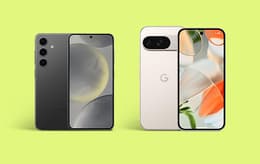
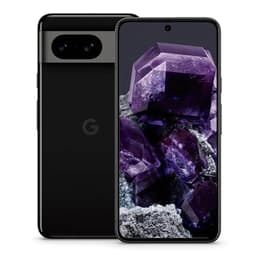

Galaxy S23 FE vs Google Pixel 8

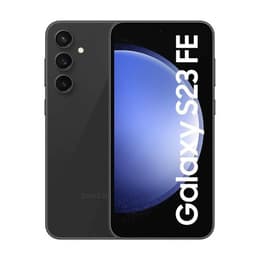
Galaxy S23 FE
Galaxy S23 FE
Starting at

Refurbished price:A$380.00

Versus A$1,172.00 new

See options
Google Pixel 8
Google Pixel 8
Starting at

Refurbished price:A$463.00

Versus A$1,245.00 new

See options

Ratings

The Samsung Galaxy S23 FE and the Google Pixel 8, both released in October 2023, are contemporary Android smartphones offering distinct experiences. While the Galaxy S23 FE provides a balanced feature set with a dedicated telephoto camera, the Google Pixel 8 emphasizes advanced computational photography and AI-driven software, alongside a commitment to extended software support. Both devices run on the Android operating system, providing users with a wide array of customization and application options.

Scores

Durability

When considering the long-term usability of these devices, their release timelines and software support are key differentiators.

  • Software Longevity: The Google Pixel 8 stands out with a commitment to seven years of operating system and security updates from its release, extending support into 2030. The Galaxy S23 FE, by comparison, is expected to receive four major OS updates and five years of security updates.
  • Build Materials: Both phones feature an aluminum frame and IP68 dust and water resistance, indicating good protection against environmental elements. The Pixel 8 uses Gorilla Glass Victus for its front and back, offering enhanced scratch and drop protection. The Galaxy S23 FE uses Gorilla Glass 5, which provides a good level of protection but is an older generation.
  • Practical Lifespan: Users prioritizing the longest possible software support and security updates will find the Pixel 8's extended commitment beneficial for a prolonged practical lifespan. The Galaxy S23 FE offers solid durability for its class, but its software support window is shorter.

Release year

2023

2023

Compatible with latest Update

Yes

Yes

Operating system

Android

Android

Foldable

No

No

Performance

Both devices offer robust performance for daily tasks, though their underlying hardware is optimized for different strengths.

  • Everyday Responsiveness: Both the Galaxy S23 FE and the Google Pixel 8 handle demanding applications, multitasking, and web browsing smoothly, providing a fluid user experience. Users generally report snappy performance for common tasks on both devices.
  • Demanding Tasks and Gaming: The Pixel 8, powered by its current-generation processor, tends to offer more consistent performance during extended gaming sessions and demanding tasks, even if it can get warm. The Galaxy S23 FE, depending on the region, uses a processor that some users report can lead to noticeable heating and occasional performance throttling during graphically intensive games or prolonged heavy use.
  • Battery Behavior: The Galaxy S23 FE is equipped with a 4500 mAh battery, while the Pixel 8 has a slightly larger 4575 mAh battery. Real-world battery life for both devices typically lasts a full day for average users, with variations depending on usage patterns and software optimization. Some reports suggest the S23 FE can offer slightly longer screen-on-time in certain usage scenarios, while others find the Pixel 8's battery life to be better overall.

Memory (GB)

8 GB

8 GB

Screen quality

The display quality on both smartphones offers a vibrant viewing experience, with some key differences in size and brightness.

  • Display Technology and Clarity: The Galaxy S23 FE features a 6.4-inch Dynamic AMOLED 2X display with a resolution of 2340 x 1080 pixels. The Pixel 8 uses a 6.2-inch Actua OLED panel with a resolution of 2400 x 1080 pixels. Both technologies deliver deep blacks, excellent contrast, and vibrant colors, providing a clear viewing experience for media consumption and daily use.
  • Brightness Levels: The Pixel 8's display can reach a peak brightness of 2000 nits, making it exceptionally visible in bright outdoor conditions. The Galaxy S23 FE offers a peak brightness of 1450 nits, which is also very good for most environments and remains easily viewable in sunlight.
  • Refresh Rate and Smoothness: Both devices feature a 120Hz refresh rate, contributing to smooth scrolling and fluid animations. This higher refresh rate enhances the overall responsiveness of the user interface.

Resolution

1080 x 2340

1080 x 2400

Screen type

Dynamic AMOLED 2X

OLED

Audiovisual

Both smartphones offer capable camera systems, but they approach photography with different strengths and hardware configurations.

  • Rear Camera System: The Google Pixel 8 features a dual-camera setup with a 50-megapixel main sensor and a 12-megapixel ultrawide lens. The Samsung Galaxy S23 FE has a triple-camera system, including a 50-megapixel main sensor, a 12-megapixel ultrawide lens, and an 8-megapixel telephoto lens with 3x optical zoom.
  • Photography Performance: The Pixel 8 is widely praised for its advanced computational photography, which excels in producing detailed and color-accurate images, particularly in low-light conditions and with features like Night Sight. The Galaxy S23 FE's camera system also performs well in various lighting conditions, offering vibrant images, and its dedicated telephoto lens provides versatility for zoomed shots that the Pixel 8 achieves through digital zoom.
  • Video Recording and Front Camera: Both phones are capable of recording 4K video at 60 frames per second from their rear cameras, with the S23 FE also offering 8K video recording at 24 frames per second. The front cameras on both devices are capable of capturing detailed selfies and video calls, with the Pixel 8 featuring a 10.5-megapixel sensor and the S23 FE a 10-megapixel sensor, both supporting 4K 60fps video.

Main camera

50 megapixels

50 megapixels

Front camera

10 megapixels

10.5 megapixels

Miscellaneous

Beyond core features, several practical elements distinguish these two devices in daily use, impacting convenience and user interaction.

  • Connectivity and Ports: Both phones support 5G networks and Bluetooth 5.3 for wireless connections. The Pixel 8 includes the newer Wi-Fi 7 standard, offering potentially faster and more reliable wireless connections compared to the S23 FE's Wi-Fi 6E. Both devices utilize a USB-C port for charging and data transfer, but the Galaxy S23 FE also supports Samsung DeX and video output, which the Pixel 8 does not. Neither phone includes a 3.5mm headphone jack or a microSD card slot.
  • Biometric Security: Both smartphones feature an in-display optical fingerprint scanner for secure unlocking. The Pixel 8 also offers face recognition for unlocking. Some users have noted that the S23 FE's fingerprint scanner can be more reliable than the Pixel 8's.
  • Physical Design and Handling: The Galaxy S23 FE is slightly larger and heavier at 158 x 76.5 x 8.2 mm and 209 grams, featuring a 6.4-inch display. The Pixel 8 is more compact and lighter at 150.5 x 70.8 x 8.9 mm and 187 grams, with a 6.2-inch display, potentially making it easier for one-handed use.

Weight

209 oz

187 oz

Screen size (in)

6.4

6.2

Network

5G

5G

SIM card

Physical SIM

Physical SIM + eSIM

Carrier compatibility

Unlocked

Unlocked

The Samsung Galaxy S23 FE and Google Pixel 8 both offer compelling Android experiences, catering to slightly different user priorities. The Galaxy S23 FE is often praised for its balanced feature set, including a dedicated telephoto camera, and its vibrant display. Some users note that its processor performance can vary by region, and it may experience heating during intense tasks. Its software support timeline is also shorter compared to the Pixel 8.

The Google Pixel 8 receives acclaim for its exceptional computational photography, long-term software update commitment, and its more compact design. User feedback highlights its smooth software experience and generally good battery life, though some have reported initial issues with the fingerprint reader or occasional overheating.

Users who prioritize a dedicated telephoto lens for versatile photography and a slightly larger display may find the Galaxy S23 FE well-suited to their needs. Those who value the longest possible software support, advanced AI features, and superior computational photography, especially in low light, will likely lean towards the Google Pixel 8. Both devices offer a premium feel and robust build quality. For those seeking an eco-friendly and quality-assured alternative, considering a refurbished version of either model can be a sustainable choice.
See all articles

Our recent comparisons