
Compare models

Galaxy S22+ 5G vs Galaxy S24 FE

  • 1-year warranty
  • Free standard shipping
  • Free 30-day returns
Galaxy S22+ 5G
Starting at

Refurbished price:A$372.00

Versus A$1,690.00 new

See options
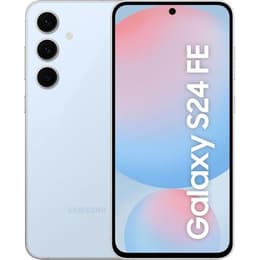
Galaxy S24 FE
Starting at

Refurbished price:A$549.00

Versus A$639.00 new

See options

Differences at a glance

The Samsung Galaxy S22+ 5G (2022) and the Samsung Galaxy S24 FE (2024) represent two distinct approaches to high-tier smartphone design, bridging flagship features with different release timelines. While the Galaxy S22+ 5G established itself as a premium larger-format device with refined materials, the Galaxy S24 FE arrives as a later generation option focusing on extended software support and modern platform adjustments. Both devices run on Android with Samsung's custom interface, though their internal hardware generations differ notably. Choosing between them involves weighing the launch timeline, physical footprint, and long-term software outlook to see which fits your daily routine.

Available Models

Colour

Storage (GB)

Scores

Durability

When evaluating the longevity of these two smartphones, differences in release years and software update policies play a central role in long-term usability.

  • Software Support Timeline: The Galaxy S24 FE benefits from a significantly extended software support window given its newer release year, while the Galaxy S22+ 5G sits further along its update lifecycle.
  • Repairability and Build: Both devices feature robust construction with glass and metal materials, though standard repair availability remains comparable across authorized service channels for both models.
  • Expected Lifespan: Users seeking maximum software longevity and security patches stretching deeper into the decade will find the newer Galaxy S24 FE well-positioned for extended use.

Release year

2022

2024

Operating system

Android

Android

Foldable

No

No

Performance

Daily operation and hardware capability differ across these models due to the two-year gap in component development and internal optimization.

  • Multitasking and Responsiveness: Both options handle demanding apps, split-screen workflows, and general navigation smoothly, though the Galaxy S24 FE utilizes a newer processing architecture for slightly improved thermal efficiency.
  • Storage and Battery Behavior: Internal storage configurations vary by region, while battery capacity differs slightly, resulting in distinct usage durations under heavy workloads.
  • System Fluidity: The newer processor generation in the Galaxy S24 FE provides minor advantages in sustained application loading speeds during intensive tasks.

Screen quality

Display characteristics on both smartphones deliver bright, sharp visuals suited for media consumption, navigation, and reading under various lighting conditions.

  • Display Technology: Both models utilize vibrant OLED display panels with deep black levels, high contrast ratios, and adaptive refresh rates for smooth scrolling.
  • Brightness and Outdoors: Peak outdoor brightness levels allow for clear readability under direct sunlight, with the newer Galaxy S24 FE offering incremental improvements in maximum luminance.
  • Size and Format: The Galaxy S22+ 5G features a slightly more expansive screen area within a slimmer profile, whereas the Galaxy S24 FE presents a comparable viewing space with slightly distinct bezel dimensions.

Resolution

1080 x 2340

1080x2340

Audiovisual

Capture capabilities and multimedia output vary slightly across the camera arrays, speaker setups, and microphone arrays of these two handsets.

  • Camera Array Versatility: Both devices house a multi-lens rear configuration including a primary wide lens, an ultra-wide sensor, and a telephoto lens with optical zoom capabilities.
  • Low-Light and Video: Image processing software on both models manages challenging lighting conditions effectively, with the newer generation leveraging updated algorithms for noise reduction.
  • Media and Audio: Stereo speaker output provides clear sound for calls and video playback, complemented by multi-microphone systems designed to isolate voice clarity during recording.

Miscellaneous

Physical handling, connectivity standards, and daily convenience features define how each smartphone integrates into everyday routines.

  • Connectivity and Ports: Both models support 5G cellular networks, modern Wi-Fi standards, Bluetooth connectivity, and utilize USB-C charging ports without traditional headphone jacks.
  • Security Sensors: In-display fingerprint scanners and facial recognition technology offer fast biometric authentication on both handsets.
  • Dimensions and Weight: The Galaxy S22+ 5G features a slightly sleeker and lighter chassis, while the Galaxy S24 FE adopts a marginally thicker footprint to accommodate its internal cooling and battery structure. Choosing a quality-assured refurbished option provides a sustainable choice that reduces electronic waste while offering reliable performance.

Weight

227 oz

213 oz

Screen size (in)

6.6

6.7

Network

5G

5G

SIM card

Physical SIM + eSIM

Physical SIM + eSIM

Carrier compatibility

Unlocked

Unlocked

What the community thinks

Real-world user feedback from community discussions highlights distinct preferences for each handset. Owners of the Galaxy S22+ 5G frequently praise its refined physical proportions, lighter handheld feel, and dependable flagship feature set. Conversely, users discussing the Galaxy S24 FE often point to its extended software update longevity and updated internal platform as major advantages for long-term ownership. Common criticisms for the older model center around natural battery capacity degradation over time, while the newer model occasionally receives remarks regarding its slightly heavier frame and wider bezels.

Users prioritizing a slimmer handheld profile and an established flagship build may find the Galaxy S22+ 5G well-suited to their preferences. Meanwhile, users prioritizing extended software support timelines and newer internal hardware generations may prefer the Galaxy S24 FE. Exploring a quality-assured refurbished option allows consumers to make an eco-friendly choice aligned with their personal technology needs. Ultimately, the decision depends on whether software longevity or physical form factor takes priority in daily use.