
Galaxy Z Flip6 vs Google Pixel 9

Galaxy Z Flip6
Galaxy Z Flip6
Starting at

Refurbished price:A$699.00

Versus A$1,649.00 new

See options
Google Pixel 9
Google Pixel 9
Starting at

Refurbished price:A$717.00

Versus A$1,349.00 new

See options

Ratings

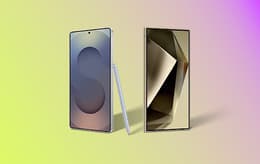
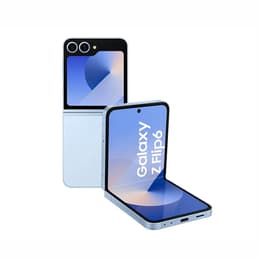
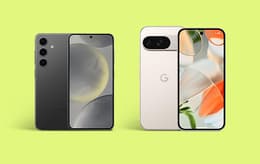
The Samsung Galaxy Z Flip6, released in July 2024, and the Google Pixel 9, launched in August 2024, represent distinct approaches to the modern smartphone experience. While the Z Flip6 offers a unique foldable clamshell design, the Pixel 9 maintains a traditional slab form factor. Both devices run on the Android operating system, with each manufacturer providing its own software enhancements and user interface. The primary differentiators lie in their physical design, display configurations, and their respective philosophies on camera technology and on-device artificial intelligence.

Scores

Durability

When considering the long-term usability of these devices, both the Galaxy Z Flip6 and the Google Pixel 9 offer substantial software support, aiming to provide users with an extended practical lifespan.

  • Software Longevity: The Galaxy Z Flip6 is promised 7 generations of Android OS updates and 7 years of software and security updates from its July 2024 release. The Google Pixel 9, released in August 2024, also offers an impressive 7 years of software support, extending its update timeline until Android 22. This commitment from both manufacturers ensures that users will receive timely security patches and new features for many years.
  • Physical Durability: The Galaxy Z Flip6 features an IP48 rating, making it the first foldable smartphone with certified dust protection, alongside water resistance. Its cover screen and back panel are protected by Corning Gorilla Glass Victus 2, while the inner foldable display uses ultra-thin glass. The Pixel 9 also incorporates Corning Gorilla Glass Victus 2 for its display and back, offering robust protection against everyday wear.
  • Repairability: While specific repairability scores can vary, the foldable nature of the Z Flip6 introduces additional mechanical components, such as the hinge, which can influence repair complexity. The Pixel 9, with its conventional design, may offer a more straightforward repair process for common component replacements.

Release year

2024

2024

Compatible with latest Update

Yes

Yes

Operating system

Android

Android

Foldable

Yes

No

Performance

Both smartphones are equipped with advanced processors designed to handle demanding applications and ensure smooth operation, though they utilize different underlying architectures.

  • Processing Power: The Galaxy Z Flip6 is powered by the Qualcomm Snapdragon 8 Gen 3 for Galaxy, a processor known for its high clock speeds and efficient performance in various tasks, from gaming to complex computations. The Google Pixel 9 features the Google Tensor G4, which is specifically optimized for on-device artificial intelligence tasks, enhancing features like real-time language processing and advanced image manipulation.
  • Multitasking and Responsiveness: The Galaxy Z Flip6 typically comes with 12 GB of RAM, providing ample capacity for running multiple applications simultaneously without slowdowns. The Pixel 9 also offers 12 GB of RAM, ensuring a fluid user experience and efficient management of background processes.
  • Battery Behavior: The Galaxy Z Flip6 houses a 4000 mAh battery, which, combined with its efficient processor, aims to provide reliable power throughout a typical day. The Pixel 9 is equipped with a larger 4700 mAh battery, designed to offer over 24 hours of use and up to 100 hours with its Extreme Battery Saver mode, catering to users who prioritize extended usage between charges.

Memory (GB)

12 GB

12 GB

Screen quality

The display experience on these two devices is shaped by their distinct form factors and panel technologies, catering to different user preferences.

  • Display Technology and Size: The Galaxy Z Flip6 features a 6.7-inch Foldable Dynamic AMOLED 2X main display when unfolded, offering vibrant colors and deep blacks. It also includes a 3.4-inch Super AMOLED cover screen for quick interactions. The Pixel 9 sports a 6.3-inch OLED display, providing a traditional, flat screen experience.
  • Clarity and Brightness: The Z Flip6's main display has a resolution of 1080 x 2640 pixels, resulting in sharp visuals, and can reach a peak brightness of 2600 nits, ensuring good visibility in various lighting conditions. The Pixel 9 offers a 2424 x 1080 pixel resolution and boasts a peak brightness of 2700 nits, making its display highly visible even in bright outdoor environments.
  • Refresh Rate and Smoothness: Both devices feature a 120Hz adaptive refresh rate on their main displays, which allows for smooth scrolling and fluid animations. The Z Flip6's cover screen operates at a 60Hz refresh rate. The Pixel 9's display can dynamically adjust its refresh rate from 60-120Hz, optimizing for both smoothness and power efficiency.

Resolution

1080 x 2640

1080 x 2424

Screen type

Foldable Dynamic LTPO AMOLED 2X

OLED

Audiovisual

Both smartphones offer capable camera systems, but they emphasize different strengths, with the Z Flip6 leveraging its unique form factor and the Pixel 9 focusing on computational photography.

  • Rear Camera Systems: The Galaxy Z Flip6 is equipped with a dual-camera setup, featuring a 50 MP wide-angle lens with optical image stabilization (OIS) and a 12 MP ultra-wide-angle lens. The Pixel 9 also has a dual-camera system, comprising a 50 MP wide sensor with OIS and a 48 MP ultrawide lens with autofocus and macro capabilities. Neither the base Pixel 9 nor the Z Flip6 includes a dedicated telephoto lens.
  • Photography Performance: The Z Flip6's 50 MP main sensor delivers detailed images, particularly in well-lit conditions, and benefits from features like Nightography for improved low-light shots. The Pixel 9 excels in computational photography, utilizing its Tensor G4 chip and Gemini AI for features like Magic Editor, Night Sight, and Astrophotography, which enhance image quality and offer creative editing options.
  • Video Recording and Front Camera: Both devices support 4K video recording at up to 60 frames per second. The Z Flip6 has a 10 MP front-facing camera on its internal display, while the Pixel 9 features a 10.5 MP front camera with autofocus. The Z Flip6's FlexCam feature allows users to utilize the main rear cameras for high-quality selfies and video calls when the device is partially folded.

Main camera

50 megapixels

50 megapixels

Front camera

10 megapixels

10.5 megapixels

Miscellaneous

Beyond core performance and display, several practical elements contribute to the overall user experience of these devices.

  • Connectivity and Ports: Both the Galaxy Z Flip6 and the Google Pixel 9 support 5G connectivity, Wi-Fi 6e (Z Flip6) or Wi-Fi 7 (Pixel 9), and Bluetooth 5.3, ensuring fast and reliable wireless connections. Both devices utilize a USB-C 3.2 port for charging and data transfer.
  • Biometric Security: The Z Flip6 typically features a side-mounted fingerprint sensor for secure unlocking. The Pixel 9 includes an ultrasonic fingerprint scanner, which offers fast and secure authentication.
  • Design and Handling: The Galaxy Z Flip6's clamshell design allows it to fold into a compact form factor, making it highly portable. It has a more squared-off frame and weighs 187 grams. The Pixel 9 maintains a traditional smartphone design, offering a familiar handling experience. Its dimensions are similar to the Pixel 9 Pro, providing a comfortable grip for one-handed use.

Weight

187 oz

198 oz

Screen size (in)

6.7

6.3

Network

5G

5G

SIM card

Physical SIM + eSIM

Physical SIM + eSIM

Carrier compatibility

Unlocked

Unlocked

The Samsung Galaxy Z Flip6 and the Google Pixel 9 cater to different user priorities, each excelling in distinct areas. Users who value a compact, stylish device with a unique foldable form factor and an interactive cover screen may find the Galaxy Z Flip6 appealing. Its robust build with IP48 dust and water resistance, combined with Samsung's extensive software support and AI features, makes it a compelling choice for those seeking a blend of innovation and practicality.

Conversely, individuals prioritizing a traditional smartphone experience with a strong emphasis on computational photography and advanced on-device artificial intelligence will likely gravitate towards the Google Pixel 9. Its larger battery capacity, high-brightness display, and Google's long-term software commitment, coupled with the Tensor G4's AI capabilities, make it well-suited for users who demand consistent performance and cutting-edge software features.

Ultimately, the decision between these two devices hinges on whether a user prefers the innovative, pocketable design of a foldable or the streamlined, AI-centric experience of a traditional flagship. Both offer excellent long-term software support and robust performance, making either a quality-assured option for a refurbished purchase, providing an eco-friendly alternative to buying new.
See all articles

Our recent comparisons