
Compare models

Galaxy A56 vs Motorola Razr 40

  • 1-year warranty
  • Free standard shipping
  • Free 30-day returns
Galaxy A56
Starting at

Refurbished price:A$384.00

Versus A$699.00 new

See options
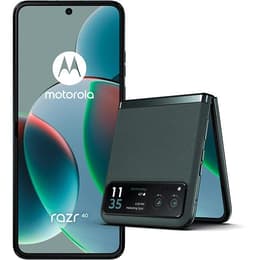
Motorola Razr 40
Starting at

Refurbished price:A$624.00

Versus A$1,983.00 new

See options

Differences at a glance

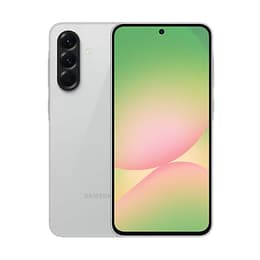
The Samsung Galaxy A56 (2025) and the Motorola Razr 40 (2023) represent two distinct approaches to modern mobile technology within the mid-range smartphone category. While the Samsung Galaxy A56 follows a traditional slate form factor with a focus on consistent daily reliability, the Motorola Razr 40 introduces a foldable design that compacts into a smaller footprint for portability. These devices operate on the Android platform, but their physical structures and intended user experiences differ significantly.

The primary differentiators lie in their form factor and hardware philosophy, balancing a classic candy bar design against a flexible folding display.

Available Models

Colour

Storage (GB)

Scores

Durability

When evaluating structural longevity and software support, both devices approach hardware maintenance and lifecycle duration through different lenses.

  • Software longevity: The Galaxy A56 benefits from a more recent release year, aligning with extended system and security patch commitments that stretch further into the future compared to its folding counterpart.
  • Build durability: The Motorola Razr 40 features a folding hinge mechanism that requires different handling considerations over time, whereas the traditional slate structure of the Galaxy A56 offers standard drop resistance and fixed-frame stability.
  • Repairability: Traditional slate devices like the Galaxy A56 generally present more straightforward maintenance procedures for component replacements than flexible-screen folding models.

Release year

2025

2023

Operating system

Android

Android

Foldable

No

Yes

Performance

Underneath their exteriors, both smartphones handle daily workloads, application launching, and multitasking through capable processing hardware tailored for mid-range efficiency.

  • Multitasking and speed: Both models handle everyday applications, web browsing, and social media navigation smoothly, though resource-heavy gaming experiences may test the thermal limits of their respective processors differently.
  • Battery behavior: The Galaxy A56 typically sustains a full day of standard mixed usage with its conventional battery capacity, while the compact layout of the Motorola Razr 40 requires careful power management during intensive tasks.
  • Storage configurations: Both options offer adequate internal storage capacities for media files, applications, and documents without requiring immediate cloud offloading.

Screen quality

Display technology is a major point of divergence between these two devices, heavily influencing media consumption and physical interaction.

  • Panel technology: The Galaxy A56 utilizes a flat OLED screen known for consistent brightness uniformity and deep contrast levels, whereas the Motorola Razr 40 features a flexible foldable interior screen accompanied by an external cover display for quick notifications.
  • Outdoor visibility: Both panels offer sufficient peak brightness levels to remain legible under direct sunlight, though reflective folding creases can occasionally alter viewing angles on the Razr 40.
  • Refresh rate smoothness: High refresh rate support ensures fluid scrolling and responsive touch feedback across both user interfaces during daily navigation.

Resolution

1080x2340

1080 x 2640

Audiovisual

Imaging hardware and audio output cater to casual photography, video calls, and media playback through distinct physical layouts.

  • Camera systems: The Galaxy A56 relies on a versatile multi-lens rear array suited for standard, wide, and macro shots, while the Motorola Razr 40 utilizes a dual-camera setup that can double as a self-shooting tool when folded upright on a flat surface.
  • Video and low light: Both devices capture clear footage in balanced lighting conditions, though challenging dark environments introduce digital noise and require steady hands to maintain clarity.
  • Audio reproduction: Stereo speaker configurations on both models deliver adequate sound for hands-free calls and casual video viewing, supplemented by clear microphone arrays.

Miscellaneous

Physical dimensions, connectivity standards, and daily handling characteristics shape how each device fits into travel and professional routines.

  • Handling and weight: The Motorola Razr 40 folds in half to fit easily into smaller pockets, while the Galaxy A56 maintains a standard slim profile that requires conventional pocket space.
  • Connectivity: Both models support modern 5G networks, stable Wi-Fi standards, and Bluetooth pairing for wireless accessories.
  • Security sensors: Side-mounted fingerprint scanners integrated into the power buttons provide fast biometric authentication on both devices alongside facial recognition options.

Weight

198 oz

189 oz

Screen size (in)

6.7

6.9

Network

5G

5G

SIM card

Physical SIM + eSIM

Dual Physical SIM

Carrier compatibility

Unlocked

Unlocked

What the community thinks

User discussions and community feedback highlight distinct preferences for each device based on everyday routines. Owners of the Galaxy A56 frequently praise its reliable battery performance, traditional durability, and straightforward daily utility. Conversely, users of the Motorola Razr 40 often highlight the convenience of its compact folding size and the novelty of the external cover display for checking notifications on the go. Common criticisms for the folding model center on hinge durability over years of heavy flipping, while the traditional Samsung model faces occasional remarks regarding its standard slate aesthetic.

Users prioritizing pocketability and a unique form factor may prefer the Motorola Razr 40, while users prioritizing long-term software support and traditional structural simplicity will lean toward the Galaxy A56. Selecting the right option depends entirely on whether a flexible folding design or a classic smartphone build aligns better with daily routines. Exploring a quality-assured refurbished option through Back Market provides a sustainable choice that extends the lifecycle of these electronics while supporting eco-friendly purchasing habits.