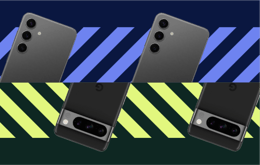
Compare models
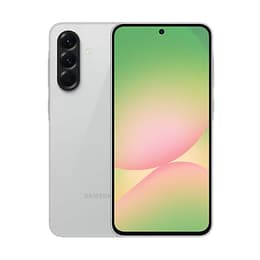
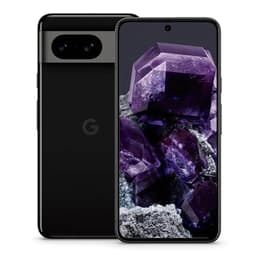
Galaxy A56 vs Google Pixel 8
- 1-year warranty
- Free standard shipping
- Free 30-day returns
Differences at a glance
The Samsung Galaxy A56 (2025) and the Google Pixel 8 (2023) are contemporary Android smartphones catering to users seeking balanced, everyday performance. While both run the Android operating system, they approach hardware design, display dimensions, and software features differently. Comparing these two devices highlights distinct choices in form factor and daily usability.
Available Models
Colour
Storage (GB)
Scores
Durability
When examining longevity, both smartphones are structured to receive extensive multi-year software updates, though their release schedules and hardware durability standards differ.
- Release timeline and support: The Google Pixel 8 launched in late 2023 with an extended seven-year update commitment, while the Samsung Galaxy A56 arrived in early 2025 with a similarly robust support window, ensuring both remain current.
- Build and physical durability: The Google Pixel 8 features an IP68 water and dust resistance rating alongside durable glass construction, while the Galaxy A56 offers an IP67 rating and robust framing, contributing to reliable day-to-day resilience.
- Expected practical lifespan: Both devices provide strong long-term usability, with the Pixel 8 benefiting from Google's deep software integration and the Galaxy A56 offering a recent hardware debut that extends its active support timeline.
Release year
2025
2023
Operating system
Android
Android
Foldable
No
No
Performance
Underneath the surface, these models handle everyday applications, multitasking, and storage management through different hardware configurations designed for responsive daily use.
- Storage and memory handling: Both devices are typically configured with 8GB of RAM and options for 128GB or 256GB of internal storage, supporting smooth switching between common apps.
- Processor capabilities: The Galaxy A56 relies on a modern mid-range processor that handles web browsing, streaming, and moderate gaming efficiently, while the Pixel 8 utilizes Google's custom silicon to power smooth system navigation and helpful on-device assistive tasks.
- Battery behavior: The Galaxy A56 includes a larger battery capacity that pairs with fast charging support, whereas the Pixel 8 balances a slightly smaller battery with power-efficient software optimization to navigate a standard day of use.
Screen quality
Display characteristics vary notably between the two models, primarily driven by physical size differences and panel tuning.
- Display technology and clarity: Both smartphones utilize vibrant OLED technology with high contrast and sharp resolutions, ensuring clear text and vivid media playback.
- Refresh rate and smoothness: Each model supports a 120Hz maximum refresh rate, delivering fluid scrolling through web pages and responsive touch interactions during daily tasks.
- Size and outdoor visibility: The Galaxy A56 features a larger 6.7-inch display suited for media consumption, while the Pixel 8 provides a more compact 6.2-inch form factor that is easier to handle with one hand and remains legible in bright sunlight.
Resolution
1080x2340
1080 x 2400
Audiovisual
Photography and media output reflect each manufacturer's distinct approach to imaging hardware and audio-visual playback.
- Camera system capabilities: The Galaxy A56 equips a triple-lens rear setup including a high-resolution main sensor and an ultra-wide lens, whereas the Pixel 8 relies on a dual-lens setup paired with advanced computational photography software for consistent results.
- Video and low-light performance: Both devices capture clear low-light imagery and stable video recordings, with Google's software processing excelling in challenging lighting conditions.
- Audio output: Stereo speakers are integrated into both models, delivering clear sound for casual video viewing, hands-free calls, and media streaming.
Miscellaneous
Practical everyday features such as connectivity standards, physical dimensions, and security sensors help differentiate the handling experience of each device.
- Connectivity and ports: Both models support 5G connectivity, modern Wi-Fi standards, Bluetooth, and USB Type-C charging ports for universal compatibility.
- Security sensors: Each smartphone features secure biometric authentication via under-display fingerprint sensors and facial recognition capabilities.
- Dimensions and handling: The Pixel 8 measures more compactly at 187 grams, making it lighter and easier to pocket, whereas the Galaxy A56 weighs 198 grams and offers a larger physical footprint for an expanded viewing area. For those seeking a quality-assured refurbished option, exploring sustainable choices on Back Market can provide a reliable path to acquiring either device.
Weight
198 oz
187 oz
Screen size (in)
6.7
6.2
Network
5G
5G
SIM card
Physical SIM + eSIM
Physical SIM + eSIM
Carrier compatibility
Unlocked
Unlocked
What the community thinks
User feedback from online communities highlights distinct preferences for each smartphone. Owners of the Google Pixel 8 frequently praise its compact handling, clean software interface, and reliable camera performance, though some note that heavy usage requires a mid-day charge. Conversely, users of the Samsung Galaxy A56 appreciate its expansive display, generous battery capacity, and rapid charging speeds, while occasionally noting its larger physical size makes one-handed reach more challenging.
Users prioritizing a smaller form factor and streamlined software assistance may prefer the Google Pixel 8, while users prioritizing a larger screen and extended battery endurance may lean toward the Samsung Galaxy A56. Choosing a quality-assured refurbished model through platforms like Back Market offers an eco-friendly alternative for acquiring either device without compromising on performance. Ultimately, the right choice depends on individual preferences regarding physical size, display dimensions, and daily charging habits.