

Compare models

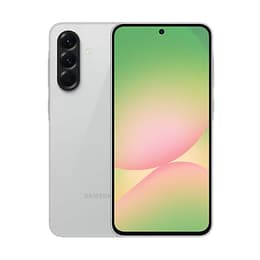
Galaxy A56 vs Google Pixel 7 Pro

  • 1-year warranty
  • Free standard shipping
  • Free 30-day returns
Galaxy A56
Starting at

Refurbished price:A$384.00

Versus A$699.00 new

See options
Google Pixel 7 Pro
Starting at

Refurbished price:A$442.00

Versus A$1,319.00 new

See options

Differences at a glance

The Samsung Galaxy A56 (2025) and the Google Pixel 7 Pro (2022) represent two different approaches to the smartphone market, blending mid-range accessibility with mature software experiences. While they stem from different release years and tiers, both devices cater to everyday users seeking reliable daily performance, capable cameras, and robust build quality. The primary differentiators lie in their generation timeline and software ecosystems, with the Galaxy A56 running on a later version of Android out of the box compared to the Google Pixel 7 Pro.

Available Models

Colour

Storage (GB)

Scores

Durability

When evaluating longevity, the release timeline and ongoing software support schedules play crucial roles in how long each smartphone remains secure and updated for daily use.

  • Software support duration: The Galaxy A56 benefits from a later launch year, providing an extended window of major operating system updates, whereas the Google Pixel 7 Pro operates on a fixed security update timeline that concludes in late 2027.
  • Repairability and build: Both handsets feature sturdy glass and metal construction with reliable dust and water resistance ratings, though availability of replacement components for the newer Samsung model can simplify long-term maintenance.
  • Expected practical lifespan: Users can expect solid multi-year viability from both units, though the Galaxy A56 retains an advantage in remaining compatible with newer operating system versions deeper into its lifecycle.

Release year

2025

2022

Foldable

No

No

Performance

Under everyday workloads, both devices deliver smooth navigation, efficient multitasking, and dependable battery longevity tailored for varied user habits.

  • Storage configurations: Both models provide flexible internal storage tiers starting at 128GB, accommodating extensive media libraries and application caches without requiring immediate cloud offloading.
  • Battery behavior: Each smartphone packs a large 5000 mAh battery capacity, comfortably lasting through a full day of mixed browsing, messaging, and media streaming under typical conditions.
  • System responsiveness: Equipped with capable processing hardware and ample memory, both devices handle demanding applications and rapid task switching smoothly, ensuring minimal lag during heavy daily routines.

Screen quality

Visual immersion and display clarity differ noticeably between the two models due to panel design and resolution tuning.

  • Display technology: The Galaxy A56 utilizes a vibrant high-refresh-rate panel, while the Google Pixel 7 Pro incorporates a curved high-resolution screen offering deep contrast and sharp text rendering.
  • Brightness and outdoor use: Both displays reach sufficient peak brightness levels to remain legible under direct sunlight, ensuring comfortable outdoor visibility for navigation and photography.
  • Smoothness: High refresh rate capabilities on both devices ensure fluid scrolling through web pages and smooth animation transitions during regular system navigation.

Resolution

1080x2340

1440 x 3120

Audiovisual

Photography and media consumption capabilities highlight distinct hardware arrangements suited for different creative and entertainment preferences.

  • Camera systems: The Google Pixel 7 Pro includes a versatile triple-lens setup featuring a dedicated telephoto zoom lens, whereas the Galaxy A56 focuses on a reliable primary and ultra-wide configuration.
  • Low-light and video performance: Computational photography software on both models delivers balanced exposure and natural colors in challenging lighting environments, alongside stable video recording tools.
  • Audio output: Stereo speaker configurations on both devices provide clear dialogue and balanced sound delivery for hands-free calls and casual video viewing.

Miscellaneous

Practical everyday features, connectivity standards, and physical handling characteristics shape how comfortable each phone feels in daily use.

  • Connectivity and ports: Both smartphones support fast 5G data networks, modern Wi-Fi standards, and reliable Bluetooth pairing via universal USB-C connection ports.
  • Security sensors: Secure authentication is handled via responsive under-display optical fingerprint scanners and facial recognition software.
  • Handling and dimensions: The Google Pixel 7 Pro offers a slightly larger form factor with curved edges, while the Galaxy A56 features flat sides that some users find easier to grip securely during one-handed use.

Weight

198 oz

212 oz

Screen size (in)

6.7

67

SIM card

Physical SIM + eSIM

Physical SIM + eSIM

Carrier compatibility

Unlocked

Unlocked

What the community thinks

Community discussions on platforms like Reddit frequently highlight the Google Pixel 7 Pro for its advanced telephoto zoom capabilities and clean software interface, though some users note that its larger size and curved glass can feel unwieldy. Conversely, the Galaxy A56 receives consistent praise for its modern flat design, reliable battery endurance, and extended update schedule, while occasional user criticisms mention that its camera versatility lacks a dedicated optical zoom lens. Choosing between the two often comes down to individual hardware preferences and software ecosystem habits.

Users prioritizing long-term software update longevity and a flat screen design may prefer the Galaxy A56, while users focusing on advanced telephoto photography and a higher-resolution curved display will lean toward the Google Pixel 7 Pro. For shoppers seeking a sustainable choice, a quality-assured refurbished option provides a reliable path to owning either device while minimizing environmental impact. Ultimately, evaluating these core differences ensures a satisfying match for your specific daily workflow.