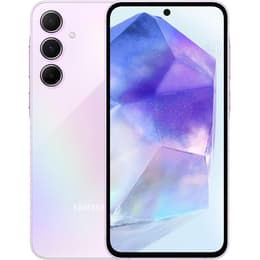


Galaxy A55 vs Google Pixel 7a

Galaxy A55
Galaxy A55
Starting at

Refurbished price:A$339.00

Versus A$699.00 new

See options
Google Pixel 7a
Google Pixel 7a
Starting at

Refurbished price:A$337.00

Versus A$749.00 new

See options

Ratings

The Samsung Galaxy A55 (released March 2024) and the Google Pixel 7a (released May 2023) are both Android smartphones designed to offer a balanced experience for everyday users. While the Galaxy A55 emphasizes a larger display and extended battery life, the Pixel 7a focuses on a compact form factor and advanced camera processing. Both devices run on the Android operating system, providing access to a wide ecosystem of applications and services.

Scores

Durability

When considering the long-term usability of these devices, both the Galaxy A55 and the Pixel 7a offer substantial software support and robust build quality, though with some distinctions.

  • Software Support: The Google Pixel 7a, released in May 2023, is expected to receive five years of major Android operating system upgrades and security updates, extending its software longevity significantly [4, 13]. The Samsung Galaxy A55, launched in March 2024, is promised four years of OS updates, up to Android 18, ensuring it remains current for a considerable period [5].
  • Physical Durability: Both smartphones feature an IP67 rating for dust and water resistance, offering protection against splashes and submersion [2, 9, 10, 14]. However, the Galaxy A55 incorporates Corning Gorilla Glass Victus+ on both its front and back, providing enhanced resistance to scratches and drops compared to the Pixel 7a's Gorilla Glass 3 on the front [9, 10]. The Pixel 7a features an aluminum frame and plastic back, while the A55 uses a metal frame with a glass back [4, 5, 11].
  • Practical Lifespan: Users can expect both devices to perform reliably for several years. The Pixel 7a's longer software update commitment might appeal to those prioritizing the absolute latest Android features for the longest duration, while the Galaxy A55's superior screen protection offers an edge in physical resilience against daily wear and tear.

Release year

2024

2022

Operating system

Android

Android

Foldable

No

No

Performance

The performance of a smartphone is crucial for daily tasks, app responsiveness, and multitasking. Both the Galaxy A55 and Pixel 7a are equipped with capable processors designed for smooth operation, but they approach performance with different underlying architectures.

  • Everyday Responsiveness: The Galaxy A55, powered by its current-generation Exynos processor, handles daily applications and multitasking smoothly, with users reporting a fluid experience for general use [15, 16]. The Pixel 7a, featuring Google's Tensor G2 processor, also delivers a responsive experience, particularly noted for its efficiency in AI-driven tasks and overall system fluidity [12].
  • Multitasking and Storage: Both devices typically come with 8GB of RAM in their base configurations, allowing for efficient multitasking [1, 2, 11]. The Galaxy A55 offers storage options up to 256GB and includes a microSD card slot for expandable storage up to 1TB, providing flexibility for users with large media libraries [5, 6, 8]. The Pixel 7a is generally available with 128GB of storage and does not offer expandable storage [1, 4, 7].
  • Battery Behavior: The Galaxy A55 features a larger 5000 mAh battery, which users often report provides solid endurance, frequently lasting through a full day or even two with moderate usage [9, 10, 15, 18]. The Pixel 7a has a 4385 mAh battery, and while it aims for efficiency, some users have noted that heavy usage can lead to more frequent charging [1, 9, 10, 17, 20, 21].

Memory (GB)

8 GB

8 GB

Screen quality

The display is a primary interface for any smartphone, and both the Galaxy A55 and Pixel 7a offer vibrant viewing experiences, albeit with differences in size and refresh rate.

  • Display Technology and Size: The Samsung Galaxy A55 features a larger 6.6-inch Super AMOLED display, providing deep blacks and vibrant colors [3, 28]. The Google Pixel 7a comes with a more compact 6.1-inch OLED panel, also known for its rich color reproduction [1, 4, 7]. The larger screen of the A55 offers more screen real estate for media consumption and productivity [9, 10].
  • Smoothness and Brightness: The Galaxy A55 boasts a 120Hz refresh rate, contributing to smoother scrolling and more fluid animations, which can be particularly noticeable during gaming or fast-paced content [9, 10]. It also offers a peak brightness of 1000 nits, enhancing visibility in bright outdoor conditions [28]. The Pixel 7a features a 90Hz refresh rate, still providing a smooth experience compared to standard 60Hz displays [7, 9].
  • Clarity and Protection: Both devices offer Full HD+ resolutions (1080x2340 for A55, 1080x2400 for Pixel 7a), ensuring sharp and clear visuals for text and images [1, 28]. The Galaxy A55's display is protected by Gorilla Glass Victus+, offering a higher level of scratch and drop resistance than the Pixel 7a's Gorilla Glass 3 [9, 10].

Resolution

1080x2340

1080 x 2400

Audiovisual

Camera capabilities are a significant factor for many users, and both the Galaxy A55 and Pixel 7a offer compelling photography experiences with distinct strengths.

  • Rear Camera Systems: The Samsung Galaxy A55 features a triple-camera setup on the rear, including a 50-megapixel main sensor with optical image stabilization (OIS), a 12-megapixel ultrawide lens, and a 5-megapixel macro lens [3, 5, 6]. The Google Pixel 7a sports a dual-camera system with a 64-megapixel main sensor (OIS) and a 13-megapixel ultrawide lens [4, 7].
  • Photography Performance: The Pixel 7a is widely recognized for its strong computational photography, often producing sharp photos with natural colors and good detail, even in challenging conditions [12, 27]. Its low-light performance is generally well-regarded. The Galaxy A55 delivers vivid and bright images, with Samsung highlighting improved low-light photography and image processing [11, 29]. Some users note the A55's camera is decent in good lighting but can be slow to focus [19].
  • Video and Front Camera: Both phones are capable of recording 4K video at 30/60 frames per second [4, 6]. For selfies, the Galaxy A55 has a 32-megapixel front camera, while the Pixel 7a features a 13-megapixel ultrawide front camera [5, 7].

Miscellaneous

Beyond core specifications, several practical elements contribute to the overall user experience of these smartphones.

  • Connectivity and Ports: Both the Galaxy A55 and Pixel 7a support 5G connectivity, along with modern Wi-Fi 6 (or 6E for Pixel 7a) and Bluetooth 5.3 standards [6, 7, 32]. Both devices utilize a USB-C port for charging and data transfer, but neither includes a traditional 3.5mm headphone jack [7, 18, 32]. The Galaxy A55's USB port is 2.0, while the Pixel 7a features USB 3.2 [31, 32].
  • Biometrics and Security: The Galaxy A55 features an optical in-screen fingerprint sensor for secure unlocking [2]. The Pixel 7a offers both an under-display fingerprint sensor and 2D face unlock, though some users have reported inconsistent performance with the fingerprint sensor [1, 20, 27].
  • Design and Handling: The Galaxy A55 is a larger and slightly heavier device, measuring 161.1 x 77.4 x 8.2 mm and weighing 213g, with a flat-edged design and a metal frame [18, 28, 31, 33]. The Pixel 7a is more compact and lighter at 152 x 72.9 x 9 mm and 193g, featuring an aluminum frame and a distinctive camera bar design [14, 25, 32]. The A55 also offers stereo speakers with Dolby Atmos, providing a rich audio experience [22, 29].

Weight

213 oz

212 oz

Screen size (in)

6.6

6.1

Network

5G

5G

SIM card

Physical SIM

Physical SIM + eSIM

Carrier compatibility

Unlocked

Unlocked

The Samsung Galaxy A55 and Google Pixel 7a each present a compelling package for users seeking a capable Android smartphone, with their strengths catering to different priorities. User feedback indicates that the Galaxy A55 is often praised for its excellent battery life, vibrant and large display with a high refresh rate, and premium build quality with enhanced durability [15, 18, 19]. Some common criticisms include its camera performance not always matching flagship levels and the presence of larger bezels around the screen [15, 19].

Conversely, the Google Pixel 7a receives consistent acclaim for its camera quality, particularly its computational photography that delivers natural and detailed images [12, 27]. Users also appreciate its clean Android software experience and timely updates [12]. However, some common concerns for the Pixel 7a include average battery life, potential heating issues during heavy use, and occasional inconsistencies with the fingerprint sensor [17, 20, 21, 24, 27].

Users prioritizing a larger, more durable display and extended battery life for prolonged usage may find the Samsung Galaxy A55 to be a well-suited option. Its expandable storage also appeals to those who need ample space for media and files. On the other hand, individuals who value a more compact device, a consistently strong camera for photography, and a pure Android software experience with long-term updates will likely lean towards the Google Pixel 7a. Both devices represent solid choices in their segment, and considering a quality-assured refurbished option for either model can be an eco-friendly alternative for making an informed and sustainable choice.


See all articles

Our recent comparisons