
Galaxy A54 vs Google Pixel 8

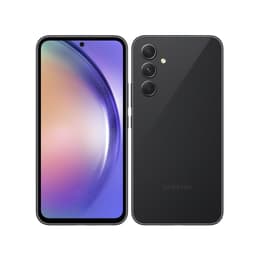
Galaxy A54
Galaxy A54
Starting at

Refurbished price:A$331.00

Versus A$714.00 new

See options
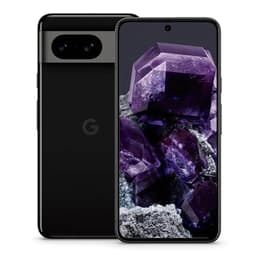
Google Pixel 8
Google Pixel 8
Starting at

Refurbished price:A$465.00

Versus A$1,245.00 new

See options

Ratings

The Samsung Galaxy A54 and the Google Pixel 8 are contemporary smartphones, released in March 2023 and October 2023, respectively. Both devices operate on the Android platform, offering distinct approaches to user experience and hardware capabilities. While the Galaxy A54 focuses on a balanced feature set with expandable storage, the Pixel 8 emphasizes advanced computational photography and a longer software support commitment.

Scores

Durability

When considering the long-term usability of a smartphone, factors like software support and ease of repair are important. The Galaxy A54 and Pixel 8 offer different propositions in this regard.

  • Software Longevity: The Google Pixel 8 stands out with an industry-leading commitment of seven years of operating system and security updates from its release date, extending its software lifespan significantly. The Samsung Galaxy A54 typically receives four years of OS updates and five years of security updates, providing a solid, though shorter, period of support.
  • Repairability: The Samsung Galaxy A54 has been noted as a fairly repairable device, with some assessments giving it a score of 6.25 out of 10, and others as high as 8.4 out of 10 under French environmental legislation. The Google Pixel 8 generally receives a repairability score around 7 out of 10, indicating moderate ease of repair, though some sources cite 5.5 out of 10. Both devices require some technical knowledge for self-repair, often involving heat to remove back panels.
  • Expected Practical Lifespan: Given its extended software support, the Pixel 8 is designed to remain current and secure for a longer duration. The Galaxy A54, while robust, will see its official software support conclude sooner.

Release year

2023

2023

Compatible with latest Update

Yes

Yes

Operating system

Android

Android

Foldable

No

No

Performance

The performance of a smartphone is crucial for daily tasks, from browsing to demanding applications. Both the Galaxy A54 and Pixel 8 deliver capable experiences, though with different underlying architectures.

  • Processing Power: The Google Pixel 8 is equipped with a current-generation processor designed for efficient handling of complex tasks, including advanced AI features and smooth multitasking. This allows for responsive app loading and fluid navigation. The Samsung Galaxy A54 features an octa-core processor that is described as powerful enough for heavy games and general daily use, offering a capable experience for most users.
  • Multitasking and Storage: The Pixel 8 typically comes with 8GB of RAM, contributing to smooth multitasking across various applications. It offers internal storage options of 128GB or 256GB, without expandable storage. The Galaxy A54 is available with 6GB or 8GB of RAM and 128GB or 256GB of internal storage, with the added flexibility of microSD card expansion up to 1TB, which can be beneficial for users with extensive media libraries.
  • Battery Behavior: The Galaxy A54 houses a 5000 mAh battery, supporting 25W fast charging. The Pixel 8 has a 4575 mAh battery with 30W fast charging capabilities. User experiences with the Pixel 8's battery life are varied, often described as good but not exceptional, typically providing 8-10 hours of screen time with mixed usage, though heavy use or mobile data can reduce this.

Memory (GB)

8 GB

8 GB

Screen quality

The display is a primary interface for any smartphone, and both devices offer vibrant viewing experiences with distinct characteristics.

  • Display Technology and Clarity: The Samsung Galaxy A54 features a 6.4-inch Super AMOLED display, providing deep blacks and rich colors with a Full HD+ resolution of 1080 x 2340 pixels. The Google Pixel 8 comes with a slightly smaller 6.2-inch OLED display, also offering a Full HD+ resolution of 2400 x 1080 pixels, known for its color accuracy and brightness.
  • Brightness and Refresh Rate: Both phones feature a 120Hz refresh rate, contributing to smoother scrolling and more fluid animations. The Galaxy A54's display can reach up to 1000 nits in High Brightness Mode (HBM), offering good outdoor visibility. The Pixel 8's display, marketed as 'Actua', boasts higher peak brightness levels, reaching up to 1400 nits for HDR content and a peak of 2000 nits for outdoor visibility, which can enhance readability in bright sunlight.
  • Screen Protection: The Galaxy A54 utilizes Corning Gorilla Glass 5 for both its front and back panels, offering a degree of scratch and drop resistance. The Pixel 8 features Corning Gorilla Glass Victus for screen protection, which is designed for enhanced durability against drops and scratches.

Resolution

1080 x 2340

1080 x 2400

Screen type

Super AMOLED

OLED

Audiovisual

Photography is a key consideration for many smartphone users, and both the Galaxy A54 and Pixel 8 offer capable camera systems, each with their own strengths.

  • Rear Camera Systems: The Samsung Galaxy A54 features a versatile triple-camera setup, including a 50 MP main sensor with optical image stabilization (OIS), a 12 MP ultrawide lens, and a 5 MP macro lens. The Google Pixel 8 employs a dual-camera system, consisting of a 50 MP main sensor with OIS and electronic image stabilization (EIS), and a 12 MP ultrawide lens with autofocus. The Pixel 8's main sensor is noted for its ability to produce high-quality images with good exposure and detail, even in challenging lighting.
  • Photography and Video Features: Both devices are capable of recording video at 4K resolution at 30 frames per second with both their front and rear cameras. The Galaxy A54 includes improved OIS for smoother video capture. The Pixel 8 leverages its advanced processing for computational photography, enhancing image quality and offering features like improved low-light performance and various AI-powered editing tools.
  • Front-Facing Cameras: For selfies and video calls, the Galaxy A54 is equipped with a 32 MP front camera. The Pixel 8 features a 10.5 MP ultrawide front camera.

Main camera

50 megapixels

50 megapixels

Front camera

32 megapixels

10.5 megapixels

Miscellaneous

Beyond core specifications, several practical elements contribute to the overall user experience and daily utility of a smartphone.

  • Connectivity and Ports: Both the Galaxy A54 and Pixel 8 support 5G connectivity, Bluetooth 5.3, and NFC for contactless payments. The Galaxy A54 supports Wi-Fi 6, while the Pixel 8 supports Wi-Fi 6E, offering potentially faster and more stable wireless connections in compatible environments. Both devices utilize a USB-C port for charging and data transfer, though the Galaxy A54 uses USB 2.0, and the Pixel 8 uses a more modern USB standard. Neither phone includes a 3.5mm headphone jack.
  • Design and Handling: The Galaxy A54 has dimensions of 158.2 x 76.7 x 8.2 mm and weighs 202g, featuring a glass front and back with an IP67 rating for dust and water resistance. The Pixel 8 is slightly more compact and lighter at 150.5 x 70.8 x 8.9 mm and 187g, also offering dust and water resistance. Both phones feature stereo speakers for an enhanced audio experience.
  • Security and Sensors: Both devices include essential sensors like accelerometers, gyroscopes, and compasses. The Pixel 8 offers face unlock with authentication, alongside a fingerprint sensor. The Galaxy A54 also includes a fingerprint sensor for secure unlocking.

Weight

202 oz

187 oz

Screen size (in)

6.4

6.2

Network

5G

5G

SIM card

Physical SIM + eSIM

Physical SIM + eSIM

Carrier compatibility

Unlocked

Unlocked

The Samsung Galaxy A54 and Google Pixel 8 cater to different user priorities within the Android smartphone market. Users often praise the Galaxy A54 for its vibrant display, reliable battery life, and the flexibility of expandable storage, making it a strong contender for those who consume a lot of media or need extra space for files. Its design, with a glass back, also receives positive remarks for its premium feel. Some common criticisms, however, point to its processor not always matching the performance of higher-end devices, and its camera, while good, may not always compete with top-tier flagships in all conditions.

The Google Pixel 8 is frequently lauded for its exceptional camera capabilities, particularly its computational photography features that enhance image quality and offer unique editing tools. Its long software support commitment is a significant advantage for users who plan to keep their device for many years. The Pixel 8's clean Android experience and consistent performance are also strong points. Conversely, some users have expressed concerns about its battery life, especially under heavy usage or when relying on mobile data, and the absence of expandable storage can be a drawback for some.

Users prioritizing a long-lasting software experience, advanced camera features, and a compact design may find the Google Pixel 8 well-suited to their needs. On the other hand, individuals who value expandable storage, a larger battery capacity, and a slightly larger display for media consumption might lean towards the Samsung Galaxy A54. Both devices offer a quality-assured refurbished option, providing an eco-friendly alternative for consumers looking to make a sustainable choice while still enjoying modern smartphone technology.

See all articles

Our recent comparisons