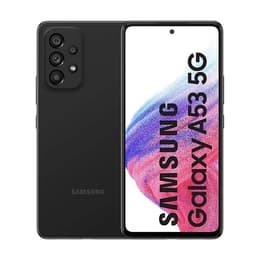
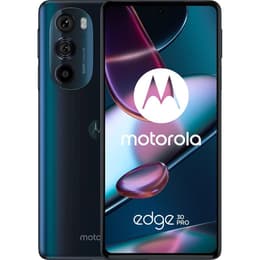

Galaxy A53 5G vs Motorola Edge 30 Pro

Galaxy A53 5G
Galaxy A53 5G
Starting at

Refurbished price:A$268.00

Versus A$991.00 new

See options
Motorola Edge 30 Pro
Starting at

Refurbished price:A$291.72

Versus A$2,709.00 new

See options

The Samsung Galaxy A53 5G and the Motorola Edge 30 Pro, both released in 2022, are Android smartphones that cater to different user priorities. While the Galaxy A53 5G focuses on a balanced experience with strong software support and durability, the Motorola Edge 30 Pro emphasizes high-end performance and a very fluid display. This comparison will delve into their practical differences to help users make an informed decision.

Scores

Durability

When considering the long-term usability of a smartphone, factors like software support and physical resilience are key. Both devices were launched in 2022, placing them in a similar generation, but their approaches to longevity differ.

  • Software Updates: The Samsung Galaxy A53 5G typically receives four years of Android operating system updates and five years of security updates from its release, offering extended software longevity. In contrast, the Motorola Edge 30 Pro generally provides two major Android updates and three years of security updates, which means its software support window is shorter.
  • Durability Features: The Galaxy A53 5G boasts an IP67 rating, signifying robust dust and water resistance, capable of submersion in up to 1 meter of freshwater for 30 minutes. Its display is protected by Corning Gorilla Glass 5. The Motorola Edge 30 Pro features an IP52 rating, indicating splash resistance rather than full water immersion protection. It uses Gorilla Glass 3 on the front and Gorilla Glass 5 on the back.
  • Build Materials: The Galaxy A53 5G utilizes a plastic back and frame, which contributes to its overall weight of 189 grams. The Edge 30 Pro features a glass back, which can offer a different tactile experience, but also has a plastic frame and weighs 196 grams.

Release year

2022

2022

Compatible with latest Update

Yes

Yes

Operating system

Android

Android

Foldable

No

No

Performance

The performance of a smartphone dictates its responsiveness and capability to handle various applications and tasks. These two devices offer distinct performance profiles based on their internal components.

  • Processing Power: The Motorola Edge 30 Pro is equipped with a high-end processor, enabling it to handle demanding applications, intensive gaming, and heavy multitasking with considerable ease and fluidity. The Samsung Galaxy A53 5G features a mid-range processor, which provides smooth performance for everyday tasks, social media, web browsing, and moderate gaming.
  • Multitasking and Storage: Both devices offer configurations with ample RAM for efficient multitasking. The Galaxy A53 5G provides storage options of 128GB or 256GB and includes a microSD card slot for expandable storage up to 1TB. The Edge 30 Pro offers 128GB, 256GB, or 512GB storage options, but does not support expandable storage via a microSD card.
  • Gaming and App Responsiveness: Users will find the Edge 30 Pro particularly well-suited for graphically intensive games and quick app loading times due to its powerful processing capabilities. The Galaxy A53 5G delivers a consistent and responsive experience for most popular games and applications, though it may not match the raw speed of the Edge 30 Pro in the most demanding scenarios.

Memory (GB)

6 GB

8 GB

Screen quality

The display is a primary interface for smartphone interaction, and both devices offer vibrant viewing experiences with some key differences in technology and features.

  • Display Technology and Resolution: The Samsung Galaxy A53 5G features a 6.5-inch Super AMOLED display, known for its vibrant colors, deep blacks, and excellent contrast. The Motorola Edge 30 Pro comes with a slightly larger 6.7-inch OLED display, also offering rich colors and deep blacks. Both displays have a Full HD+ resolution (1080 x 2400 pixels), providing sharp and clear visuals for typical viewing distances.
  • Refresh Rate and Smoothness: The Galaxy A53 5G offers a 120Hz refresh rate, contributing to smooth scrolling and a responsive user interface. The Edge 30 Pro elevates this with a 144Hz refresh rate, providing an even more fluid visual experience, particularly noticeable during fast-paced content or gaming.
  • Brightness and Outdoor Visibility: The Galaxy A53 5G's display can reach a peak brightness of 800 nits, enhancing visibility in bright outdoor conditions. The Edge 30 Pro's display can boost up to 685 nits in auto mode when exposed to bright light, offering good outdoor readability.

Resolution

1080 x 2400

1080 x 2400

Screen type

Super AMOLED

OLED

Audiovisual

Camera capabilities are a significant consideration for many users, and both smartphones offer versatile camera systems with different strengths.

  • Rear Camera Systems: The Samsung Galaxy A53 5G features a 64MP main camera with optical image stabilization (OIS), a 12MP ultrawide lens, a 5MP macro lens, and a 5MP depth sensor. The Motorola Edge 30 Pro comes with a 50MP main camera with OIS, a 50MP ultrawide lens, and a 2MP depth sensor. The Edge 30 Pro's higher resolution ultrawide camera captures more detail in wider shots.
  • Photography Performance: The Galaxy A53 5G's main camera delivers detailed photos, and its night mode is noted for producing brighter and more detailed shots in low-light environments. The Edge 30 Pro's main camera produces accurate colors and contrast in good lighting, though its low-light performance can be inconsistent. Both devices utilize pixel binning technology to enhance image quality.
  • Video Recording and Front Camera: For video, the Galaxy A53 5G supports 4K recording at 30 frames per second (fps) from both its rear and front cameras. It has a 32MP front-facing camera. The Edge 30 Pro offers more advanced video capabilities, including 8K recording at 24fps and 4K at 60fps from its main camera, and features a high-resolution 60MP front camera.

Main camera

64 megapixels

50 megapixels

Front camera

32 megapixels

60 megapixels

Miscellaneous

Beyond the core features, several other aspects contribute to the overall user experience and functionality of these smartphones.

  • Connectivity Standards: Both devices support 5G connectivity. The Motorola Edge 30 Pro offers more advanced wireless connectivity with Wi-Fi 6E and Bluetooth 5.2. The Samsung Galaxy A53 5G supports Wi-Fi 5 (802.11ac) and Bluetooth 5.1.
  • Ports and Biometrics: Both smartphones feature a USB-C port for charging and data transfer, but neither includes a 3.5mm headphone jack. The Edge 30 Pro's USB-C port also supports DisplayPort 1.4, allowing for video output to external displays. The Galaxy A53 5G incorporates an optical fingerprint sensor under the display. The Edge 30 Pro uses a side-mounted fingerprint sensor integrated into the power button.
  • Additional Features: The Motorola Edge 30 Pro supports wireless charging and reverse wireless charging, offering more versatile power options. The Galaxy A53 5G does not include wireless charging. The Edge 30 Pro also features stereo speakers with Dolby Atmos support for an enhanced audio experience. The Galaxy A53 5G also has stereo speakers.

Weight

189 oz

196 oz

Screen size (in)

6.5

6,7

Network

5G

5G

SIM card

Dual Physical SIM

Dual Physical SIM

Carrier compatibility

Unlocked

Unlocked

The Samsung Galaxy A53 5G and the Motorola Edge 30 Pro, both 2022 releases, present compelling options for Android users, each with a distinct set of advantages. User feedback often highlights the Galaxy A53 5G's reliable battery life, vibrant Super AMOLED display, and Samsung's commitment to extended software updates as key strengths. Some users, however, note that its performance, while capable for daily use, may not match the raw power of some competitors.

Conversely, the Motorola Edge 30 Pro is frequently praised for its exceptional processing power, making it a strong contender for mobile gaming and demanding applications. Its 144Hz OLED display offers a remarkably smooth visual experience, and its fast wired and wireless charging capabilities are also well-received. Criticisms sometimes point to its less robust IP rating and a shorter software update commitment compared to Samsung.

For users prioritizing long-term software support, a higher degree of water and dust resistance, and a consistently good display for everyday tasks, the Samsung Galaxy A53 5G may be the more suitable choice. Its balanced feature set and extended update cycle contribute to a longer practical lifespan. On the other hand, individuals who demand top-tier performance for intensive gaming, rapid application execution, and a very high refresh rate display, along with faster charging, might find the Motorola Edge 30 Pro better aligned with their needs. Both devices are available as quality-assured refurbished options, providing an eco-friendly alternative for consumers.


See all articles

Our recent comparisons