
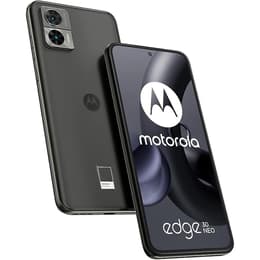

Galaxy A51 vs Motorola Edge 30 Neo

Galaxy A51
Galaxy A51
Starting at

Refurbished price:A$196.16

Versus A$592.00 new

See options
Motorola Edge 30 Neo
Starting at

Refurbished price:A$306.00

Versus A$414.00 new

See options

Ratings

The Samsung Galaxy A51, released in December 2019, and the Motorola Edge 30 Neo, launched in September 2022, are both smartphones designed for everyday use. While the Galaxy A51 represents an earlier generation of mid-range devices, the Edge 30 Neo offers more contemporary features, particularly in terms of display technology and connectivity. Both devices operate on the Android platform, providing a familiar user experience with access to a wide ecosystem of applications.

Scores

Durability

The expected lifespan of a smartphone is influenced by its release date, software support, and physical resilience.

  • Release Timeline: The Galaxy A51 was released in December 2019, making it an older device compared to the Motorola Edge 30 Neo, which launched in September 2022. This difference in release dates impacts their respective software support cycles.
  • Software Longevity: The Galaxy A51 originally shipped with Android 10 and received three major Android OS updates, concluding with Android 13, along with four years of security updates. The Motorola Edge 30 Neo launched with Android 12 and is expected to receive at least two to three major OS updates, with a planned upgrade to Android 15, and typically three years of security updates. This means the Edge 30 Neo will benefit from a longer period of current software features and security patches.
  • Physical Durability: The Galaxy A51 features a plastic back and a Gorilla Glass 3 front for screen protection, but lacks an official IP rating for water and dust resistance. The Motorola Edge 30 Neo also uses a plastic frame and back, with Gorilla Glass 3 on the front, but includes an IP52 rating, offering basic protection against dust and splashes.

Release year

2019

2022

Compatible with latest Update

No

Yes

Operating system

Android

Android

Foldable

No

No

Performance

Performance in daily tasks is a key differentiator, with the newer device generally offering a more responsive experience.

  • Processing Power: The Galaxy A51 is equipped with a processor that was considered mid-range at its release. Users reported that apps and websites could take longer to load, and some caching was noticeable when multiple applications were open simultaneously. The Motorola Edge 30 Neo features a more recent processor, which provides a smoother experience for demanding applications and multitasking.
  • Multitasking and Storage: The Galaxy A51 offered RAM configurations up to 8GB and storage options up to 256GB, with the added flexibility of expandable storage via a microSD card up to 512GB. The Edge 30 Neo comes with RAM options up to 12GB and storage up to 256GB, but it does not support expandable storage.
  • Battery Behavior: Both devices feature a 4000 mAh battery capacity. The Galaxy A51 supports 15W fast charging, with one test indicating approximately 1.5 days of use. The Motorola Edge 30 Neo supports significantly faster 68W wired charging and also includes 5W wireless charging, a feature not present on the A51. Its efficient processor is expected to contribute to all-day battery life.

Memory (GB)

6 GB

8 GB

Screen quality

The visual experience is largely defined by the display technology and its characteristics.

  • Display Technology and Size: The Samsung Galaxy A51 features a 6.5-inch Super AMOLED display, known for its deep blacks and vibrant colors. The Motorola Edge 30 Neo has a slightly smaller 6.28-inch P-OLED display, which also delivers rich colors and strong contrast.
  • Resolution and Clarity: Both phones offer a Full HD+ resolution of 1080 x 2400 pixels, resulting in sharp images and text with a pixel density of around 405-419 pixels per inch.
  • Smoothness and Brightness: A key difference lies in the refresh rate; the Galaxy A51 has a standard 60Hz refresh rate, while the Motorola Edge 30 Neo boasts a smoother 120Hz refresh rate, which makes scrolling and animations appear more fluid. The Edge 30 Neo also offers higher peak brightness for better visibility in bright conditions.

Resolution

1080 x 2400

1080 x 2400

Screen type

Super AMOLED

P-OLED

Audiovisual

Camera capabilities vary between the two models, impacting the quality and versatility of photos and videos.

  • Rear Camera Systems: The Galaxy A51 features a quad-camera setup with a 48 MP main sensor, a 12 MP ultrawide lens, a 5 MP macro lens, and a 5 MP depth sensor. The Motorola Edge 30 Neo has a dual-camera system, including a 64 MP main sensor with Optical Image Stabilization (OIS) and a 13 MP ultrawide lens that can also function as a macro camera. The OIS on the Edge 30 Neo's main camera helps in capturing more stable photos and videos.
  • Photography Performance: The Galaxy A51 is capable of recording video up to 4K at 30 frames per second. The Edge 30 Neo's video recording is limited to 1080p at up to 120 frames per second, lacking 4K capability.
  • Front Camera and Audio: Both devices feature a 32 MP front-facing camera for selfies and video calls. For audio, the Galaxy A51 has a single speaker and a 3.5mm headphone jack. The Edge 30 Neo offers stereo speakers with Dolby Atmos support for an enhanced audio experience, but it omits the 3.5mm headphone jack.

Main camera

48 megapixels

64 megapixels

Front camera

32 megapixels

32 megapixels

Miscellaneous

Beyond core features, several practical elements contribute to the overall user experience.

  • Connectivity: The Galaxy A51 supports 4G LTE networks, Wi-Fi 5 (802.11ac), and Bluetooth 5.0. The Motorola Edge 30 Neo offers more advanced connectivity with 5G network support, Wi-Fi 6 (802.11ax), and Bluetooth 5.1, providing faster data speeds and improved wireless performance.
  • Ports and Sensors: The Galaxy A51 includes a USB-C port for charging and data transfer, along with a traditional 3.5mm headphone jack. It features an under-display optical fingerprint sensor for security. The Edge 30 Neo also uses a USB-C port and an under-display optical fingerprint sensor, but it does not have a 3.5mm headphone jack.
  • Design and Handling: The Galaxy A51 measures 158.5 x 73.6 x 7.9 mm and weighs 172g. The Motorola Edge 30 Neo is slightly more compact and lighter, with dimensions of 152.9 x 71.2 x 7.8 mm and a weight of 155g, potentially offering a more comfortable in-hand feel.

Weight

172 oz

155 oz

Screen size (in)

6.5

6.28

Network

4G

5G

SIM card

Physical SIM

Dual Physical SIM

Carrier compatibility

Unlocked

Unlocked

The Samsung Galaxy A51 and Motorola Edge 30 Neo cater to different user priorities, largely due to their respective release timelines and the technological advancements that have occurred between their launches.

Users often praised the Galaxy A51 for its vibrant Super AMOLED display and capable camera system for its time. Common criticisms included its performance, which some found to be on the slower side for demanding tasks, and its average battery life. The Motorola Edge 30 Neo, being a newer device, generally receives positive feedback for its smooth 120Hz OLED display, faster charging capabilities, and more modern design. Some users noted the absence of a 3.5mm headphone jack and the lack of 4K video recording as potential drawbacks.

Users prioritizing a larger display and the continued presence of a 3.5mm headphone jack might find the Galaxy A51 suitable, especially if their usage involves lighter tasks and they appreciate expandable storage. Conversely, those who value a more fluid screen experience, faster overall performance, quicker charging, and 5G connectivity will likely lean towards the Motorola Edge 30 Neo. Its more recent software support timeline also offers a longer period of up-to-date features and security. For those considering either device, exploring a quality-assured refurbished option can be a sustainable choice, offering access to these features while extending the product's lifecycle.


See all articles

Our recent comparisons