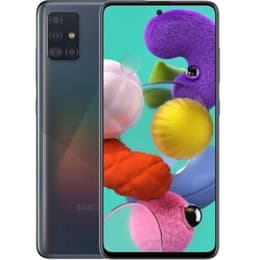
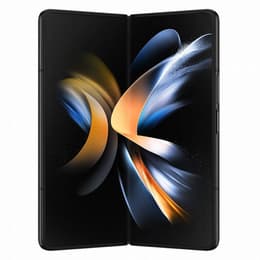

Galaxy A51 vs Galaxy Z Fold4

Galaxy A51
Galaxy A51
Starting at

Refurbished price:A$196.16

Versus A$592.00 new

See options
Galaxy Z Fold4
Galaxy Z Fold4
Starting at

Refurbished price:A$738.00

Versus A$3,628.00 new

See options

Ratings

The Samsung Galaxy A51, released in late 2019, is a traditional smartphone designed for everyday use, while the Samsung Galaxy Z Fold4, launched in August 2022, represents a premium foldable device offering a tablet-like experience in a compact form factor. These two Android-based devices cater to distinct user needs, primarily differing in their form factor, display technology, and overall performance capabilities. Both run on Samsung's One UI interface, providing a consistent software experience, but their hardware foundations lead to significant practical distinctions.

Scores

Durability

The lifespan of a smartphone is influenced by its release timeline, software support, and physical resilience. The Galaxy A51 and Galaxy Z Fold4 offer different trajectories in these aspects.

  • Release Timeline and Software Support: The Galaxy A51, released in December 2019, shipped with Android 10 and received its last major operating system update with Android 13 in late 2022. While it may still receive security patches, it has reached its end-of-life for major Android upgrades. In contrast, the Galaxy Z Fold4, released in August 2022 with Android 12L, was promised four major Android OS updates and five years of security updates, extending its software longevity significantly further, potentially up to Android 16 or 17.
  • Physical Durability: The Galaxy A51 features a glass front with Gorilla Glass 3 protection and a plastic back and frame. It does not have an official IP rating for water or dust resistance, and some user reports suggest a less robust build that can be susceptible to bending under pressure. The Galaxy Z Fold4, a more recent device, incorporates Gorilla Glass Victus+ on its cover screen and back, along with an aluminum frame. It boasts an IPX8 water resistance rating, meaning it can withstand submersion in fresh water, though it lacks dust resistance. However, its foldable nature introduces unique durability considerations, such as the internal screen protector peeling over time and potential hinge issues, which some users have reported after extended use.
  • Repairability: The Galaxy A51 has a repairability score of approximately 6.5 out of 10, indicating that while some components like the battery and screen can be replaced, the use of adhesive and numerous small parts can make repairs challenging for an average person. For the Galaxy Z Fold4, screen repairs can be more complex due to its foldable design, though Samsung has made efforts to reduce repair costs for screen damage, particularly with a Samsung Care+ plan.

Release year

2019

2022

Compatible with latest Update

No

Yes

Operating system

Android

Android

Foldable

No

Yes

Performance

The performance capabilities of these two devices reflect their different market segments and release years, impacting how they handle various tasks.

  • Processing Power: The Galaxy A51 is equipped with an Exynos 9611 processor, which provides adequate performance for general daily tasks such as web browsing, social media, and light applications. It can handle some gaming, but demanding titles may experience slower frame rates and reduced graphical settings. The Galaxy Z Fold4, featuring a more advanced processor, delivers significantly higher performance. This allows for smooth multitasking, rapid app loading, and a fluid experience even with graphically intensive games and productivity applications.
  • Multitasking and Responsiveness: With RAM options typically ranging from 4GB to 8GB, the Galaxy A51 can manage several applications simultaneously, but heavy multitasking might lead to occasional slowdowns. The Galaxy Z Fold4 comes with 12GB of RAM, enabling seamless transitions between numerous open applications and efficient handling of complex workflows, especially when utilizing its multi-window features.
  • Storage Options: The Galaxy A51 offers internal storage options of 64GB or 128GB, with the added flexibility of expandable storage via a microSD card. The Galaxy Z Fold4 provides larger internal storage configurations, starting from 256GB and going up to 1TB, but it does not support expandable storage.

Memory (GB)

6 GB

12 GB

Screen quality

The display experience is a primary differentiator between these two Samsung smartphones, owing to their fundamental design philosophies.

  • Display Technology and Size: The Galaxy A51 features a 6.5-inch Super AMOLED Infinity-O display with a resolution of 1080 x 2400 pixels. This provides vibrant colors and deep blacks, characteristic of AMOLED panels. The Galaxy Z Fold4 offers a dual-screen setup: a 6.2-inch Dynamic AMOLED 2X cover display and a large 7.6-inch Foldable Dynamic AMOLED 2X main display when unfolded. The main display's expansive size transforms the device into a small tablet, ideal for immersive content consumption and productivity.
  • Refresh Rate and Smoothness: The Galaxy A51 has a standard 60Hz refresh rate, which is suitable for most everyday interactions. The Galaxy Z Fold4's displays, both the cover and main screens, feature a 120Hz adaptive refresh rate. This higher refresh rate results in noticeably smoother scrolling, more fluid animations, and a more responsive feel during gaming and general navigation.
  • Brightness and Clarity: Both devices offer good clarity for their respective resolutions. The Galaxy A51's Super AMOLED panel provides good brightness for indoor and outdoor viewing. The Galaxy Z Fold4's Dynamic AMOLED 2X displays offer higher peak brightness, enhancing visibility in bright outdoor conditions and improving HDR content viewing.

Resolution

1080 x 2400

1812 x 2176

Screen type

Super AMOLED

Foldable Dynamic AMOLED 2X

Audiovisual

The camera systems of the Galaxy A51 and Galaxy Z Fold4 reflect their different generations and target user experiences.

  • Rear Camera System: The Galaxy A51 features a quad-camera setup with a 48MP main sensor, a 12MP ultrawide, a 5MP macro, and a 5MP depth sensor. It performs well in good lighting conditions, capturing detailed photos with good color reproduction. The Galaxy Z Fold4 comes with a more advanced triple-camera system, including a 50MP main sensor with optical image stabilization (OIS), a 12MP ultrawide, and a 10MP telephoto lens with 3x optical zoom. This setup offers greater versatility and improved image quality, especially in challenging scenarios.
  • Low-Light and Video Performance: While the Galaxy A51 includes a night mode, its low-light performance is generally considered adequate but can result in softer images. It supports video recording up to 4K at 30fps. The Galaxy Z Fold4, with its larger main sensor and advanced processing, delivers superior low-light photography with better detail and reduced noise. It also offers enhanced video recording capabilities, including 8K at 24fps and improved stabilization.
  • Front Camera and Audio: The Galaxy A51 has a 32MP front camera capable of recording 1080p video. The Galaxy Z Fold4 features a 10MP front camera on the cover display and a 4MP under-display camera on the main foldable screen. For audio, the A51 has a single bottom-firing speaker and a 3.5mm headphone jack. The Z Fold4 offers stereo speakers for a more immersive audio experience, but it lacks a headphone jack.

Main camera

48 megapixels

50 megapixels

Front camera

32 megapixels

4 megapixels

Miscellaneous

Beyond the core features, several practical elements contribute to the overall user experience of these devices.

  • Connectivity: The Galaxy A51 supports 4G LTE, Wi-Fi 5, and Bluetooth 5.0. The Galaxy Z Fold4 offers more advanced connectivity, including 5G support, Wi-Fi 6E for faster wireless speeds, and Bluetooth 5.2.
  • Ports and Biometrics: The Galaxy A51 includes a USB-C port for charging and data transfer, along with a 3.5mm headphone jack. It features an in-display optical fingerprint sensor. The Galaxy Z Fold4 uses a USB-C port but omits the headphone jack. Its fingerprint sensor is integrated into the side power button.
  • Design and Handling: The Galaxy A51 has a traditional candy bar design, weighing around 172g. Its plastic back contributes to a lighter feel. The Galaxy Z Fold4, as a foldable, has a unique design. When folded, it is thicker and heavier than a standard smartphone, weighing 263g, but offers a narrower cover screen for one-handed use. Unfolded, it provides a large display for productivity and media.
  • Build Materials: The A51 uses Gorilla Glass 3 for its display and a plastic back and frame. The Z Fold4 utilizes more premium materials, including Gorilla Glass Victus+ on its exterior displays and back, and an Armor Aluminum frame, contributing to its more robust feel and water resistance.

Weight

172 oz

263 oz

Screen size (in)

6.5

7.6

Network

4G

5G

SIM card

Physical SIM

Physical SIM + eSIM

Carrier compatibility

Unlocked

Unlocked

The Samsung Galaxy A51 and Galaxy Z Fold4 cater to fundamentally different user expectations and priorities. The Galaxy A51, a mid-range device from 2019, is often praised for its vibrant Super AMOLED display and capable camera system for its class. Users frequently highlight its reliable performance for everyday tasks and the inclusion of a headphone jack and expandable storage as practical benefits. Criticisms sometimes point to its processor performance for demanding applications and its plastic build.

The Galaxy Z Fold4, a premium foldable from 2022, receives acclaim for its innovative form factor, offering a large, immersive main display for multitasking and media consumption. Its powerful processor and advanced camera system are also frequently lauded. However, common concerns among users include its bulk and weight, the noticeable crease on the main display, and the long-term durability of the inner screen protector and hinge mechanism.

Users prioritizing a straightforward, reliable smartphone experience for daily communication, social media, and casual photography, who also value traditional features like a headphone jack and expandable storage, may find the Galaxy A51 suitable. Its established design offers a familiar and accessible experience. Conversely, individuals seeking a cutting-edge device that combines the functionality of a smartphone with the expansive screen real estate of a tablet will find the Galaxy Z Fold4 aligns with their needs. It is particularly well-suited for power users, multitaskers, and those who consume a lot of media on the go, provided they are comfortable with its unique form factor and durability considerations.

For those considering either device, exploring quality-assured refurbished options can provide a sustainable choice, extending the life cycle of these electronics and offering an eco-friendly alternative.
See all articles

Our recent comparisons