
Compare models
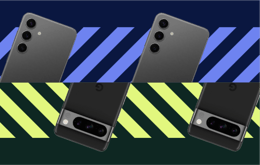
Galaxy A34 vs Google Pixel 9
- 1-year warranty
- Free standard shipping
- Free 30-day returns
Differences at a glance
The Samsung Galaxy A34 (2023) and the Google Pixel 9 (2024) are popular smartphones designed to cater to everyday communication, media consumption, and photography needs. While both devices run on the Android operating system, they approach hardware capabilities, software integration, and design from different angles. Choosing between these two models depends on individual preferences regarding software experiences, physical dimensions, and daily computing demands.
Available Models
Colour
Storage (GB)
Scores
Durability
When evaluating hardware longevity and software support, both devices offer robust frameworks for long-term usability, though their release timelines and update commitments differ.
- Software support timelines: The Google Pixel 9 benefits from an extended software commitment spanning several years of operating system upgrades, whereas the Samsung Galaxy A34 follows a traditional mid-range update schedule.
- Repairability and build durability: Both models feature dust and water resistance ratings alongside sturdy glass fronts, making them resilient against everyday wear and tear.
- Expected practical lifespan: Users can expect reliable daily performance over multiple years from both devices, supported by regular security patches and system updates.
Release year
2023
2024
Compatible with latest Update
Yes
Yes
Operating system
Android
Android
Foldable
No
No
Performance
Daily responsiveness and multitasking capabilities vary based on internal hardware allocations and memory configurations tailored to each device.
- Multitasking and memory: The Google Pixel 9 incorporates generous random access memory capacity to handle multiple active applications smoothly, while the Galaxy A34 offers balanced configurations suited for standard daily tasks.
- App loading and gaming: Both smartphones handle standard social media apps, web browsing, and casual gaming efficiently, though heavier processing tasks benefit from newer internal hardware generations.
- Storage capacity and expansion: The Galaxy A34 provides expandable storage options via a card slot, whereas the Pixel 9 relies entirely on fixed internal storage variants.
Screen quality
Display characteristics differ slightly in size, peak brightness capabilities, and panel technology, impacting media viewing and outdoor visibility.
- Display technology: Both models feature vibrant OLED panels with smooth high refresh rates, ensuring fluid scrolling and rich color reproduction during video playback.
- Outdoor visibility: The Pixel 9 reaches higher peak brightness levels for improved legibility under direct sunlight, while the Galaxy A34 maintains clear visibility during typical daylight use.
- Screen dimensions: The Galaxy A34 offers a slightly larger viewing area for media consumption, whereas the Pixel 9 presents a more compact footprint that is easier to handle with one hand.
Resolution
1080 x 2340
1080 x 2424
Screen type
Super AMOLED
OLED
Audiovisual
Photography and video recording suites cater to varying creator styles through different sensor resolutions and software processing algorithms.
- Main and ultra-wide lenses: Both devices capture detailed everyday photographs using high-resolution primary sensors accompanied by ultra-wide options for landscape framing.
- Low-light performance: Advanced computational photography helps both models preserve detail and color accuracy in challenging lighting conditions.
- Video and audio recording: Integrated multi-microphone arrays deliver clear voice capture during calls and video recording sessions, paired with balanced stereo speaker outputs for media playback.
Main camera
48 megapixels
50 megapixels
Front camera
13 megapixels
10.5 megapixels
Miscellaneous
Physical dimensions, connectivity standards, and biometric security features shape the overall ergonomics and daily handling experience.
- Connectivity standards: Both smartphones support modern fifth-generation mobile networks, rapid wireless protocols, and versatile data transfer speeds.
- Biometric security: Secure authentication is handled via responsive fingerprint sensors integrated directly beneath the display panels alongside facial recognition options.
- Physical handling: The Galaxy A34 features a slightly lighter plastic frame construction, while the Pixel 9 utilizes a denser glass and metal build structure.
Weight
199 oz
198 oz
Screen size (in)
6,6
6.3
Network
5G
5G
SIM card
Physical SIM
Physical SIM + eSIM
Carrier compatibility
Unlocked
Unlocked
What the community thinks
User feedback from online communities highlights distinct preferences for each device based on everyday usage patterns. Owners of the Samsung Galaxy A34 frequently praise its dependable battery endurance, expandable storage flexibility, and smooth display quality. Conversely, Google Pixel 9 users frequently emphasize the clean software interface, advanced camera processing capabilities, and premium build materials as primary highlights. Some users note that the Pixel line can experience warmth during intensive tasks, while others mention that the Galaxy A34's processing speeds are best suited for mainstream rather than heavy professional workloads.
Users prioritizing expandability and a larger viewing area may prefer the Galaxy A34, while users prioritizing long-term software commitments and streamlined photography features lean toward the Google Pixel 9. Eco-conscious consumers exploring either device can also consider a quality-assured refurbished option as a sustainable choice that reduces electronic waste without compromising on core functionality.