
Compare models
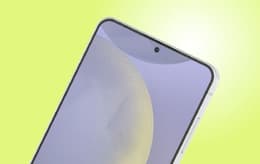
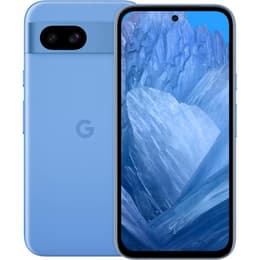
Galaxy A34 vs Google Pixel 8a
- 1-year warranty
- Free standard shipping
- Free 30-day returns
Differences at a glance
The Samsung Galaxy A34 (2023) and the Google Pixel 8a (2024) are mid-range smartphones designed to deliver reliable everyday performance without the complexity or cost of flagship models. While both devices run on the Android operating system, they approach software integration, hardware capability, and design from different perspectives. The Galaxy A34 focuses on a large viewing space and steady battery endurance, whereas the Pixel 8a emphasizes computational photography and an extended software support schedule.
Available Models
Colour
Storage (GB)
Scores
Durability
When evaluating the long-term usability and update outlook of these two devices, distinct differences emerge regarding software longevity and hardware endurance.
- Software update timeline: The Google Pixel 8a provides a significantly extended software support window, receiving major operating system updates and security patches for several years longer than the Galaxy A34, making it well-suited for users who plan to keep their phone for an extended period.
- Repairability and durability: Both models feature dust and water resistance ratings suitable for everyday mishaps, though the Pixel 8a benefits from a more recent manufacturing date, which generally translates to longer availability of replacement parts and quality-assured refurbished options on the market.
- Expected practical lifespan: Due to its newer processor generation and prolonged update schedule, the Pixel 8a maintains active software compatibility further into the future, while the Galaxy A34 relies on its robust build quality to sustain everyday utility over time.
Release year
2023
2024
Compatible with latest Update
Yes
Yes
Operating system
Android
Android
Foldable
No
No
Performance
Underneath the exterior, both smartphones handle daily tasks, multitasking, and media consumption efficiently, though they manage processing loads differently.
- Multitasking and app switching: Both devices manage everyday applications like web browsing, social media, and streaming smoothly, though the Pixel 8a handles intensive processing tasks with slightly greater speed thanks to its newer internal hardware configuration.
- Storage and memory handling: Both models offer standard storage capacities suited for storing apps, photos, and media, paired with sufficient memory to keep multiple background processes active without unexpected closures.
- Battery behavior: The Galaxy A34 incorporates a larger battery capacity that comfortably stretches through a full day of mixed use, whereas the Pixel 8a manages power efficiently through software optimization despite housing a slightly smaller battery cell.
Screen quality
The viewing experience on each device reflects different design priorities concerning size, panel technology, and visual fluidity.
- Display technology and clarity: Both smartphones utilize bright, vibrant OLED panels that deliver deep contrast levels and sharp resolution, ensuring text remains legible and images appear clear under various lighting conditions.
- Refresh rate and smoothness: Both devices support high refresh rate capabilities, resulting in fluid scrolling through menus, web pages, and supported applications, which enhances overall system responsiveness.
- Outdoor visibility: The Pixel 8a reaches higher peak brightness levels for comfortable outdoor viewing in direct sunlight, while the Galaxy A34 offers a larger screen area that appeals to users who prioritize extra space for viewing media documents.
Resolution
1080 x 2340
1080 x 2400
Screen type
Super AMOLED
OLED
Audiovisual
Photography and media recording capabilities differ noticeably between the two models, driven largely by contrasting software processing philosophies.
- Main camera performance: The Pixel 8a relies heavily on advanced computational photography to deliver consistently detailed images with balanced dynamic range, particularly in challenging low-light environments, while the Galaxy A34 captures sharp daytime photos using its high-resolution primary sensor.
- Secondary lenses: Both devices include ultra-wide-angle lenses for capturing broader scenes, though the Pixel 8a integrates additional software editing tools directly into the operating system for refining captured media.
- Video and audio output: Video recording on both models remains stable and clear for casual sharing, and their respective stereo speaker setups provide adequate sound clarity for hands-free calls and short video playback.
Main camera
48 megapixels
64 megapixels
Front camera
13 megapixels
13 megapixels
Miscellaneous
Practical physical attributes, connectivity options, and sensor configurations shape how each device fits into daily routines.
- Connectivity and ports: Both smartphones support modern 5G networks, fast Wi-Fi standards, and Bluetooth connectivity, utilizing reversible USB-C ports for charging and data transfer without legacy headphone jacks.
- Security and biometrics: Each device offers biometric authentication options, featuring responsive fingerprint sensors embedded beneath the screen alongside facial recognition capabilities for quick unlocking.
- Physical dimensions and handling: The Galaxy A34 features a larger physical footprint and a slightly heavier build to accommodate its bigger screen, whereas the Pixel 8a offers a more compact, pocket-friendly form factor with rounded edges that improve one-handed handling.
Weight
199 oz
188 oz
Screen size (in)
6,6
6.1
Network
5G
5G
SIM card
Physical SIM
Physical SIM + eSIM
Carrier compatibility
Unlocked
Unlocked
What the community thinks
Users discussing these devices on public forums frequently praise the Galaxy A34 for its generous screen size and reliable battery endurance, while noting that its physical dimensions can feel bulky. Conversely, community feedback for the Pixel 8a highlights its compact handling, advanced photo processing capabilities, and long-term software commitment, though some users mention that it can run warm during extended high-intensity tasks.
Users prioritizing a larger viewing area, expandable storage options, and steady battery endurance will find the Galaxy A34 well-suited to their daily routines. Meanwhile, users prioritizing a more compact physical size, extended software longevity, and advanced computational photography may lean toward the Pixel 8a. Buyers exploring these models can also consider a quality-assured refurbished option as a sustainable choice that extends the lifecycle of technology without compromising on functional reliability.