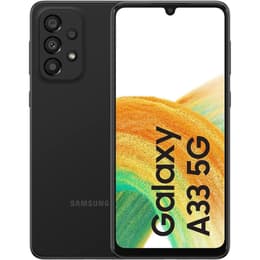
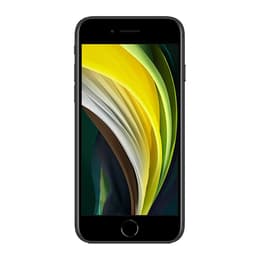

Galaxy A33 5G vs iPhone SE (2020)

Galaxy A33 5G
Galaxy A33 5G
Starting at

Refurbished price:A$206.00

Versus A$495.00 new

See options
iPhone SE (2020)
iPhone SE (2020)
Starting at

Refurbished price:A$162.00

Versus A$529.00 new

See options

The Samsung Galaxy A33 5G, released in 2022, and the iPhone SE 2020, launched in 2020, represent distinct approaches to smartphone design and functionality. While the Galaxy A33 5G offers a modern Android experience with a larger display and versatile camera system, the iPhone SE 2020 provides a compact iOS experience powered by a high-performance chip. These devices cater to different user preferences, with the A33 focusing on contemporary features and the SE on a familiar, streamlined Apple ecosystem.

Scores

Durability

When considering the long-term usability of these devices, their release timelines and software support are key factors. The Samsung Galaxy A33 5G, being a newer device, generally benefits from a longer expected period of software updates compared to the iPhone SE 2020.

  • Software Longevity: The Galaxy A33 5G launched with Android 12 and Samsung has committed to four generations of Android OS updates and five years of security updates, extending its practical software lifespan well into the future. The iPhone SE 2020, originally on iOS 13.4, has received updates to current iOS versions and is expected to continue receiving support for approximately 5-6 years from its release.
  • Physical Durability: Both devices feature an IP67 rating for dust and water resistance, offering protection against splashes and submersion in shallow water. The Galaxy A33 5G uses Gorilla Glass 5 for screen protection, while the iPhone SE 2020 has a glass front and back with an aluminum frame.
  • Repairability: The Galaxy A33 5G has a repairability score of 7.75 out of 10, indicating it is relatively easy to disassemble, with accessible components like the battery and screen. The iPhone SE 2020 received a score of 6 out of 10, with the display and battery being straightforward to replace, though the glass back is considered impractical to repair.

Performance

The performance of a smartphone is largely determined by its internal components and how efficiently they handle daily tasks and demanding applications. Both the Galaxy A33 5G and the iPhone SE 2020 offer capable performance for their respective platforms.

  • Processing Power: The iPhone SE 2020 is equipped with a powerful chip that allows for smooth navigation, rapid app launches, and efficient handling of graphically intensive games and applications. The Galaxy A33 5G features an octa-core processor designed to manage multitasking and everyday usage effectively, with some models offering virtual RAM expansion for an additional boost in app performance.
  • Multitasking and Storage: The Galaxy A33 5G comes with 6GB or 8GB of RAM, which supports fluid multitasking across multiple applications. The iPhone SE 2020 has 3GB of RAM, optimized by its operating system to maintain responsiveness even with several apps open. Both devices offer various internal storage options, with the Galaxy A33 5G also providing expandable storage via a microSD card, a feature not present on the iPhone SE 2020.
  • Battery Behavior: The Galaxy A33 5G houses a larger 5000 mAh battery, often providing up to two days of usage for many users, and supports 25W fast charging. The iPhone SE 2020 has an 1821 mAh battery, which, combined with its efficient processor and software, delivers sufficient power for a full day of moderate use, with support for 18W fast charging.

Memory (GB)

4 GB

3 GB

Screen quality

The display is a primary interface for smartphone interaction, and both devices offer distinct visual experiences tailored to their design philosophies.

  • Display Technology and Size: The Galaxy A33 5G features a 6.4-inch Super AMOLED display, known for its vibrant colors, deep blacks, and high contrast. The iPhone SE 2020 utilizes a 4.7-inch Retina HD IPS LCD display, which provides accurate color reproduction and good viewing angles.
  • Resolution and Refresh Rate: The Galaxy A33 5G offers a Full HD+ resolution of 1080 x 2400 pixels and a 90Hz refresh rate, contributing to smoother scrolling and a more fluid visual experience. The iPhone SE 2020 has a resolution of 1334 x 750 pixels and a standard 60Hz refresh rate, which is suitable for everyday tasks.
  • Clarity and Brightness: Both displays offer good clarity for typical viewing. The Super AMOLED panel on the A33 5G generally provides higher peak brightness and better outdoor visibility compared to the LCD panel of the iPhone SE 2020.

Audiovisual

Camera capabilities are a significant consideration for many users, and these two smartphones approach photography with different hardware and software strengths.

  • Rear Camera System: The Galaxy A33 5G boasts a versatile quad-camera setup, including a 48 MP main sensor with Optical Image Stabilization (OIS), an 8 MP ultrawide lens, a 5 MP macro lens, and a 2 MP depth sensor. This allows for a range of photographic styles, from wide landscapes to detailed close-ups. The iPhone SE 2020 features a single 12 MP wide-angle camera with OIS, which, despite its single lens, benefits from advanced computational photography for impressive image quality, including Portrait mode for human subjects and Smart HDR.
  • Low-Light and Video Performance: The Galaxy A33 5G's main camera performs well in various lighting conditions, and it can record video at up to 4K resolution at 30 frames per second. The iPhone SE 2020 also delivers strong low-light performance for a single-lens system and excels in video recording, offering 4K video capture at up to 60 frames per second with good stabilization.
  • Front Camera and Audio: For selfies, the Galaxy A33 5G has a 13 MP front camera, capable of recording 4K video. The iPhone SE 2020 features a 7 MP front camera that supports Portrait mode for selfies. The Galaxy A33 5G includes stereo speakers, enhancing the media consumption experience, while the iPhone SE 2020 also offers a good audio output for its size.

Miscellaneous

Beyond core specifications, several practical features contribute to the overall user experience and daily convenience of a smartphone.

  • Connectivity and Ports: The Galaxy A33 5G supports 5G networks, offering faster mobile data speeds, along with Wi-Fi 5 (802.11ac) and Bluetooth 5.1. It uses a USB-C 2.0 port for charging and data transfer and notably lacks a 3.5mm headphone jack. The iPhone SE 2020 supports Gigabit LTE and Wi-Fi 6, along with Bluetooth 5.0, and uses Apple's proprietary Lightning port. It also does not include a 3.5mm headphone jack.
  • Biometrics and Design: The Galaxy A33 5G features an in-display optical fingerprint sensor for secure unlocking. The iPhone SE 2020 uses a physical home button with Touch ID, a capacitive fingerprint sensor. The Galaxy A33 5G has a more contemporary design with slimmer bezels and a larger screen-to-body ratio, measuring 159.7 x 74 x 8.1 mm and weighing 186 grams. The iPhone SE 2020 retains the classic iPhone design with more prominent bezels, measuring 138.4 x 67.3 x 7.3 mm and weighing 148 grams, making it a more compact and lighter device.
  • Build Materials: The Galaxy A33 5G features a glass front with Gorilla Glass 5 protection, a plastic back, and a plastic frame. The iPhone SE 2020 has a glass front and back, paired with an aluminum frame, contributing to a premium feel.

Screen size (in)

6.4

4.7

Network

5G

4G

SIM card

Physical SIM

Physical SIM + eSIM

Carrier compatibility

Unlocked

Unlocked

The Samsung Galaxy A33 5G and the iPhone SE 2020 offer distinct smartphone experiences, each with its own set of strengths and considerations based on user priorities.

Users often praise the Galaxy A33 5G for its impressive battery life, vibrant Super AMOLED display with a 90Hz refresh rate, and the versatility of its quad-camera system. Its commitment to extended software updates and 5G connectivity are also frequently highlighted as positive aspects. Some common criticisms include the absence of a charger in the box and the perceived limited utility of some auxiliary camera lenses.

Conversely, the iPhone SE 2020 is frequently lauded for its powerful processor, which delivers smooth and responsive performance across all tasks, and its compact, familiar design. Its single main camera, despite lacking multiple lenses, is often praised for its image quality and video capabilities, especially within the Apple ecosystem. Criticisms often revolve around its dated design with larger bezels and its comparatively smaller battery capacity, which may require more frequent charging for heavy users.

Users prioritizing a modern design, a larger and smoother display, a multi-lens camera system, and extensive battery life may find the Samsung Galaxy A33 5G well-suited to their needs. This device is a strong contender for those who value the flexibility of the Android operating system and expandable storage. On the other hand, users who prefer a compact form factor, the streamlined iOS experience, and a device with a powerful processor for sustained performance will likely lean towards the iPhone SE 2020. It is an excellent choice for individuals deeply integrated into the Apple ecosystem or those seeking a highly responsive device in a smaller package.

Both models are available as quality-assured refurbished options, providing an eco-friendly alternative for consumers looking to make a sustainable choice while still acquiring a capable smartphone.
See all articles

Our recent comparisons