
Galaxy A23 vs iPhone SE (2022)

Galaxy A23
Galaxy A23
See options
iPhone SE (2022)
iPhone SE (2022)
Starting at

Refurbished price:A$216.00

Versus A$719.00 new

See options

Ratings

The Samsung Galaxy A23 and the Apple iPhone SE 2022, both released in 2022, offer distinct smartphone experiences tailored to different user preferences. The Galaxy A23 operates on the Android platform, featuring a larger display and a versatile multi-camera system. In contrast, the iPhone SE 2022 runs on iOS, characterized by its compact form factor and a powerful internal processor. These differences primarily influence screen size, camera capabilities, and software ecosystems.

Scores

Durability

When evaluating the long-term usability of these devices, their software support timelines and physical construction present key distinctions.

  • Software Longevity: The iPhone SE 2022 typically receives major iOS updates for an extended period, often 5-7 years from its release, ensuring prolonged access to new features and security enhancements. The Galaxy A23, as part of Samsung's A-series, generally receives 2 major Android OS updates and 4-5 years of security updates, meaning its major operating system support concludes sooner.
  • Build Quality: The iPhone SE 2022 features a glass front and back, along with an aluminum frame, and carries an IP67 rating for dust and water resistance. The Galaxy A23 uses a Gorilla Glass 5 front but has a plastic frame and back, and it lacks an official IP rating, making it less resistant to environmental elements.
  • Repairability: Both devices are designed with modern smartphone construction. The iPhone SE's internal layout can be more complex for repairs, often requiring specialized tools, while the Galaxy A23 may offer slightly more straightforward access for common component replacements.

Release year

2022

2022

Compatible with latest Update

Yes

Yes

Operating system

Android

iOS

Foldable

No

No

Performance

The internal components of these two smartphones lead to noticeable differences in their day-to-day performance and responsiveness.

  • Processing Power: The iPhone SE 2022 is equipped with a high-performance processor, ensuring quick app launches and smooth transitions, even with demanding applications. The Galaxy A23 features an octa-core processor that provides a generally smooth experience for typical usage, though it might exhibit minor delays when switching between many open applications or loading large files.
  • Multitasking and Storage: The iPhone SE 2022 comes with 4GB of RAM, which supports efficient multitasking within the iOS environment. The Galaxy A23 offers various RAM configurations, including 4GB, 6GB, and 8GB options, with higher RAM variants providing more seamless multitasking on Android. The Galaxy A23 also offers expandable storage via a microSD card slot, providing flexibility for users who need to store large amounts of media or applications, a feature not available on the iPhone SE 2022.
  • Battery Behavior: The iPhone SE 2022's smaller battery capacity means more frequent charging for heavy users. The Galaxy A23, with its larger battery, generally offers longer usage times between charges.

Memory (GB)

4 GB

4 GB

Screen quality

The visual experience on these devices is a key differentiator, primarily due to their display technologies and sizes.

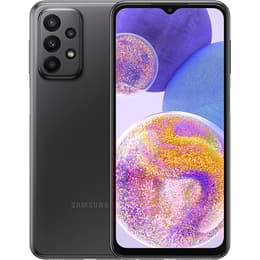
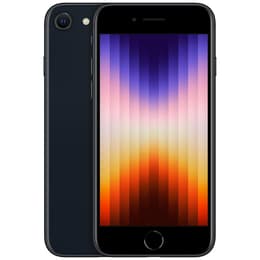
  • Display Technology and Size: The Galaxy A23 features a larger 6.6-inch PLS LCD display, offering more screen real estate for media consumption and productivity. The iPhone SE 2022 has a more compact 4.7-inch IPS LCD display, which is ideal for one-handed use and portability.
  • Resolution and Clarity: The Galaxy A23 provides a resolution of 1080x2408 pixels, resulting in a pixel density of approximately 400 PPI. The iPhone SE 2022 offers a resolution of 750x1334 pixels, with a pixel density of 326 PPI.
  • Refresh Rate: The Galaxy A23 boasts a 120Hz refresh rate, which provides a noticeably smoother scrolling experience and more fluid animations compared to the iPhone SE 2022's standard 60Hz refresh rate.

Resolution

1080 x 2408

750 x 1334

Screen type

PLS LCD

Retina IPS LCD

Audiovisual

The camera systems on these phones approach photography from different philosophies, impacting versatility and image processing.

  • Rear Camera System: The Galaxy A23 features a versatile quad-camera setup, including a 50 MP main sensor with optical image stabilization (OIS), a 5 MP ultrawide lens, and dedicated macro and depth sensors, providing a range of shooting options. The iPhone SE 2022 relies on a single 12 MP main camera with OIS, leveraging its powerful processor for advanced computational photography.
  • Everyday Photography: The iPhone SE 2022 excels in producing consistently high-quality photos, especially in good lighting, with accurate colors and detail, thanks to its image processing capabilities. The Galaxy A23 offers more flexibility with its multiple lenses, allowing for wider shots or close-ups, and its main sensor performs well in various conditions.
  • Video Recording and Audio: Both devices are capable of recording 4K video. The iPhone SE 2022 generally offers superior video quality with better stabilization and dynamic range. For audio, the iPhone SE 2022 includes stereo speakers for a more immersive sound experience, while the Galaxy A23 has a single bottom-firing speaker. The Galaxy A23 retains a 3.5mm headphone jack, which is absent on the iPhone SE.

Main camera

50 megapixels

12 megapixels

Front camera

8 megapixels

7 megapixels

Miscellaneous

Beyond core specifications, several practical elements differentiate these two smartphones in daily use.

  • Connectivity and Ports: Both smartphones support 5G connectivity for faster mobile data speeds. The iPhone SE 2022 includes Wi-Fi 6 for improved wireless network performance, while the Galaxy A23 supports Wi-Fi 5. The Galaxy A23 uses a USB-C port for charging and data transfer, alongside a traditional 3.5mm headphone jack. The iPhone SE 2022 utilizes Apple's proprietary Lightning port and does not include a headphone jack.
  • Biometrics and Design: The Galaxy A23 features a side-mounted fingerprint sensor for secure unlocking. The iPhone SE 2022 integrates its Touch ID fingerprint sensor into the home button. In terms of physical design, the iPhone SE 2022 is significantly lighter at 144g and more compact (138.4 x 67.3 x 7.3 mm) compared to the Galaxy A23, which weighs around 195-197g and measures 165.4 x 76.9 x 8.4 mm.
  • User Interface: The Galaxy A23 runs Android with Samsung's One UI, offering extensive customization options. The iPhone SE 2022 runs iOS, known for its intuitive interface and strong ecosystem integration.

Weight

195 oz

144 oz

Screen size (in)

6.6

4.7

SIM card

Dual Physical SIM

Physical SIM + eSIM

Carrier compatibility

Unlocked

Unlocked

User feedback for the Galaxy A23 often praises its large 120Hz display, the versatility offered by its multiple camera lenses, and the convenience of expandable storage and a headphone jack. Some users note that its processor, while capable, isn't designed for the most demanding tasks, and its plastic build might feel less premium. The iPhone SE 2022 is frequently lauded for its powerful processor, ensuring smooth performance for years, its compact size, and the reliability of its single main camera. Criticisms often point to its smaller screen, the need for more frequent charging for heavy users due to its battery capacity, and the absence of a headphone jack.

Users prioritizing a larger, high-refresh-rate display, a versatile multi-camera system, and expandable storage may prefer the Galaxy A23. This device is well-suited for those who enjoy media consumption on a bigger screen and value the flexibility of the Android ecosystem. Conversely, users who prioritize a compact design for one-handed use, a highly responsive and powerful processor for sustained performance, and a longer software support window will find the iPhone SE 2022 well-suited to their needs. Both models are available as quality-assured refurbished options, providing an eco-friendly alternative for consumers.
See all articles

Our recent comparisons