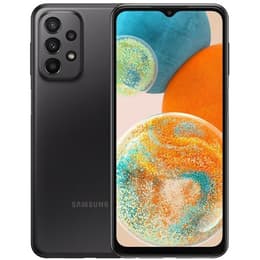
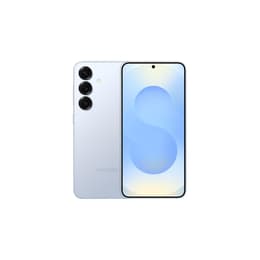

Galaxy A23 vs Galaxy S25

Galaxy A23
Galaxy A23
See options
Galaxy S25
Galaxy S25
Starting at

Refurbished price:A$855.00

Versus A$1,399.00 new

See options

Ratings

The Samsung Galaxy A23, released in March 2022, is a mid-range smartphone designed for everyday use, offering a balance of features and accessibility. In contrast, the Samsung Galaxy S25, launched in February 2025, represents a flagship device with advanced technology and premium capabilities. While both run on the Android operating system, the S25 introduces significant upgrades in performance, display quality, and camera systems, catering to users seeking a more sophisticated mobile experience.

Scores

Durability

The expected lifespan and software support differ considerably between these two devices, reflecting their respective market segments and release timelines.

  • Release Timeline: The Galaxy A23 was released in March 2022, making it an older device compared to the Galaxy S25, which launched in February 2025. This age difference directly impacts their remaining software support.
  • Software Longevity: The Galaxy A23 (LTE version) was slated to receive two major Android OS upgrades and four years of security updates from its release, meaning its official software support concluded in 2026. The Galaxy S25, however, is promised seven years of OS and security updates, extending its support through 2032.
  • Durability and Repairability: The Galaxy A23 features a glass front with Gorilla Glass 5 protection and a plastic back and frame, offering a practical level of durability. The Galaxy S25 incorporates more premium materials, including Gorilla Glass Victus 2 for the front and an Armor Aluminum frame, alongside an IP68 rating for enhanced water and dust resistance, suggesting a more robust build.

Release year

2022

2025

Operating system

Android

Android

Foldable

No

No

Performance

The performance capabilities of the Galaxy A23 and Galaxy S25 are distinct, influencing how smoothly they handle various tasks and applications.

  • Processor Capabilities: The Galaxy A23 is powered by a Qualcomm Snapdragon 680 processor, which efficiently handles daily tasks, web browsing, and light gaming. The Galaxy S25 features a more advanced Qualcomm Snapdragon 8 Elite for Galaxy chipset, designed for demanding applications, intensive multitasking, and high-performance gaming with greater efficiency.
  • Multitasking and Responsiveness: With RAM options ranging from 4GB to 8GB, the Galaxy A23 provides adequate memory for typical smartphone usage. The Galaxy S25 comes with a standard 12GB of RAM, enabling seamless transitions between numerous applications and maintaining responsiveness even under heavy loads.
  • Storage Options: The Galaxy A23 offers internal storage options of 64GB or 128GB, with the flexibility of expanding storage up to 1TB via a microSD card. The Galaxy S25 provides larger internal storage configurations, starting from 128GB and going up to 512GB, but it does not include a microSD card slot for expansion.

Memory (GB)

4 GB

12 GB

Screen quality

The visual experience on the Galaxy A23 and Galaxy S25 differs significantly due to their display technologies and specifications.

  • Display Technology and Clarity: The Galaxy A23 features a 6.6-inch PLS TFT LCD display with a Full HD+ resolution (1080 x 2408 pixels), providing clear visuals for everyday content consumption. The Galaxy S25 boasts a 6.2-inch Dynamic AMOLED 2X display with a Full HD+ resolution (2340 x 1080 pixels), offering deeper blacks, more vibrant colors, and superior contrast.
  • Refresh Rate and Smoothness: The Galaxy A23 has a 90Hz refresh rate, which contributes to smoother scrolling and a more fluid user interface compared to standard 60Hz displays. The Galaxy S25 features an adaptive 120Hz refresh rate, capable of dynamically adjusting from 1Hz to 120Hz, providing exceptionally smooth motion for gaming and video while conserving battery life when high refresh rates are not needed.
  • Brightness and Outdoor Visibility: While the Galaxy A23's display is suitable for indoor and moderate outdoor use, the Galaxy S25 offers a significantly higher peak brightness of 2600 nits, ensuring excellent visibility even under direct sunlight.

Resolution

1080 x 2408

1080x2340

Audiovisual

The camera systems on the Galaxy A23 and Galaxy S25 offer different capabilities for capturing photos and videos.

  • Rear Camera System: The Galaxy A23 is equipped with a quad-camera setup, including a 50-megapixel main sensor with optical image stabilization (OIS), a 5-megapixel ultrawide lens, and two 2-megapixel sensors for macro and depth. The Galaxy S25 features a triple-camera system with a 50-megapixel main sensor (OIS), a 12-megapixel ultrawide lens, and a 10-megapixel telephoto lens with 3x optical zoom, providing more versatile photography options.
  • Photography Performance: The A23's main camera performs well in good lighting conditions, with OIS helping to reduce blur. The S25's camera system benefits from a more advanced processor and computational photography, leading to improved image processing, better low-light performance, and more detailed shots across its multiple lenses.
  • Video Recording and Front Camera: The Galaxy A23 can record videos up to 4K resolution at 30 frames per second with its rear camera and has an 8-megapixel front camera. The Galaxy S25 supports video recording up to 8K resolution at 30 frames per second, offering higher detail for video content, and features a 12-megapixel front camera for clearer selfies and video calls.

Miscellaneous

Beyond core specifications, several practical elements differentiate the user experience between the Galaxy A23 and Galaxy S25.

  • Connectivity and Ports: The Galaxy A23 supports 4G LTE, Wi-Fi 5 (802.11 a/b/g/n/ac), Bluetooth 5.0, and includes a 3.5mm headphone jack and a USB-C 2.0 port. The Galaxy S25 offers more advanced connectivity with 5G support, Wi-Fi 7, Bluetooth 5.3, and a faster USB-C port, though it omits the 3.5mm headphone jack.
  • Biometrics and Sensors: For security, the Galaxy A23 features a side-mounted fingerprint sensor. The Galaxy S25 incorporates an ultrasonic in-screen fingerprint sensor, offering a more integrated and modern unlocking experience. Both devices include standard sensors like accelerometers and gyroscopes.
  • Build Materials and Handling: The Galaxy A23 has a practical design with a plastic back and frame, contributing to its lighter weight of 195g. The Galaxy S25 uses premium materials such as an Armor Aluminum frame and Gorilla Glass Victus 2, providing a more refined feel and enhanced durability, while maintaining a lighter profile at 162g and a slimmer build.

Weight

195 oz

162 oz

Screen size (in)

6.6

6.2

Network

4G

5G

SIM card

Dual Physical SIM

Physical SIM + eSIM

Carrier compatibility

Unlocked

Unlocked

The Samsung Galaxy A23 and Galaxy S25 cater to different user needs and priorities. The Galaxy A23 is often praised by users for its reliable battery life and the inclusion of a 3.5mm headphone jack and expandable storage, which are practical features for many. Some users have noted its performance is suitable for general daily tasks, though it may struggle with more demanding applications. Criticisms sometimes point to its LCD display technology and less robust build compared to higher-end devices.

Conversely, the Galaxy S25 receives acclaim for its powerful performance, vibrant AMOLED display with an adaptive refresh rate, and advanced camera capabilities, including optical zoom. Users appreciate its premium design and the long-term software support provided by Samsung. Common feedback highlights its compact size for a flagship and the overall smooth user experience. Some users might find its battery capacity, while efficient, to be smaller than some alternatives, and the absence of a headphone jack or expandable storage might be a consideration for others.

Users prioritizing extended software support, a premium build, and top-tier performance for gaming, advanced photography, and demanding applications will find the Galaxy S25 well-suited to their needs. Its advanced display and camera features offer a more refined multimedia experience. For those seeking a more budget-conscious device that handles essential smartphone functions reliably, offers expandable storage, and retains a traditional headphone jack, the Galaxy A23 remains a practical choice. Both devices, when considered as quality-assured refurbished options, provide an eco-friendly alternative for consumers looking to make informed and sustainable choices.

See all articles

Our recent comparisons