
Galaxy A23 vs Galaxy A53 5G

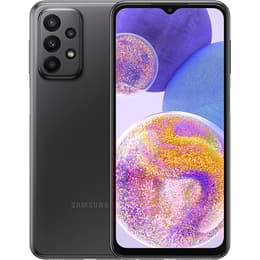
Galaxy A23
Galaxy A23
See options
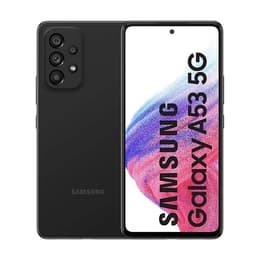
Galaxy A53 5G
Galaxy A53 5G
Starting at

Refurbished price:A$342.00

Versus A$624.00 new

See options

Ratings

The Samsung Galaxy A23 and the Samsung Galaxy A53 5G are both Android-based smartphones released in 2022, targeting users seeking capable devices within the mid-range segment. While both offer a robust Android experience with Samsung's One UI, the Galaxy A53 5G distinguishes itself with a more advanced display and enhanced camera capabilities, whereas the Galaxy A23 provides a practical feature set for everyday use.

Scores

Durability

Evaluating the longevity of a smartphone involves considering its release timeline, software support, and ease of repair.

  • Release Timeline: The Samsung Galaxy A23 was initially launched in March 2022, with a 5G variant following in August 2022. The Samsung Galaxy A53 5G was released slightly later in March 2022. This means both devices are from the same general generation, but the A53 5G benefits from a more extended software commitment.
  • Software Longevity: The Galaxy A23 (4G variant) was promised two major Android OS updates, typically reaching Android 14, and four years of security updates. The Galaxy A23 5G, however, has received updates up to Android 15 as of July 2025. In contrast, the Galaxy A53 5G offers a more substantial commitment, with four major Android OS upgrades, extending its support to Android 16, and five years of security updates, ensuring continued functionality and security until at least March 2027.
  • Repairability: Both the Galaxy A23 and Galaxy A53 5G are considered relatively repairable. Disassembly often involves heat to loosen adhesive for the back panel, and components like the battery are generally accessible, though some require specific tools and care. The Galaxy A53 5G has a repairability score of 6.75 out of 10, while the Galaxy A23 has a similar score of 6.75 out of 10 or 8.1 out of 10 depending on the assessment.

Performance

The performance of these devices impacts daily responsiveness, app handling, and multitasking efficiency.

  • Processor Capabilities: The Galaxy A23 is powered by a processor designed for efficient everyday tasks, suitable for general browsing, social media, and light gaming. The Galaxy A53 5G features a different internal processing unit, which aims to deliver a smoother experience for more demanding applications and multitasking. However, some users of the A53 5G have reported occasional sluggishness and lag, particularly when multitasking or running intensive applications. Similarly, the Galaxy A23 has also been noted by users for a slow or laggy user interface and struggles with multitasking.
  • Storage and RAM: The Galaxy A23 typically comes with 4GB or 6GB of RAM and 64GB or 128GB of internal storage. The Galaxy A53 5G generally offers more generous configurations, starting with 6GB of RAM and 128GB of storage, with options for 8GB of RAM and 256GB of storage. Both models support expandable storage via a microSD card, allowing users to increase their storage capacity.
  • Battery Behavior: Both smartphones are equipped with a 5000mAh battery, designed to provide extended usage on a single charge. Users of both devices generally report good battery life, with the capacity often lasting a full day or more with moderate use. Both support 25W fast charging, though neither includes a charger in the box.

Memory (GB)

4 GB

4 GB

Screen quality

The visual experience is a key differentiator, with distinct display technologies influencing color, contrast, and outdoor visibility.

  • Display Technology and Clarity: The Galaxy A23 features a 6.6-inch PLS LCD display, offering a resolution of 1080x2408 pixels. The Galaxy A53 5G, on the other hand, comes with a 6.5-inch Super AMOLED display, providing a resolution of 1080x2400 pixels. The Super AMOLED technology on the A53 5G typically delivers deeper blacks, higher contrast, and more vibrant colors compared to the PLS LCD of the A23.
  • Refresh Rate and Brightness: Both devices boast a 120Hz refresh rate, contributing to smoother scrolling and a more fluid visual experience. The Galaxy A53 5G's Super AMOLED display can achieve higher peak brightness levels, making it generally more comfortable to view in bright outdoor conditions. The A23's LCD screen can struggle with sunlight visibility. Both displays are protected by Corning Gorilla Glass 5.
  • Screen Size and Viewing: While both screens are large, the Galaxy A23 has a slightly larger 6.6-inch display compared to the A53 5G's 6.5-inch screen. However, the A23 has more noticeable bezels and a teardrop notch for the front camera, while the A53 5G features a punch-hole cutout, offering a more expansive viewing area relative to its size.

Audiovisual

The camera systems on both phones offer different capabilities for capturing photos and videos.

  • Rear Camera System: The Galaxy A23 is equipped with a quad-camera setup, featuring a 50-megapixel main sensor, a 5-megapixel ultrawide lens, and two 2-megapixel sensors for macro and depth. The Galaxy A53 5G also has a quad-camera array, but with a higher-resolution 64-megapixel main sensor that includes optical image stabilization (OIS), a 12-megapixel ultrawide lens, and two 5-megapixel sensors for macro and depth. The A53 5G's main camera generally produces sharper images with better detail, especially in challenging lighting conditions, due to its higher resolution and OIS.
  • Front Camera and Video Quality: For selfies and video calls, the Galaxy A23 features an 8-megapixel front camera. The Galaxy A53 5G significantly upgrades this with a 32-megapixel front camera, capable of capturing more detailed self-portraits. In terms of video recording, the A23 supports up to 1080p resolution at 30 frames per second (fps) for both front and rear cameras. The A53 5G offers more versatile video capabilities, supporting 4K recording at 30fps on both its front and main rear cameras, providing higher quality footage.
  • Audio Experience: The Galaxy A23 includes a 3.5mm headphone jack, a feature absent on the Galaxy A53 5G. The A53 5G compensates with stereo speakers, offering a more immersive audio experience for media consumption compared to the A23's single loudspeaker.

Miscellaneous

Beyond core features, several practical elements contribute to the overall user experience and device utility.

  • Connectivity: The Galaxy A23 is available in both 4G and 5G variants, while the Galaxy A53 5G, as its name suggests, offers 5G connectivity as a standard feature. Both devices support modern Wi-Fi standards and Bluetooth for wireless connections.
  • Physical Design and Handling: Both phones feature a plastic build for their frame and back. The Galaxy A23 measures 165.4 x 76.9 x 8.4 mm and weighs 195 grams. The Galaxy A53 5G is slightly more compact and lighter at 159.6 x 74.8 x 8.1 mm and 189 grams. The A53 5G also boasts an IP67 rating for dust and water resistance, a durability feature not present on the A23.
  • Security and Ports: The Galaxy A23 incorporates a side-mounted fingerprint sensor for biometric authentication. The Galaxy A53 5G utilizes an under-display optical fingerprint sensor. Both devices feature a USB-C port for charging and data transfer. As mentioned, the A23 retains a 3.5mm headphone jack, which the A53 5G omits.

Screen size (in)

6.6

6.5

Network

4G

5G

SIM card

Dual Physical SIM

Physical SIM

Carrier compatibility

Unlocked

Unlocked

User feedback for the Samsung Galaxy A23 often highlights its large display and solid battery life as positive aspects. However, common criticisms include a sometimes sluggish user interface, occasional overheating, and a camera that performs adequately in good lighting but struggles in low-light conditions. Some users have also reported issues with Wi-Fi reliability and slow charging.

The Samsung Galaxy A53 5G is frequently praised for its vibrant Super AMOLED display, improved camera system with OIS, and its commitment to extended software updates. Conversely, some users have expressed concerns about its performance, noting instances of lag and stuttering, particularly during multitasking or with demanding applications. Battery drain issues have also been reported by a segment of users.

Users who prioritize a more immersive visual experience, enhanced camera capabilities for both photos and videos, and a longer period of software support may find the Galaxy A53 5G to be a more suitable choice. Its IP67 water and dust resistance also adds a layer of durability. On the other hand, individuals who value the presence of a traditional 3.5mm headphone jack, a slightly larger screen, and a device that handles everyday tasks without needing top-tier performance might lean towards the Galaxy A23. Both models represent a practical choice for those seeking a quality-assured refurbished option, offering a sustainable alternative for their mobile needs.


See all articles

Our recent comparisons