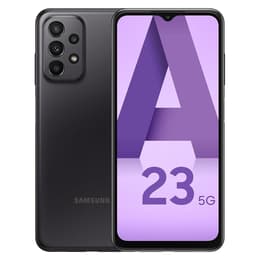
Galaxy A23 vs Galaxy A23 5G

Galaxy A23
Galaxy A23
See options
Galaxy A23 5G
Galaxy A23 5G
Starting at

Refurbished price:A$219.00

Versus A$457.00 new

See options

Ratings

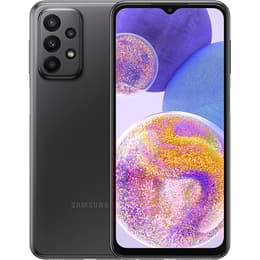
The Samsung Galaxy A23 and the Samsung Galaxy A23 5G are both mid-range smartphones released by Samsung, with the Galaxy A23 launching in March 2022 and the Galaxy A23 5G following in August 2022. While they share a similar design and core camera capabilities, the primary distinction lies in their network connectivity and the underlying processing power that supports it. Both devices run on the Android operating system with Samsung's One UI overlay, offering a consistent software experience.

Scores

Durability

The longevity of a smartphone is influenced by its release date and the manufacturer's commitment to software updates. These two models, being part of the same generation, offer comparable expected lifespans in terms of software support.

  • Release Timeline: The Galaxy A23 was released in March 2022, while the Galaxy A23 5G followed a few months later in August 2022. This slight difference means the 5G variant may receive software support for a marginally longer period.
  • Software Updates: Both devices were launched with Android 12 and are slated to receive two major Android OS upgrades and four years of security updates. This means both models are expected to receive updates up to Android 14, with security patches extending into 2026 or 2027. Some users have reported the Galaxy A23 5G receiving updates up to Android 15.
  • Repairability: Both the Galaxy A23 and A23 5G are considered moderately difficult to repair, with the battery being a particular challenge due to strong adhesive. Common repairs like screen replacement are feasible with the right tools and patience.

Release year

2022

2022

Compatible with latest Update

Yes

Yes

Operating system

Android

Android

Foldable

No

No

Performance

The performance of these two Galaxy A-series phones is a key area of differentiation, primarily due to their distinct processors and internal storage technologies.

  • Processing Power: The Galaxy A23 is equipped with a processor designed for 4G connectivity, which handles everyday tasks and light multitasking smoothly. The Galaxy A23 5G, however, features a more capable processor optimized for 5G networks, resulting in generally faster app loading, smoother navigation, and improved performance in more demanding applications and games.
  • System Responsiveness: Users of the Galaxy A23 5G often report a more responsive overall experience, benefiting from the enhanced processing capabilities and a higher display refresh rate. While the standard A23 is adequate for general use, some users have noted occasional sluggishness, particularly with the camera app or when multitasking heavily.
  • Storage and RAM: Both models offer various RAM configurations (4GB, 6GB, 8GB) and internal storage options (64GB, 128GB), expandable via microSD. However, the Galaxy A23 5G utilizes UFS 2.2 storage, which is generally faster than the eMMC storage found in the standard Galaxy A23, contributing to quicker app installs and file transfers.

Memory (GB)

4 GB

4 GB

Screen quality

Both the Galaxy A23 and Galaxy A23 5G feature large displays, but there are subtle differences in their specifications that impact the visual experience.

  • Display Technology and Size: Both devices come with a 6.6-inch PLS LCD display, offering a large viewing area. They share the same FHD+ resolution (1080x2408 pixels), ensuring content appears clear and detailed.
  • Refresh Rate: A notable difference is the screen's refresh rate. The Galaxy A23 features a 90Hz refresh rate, providing a smoother scrolling experience than a standard 60Hz display. The Galaxy A23 5G elevates this further with a 120Hz refresh rate, which results in even more fluid animations and a more responsive feel during navigation and gaming.
  • Brightness and Clarity: Both displays offer sufficient brightness for indoor use, and while neither is an OLED panel, the PLS LCD technology provides good color reproduction. The FHD+ resolution ensures text and images are sharp for typical viewing distances.

Resolution

1080 x 2408

1080 x 2408

Screen type

PLS LCD

PLS LCD

Audiovisual

The camera systems on the Galaxy A23 and Galaxy A23 5G are largely identical in terms of hardware, offering a versatile setup for various photographic situations.

  • Rear Camera System: Both phones feature a quad-camera array on the rear, headlined by a 50-megapixel main sensor with Optical Image Stabilization (OIS). This is complemented by a 5-megapixel ultrawide lens, a 2-megapixel macro lens, and a 2-megapixel depth sensor. This configuration allows for detailed wide shots, expansive landscapes, close-up photography, and portraits with background blur.
  • Photography Performance: The 50MP main sensor with OIS helps in capturing stable photos and videos, especially in challenging lighting conditions. While the hardware is the same, the Galaxy A23 5G's more powerful processor may contribute to slightly faster image processing and potentially better overall image quality, particularly in complex scenes. Both can record video at 1080p resolution at 30 frames per second.
  • Front Camera and Audio: For selfies and video calls, both models include an 8-megapixel front-facing camera. In terms of audio, both devices are equipped with a 3.5mm headphone jack and offer comparable speaker output for media consumption.

Main camera

50 megapixels

50 megapixels

Front camera

8 megapixels

8 megapixels

Miscellaneous

Beyond the core specifications, several other features contribute to the overall user experience and practical utility of these smartphones.

  • Connectivity: The most significant difference is the network capability; the Galaxy A23 supports 4G LTE, while the Galaxy A23 5G offers next-generation 5G connectivity, enabling faster download and upload speeds in supported areas. Both support Wi-Fi 802.11 a/b/g/n/ac. The Galaxy A23 5G features Bluetooth 5.1, a slight upgrade from the Galaxy A23's Bluetooth 5.0. NFC for contactless payments is generally available on the 5G model and may vary by region for the 4G model.
  • Ports and Sensors: Both devices include a USB-C 2.0 port for charging and data transfer, along with a 3.5mm headphone jack. For security, both integrate a side-mounted fingerprint sensor. They also feature standard sensors like an accelerometer, gyroscope, and proximity sensor.
  • Design and Build: The physical dimensions and weight are very similar, with both phones featuring a plastic back and a Gorilla Glass 5 front for display protection. The Galaxy A23 5G might have a matte plastic finish compared to the glossy finish of the 4G variant, which can affect grip and resistance to fingerprints.

Weight

195 oz

197 oz

Screen size (in)

6.6

6.6

Network

4G

5G

SIM card

Dual Physical SIM

Physical SIM

Carrier compatibility

Unlocked

Unlocked

The Samsung Galaxy A23 and Galaxy A23 5G cater to users with slightly different priorities, primarily revolving around network speed and overall performance. User feedback for both models is mixed, with some praising their capabilities for the price point, while others express concerns about performance and responsiveness.

Common praise for both devices often highlights their large, clear displays, long-lasting 5000 mAh batteries, and versatile camera systems with OIS. Users appreciate the inclusion of a 3.5mm headphone jack and expandable storage. However, criticisms frequently point to the performance of the standard A23, with some users finding it slow or laggy, especially with the camera. For the A23 5G, while generally better performing, some users with lower RAM variants have reported similar issues, and there are occasional mentions of overheating or signal reception problems.

Users prioritizing future-proof connectivity and a smoother, more responsive experience for daily tasks and moderate gaming will find the Galaxy A23 5G better suited to their needs, thanks to its more powerful processor and 120Hz display. Its faster internal storage also contributes to a snappier feel. Conversely, individuals who primarily use their phone for basic communication, web browsing, and social media, and who do not require 5G speeds, may find the standard Galaxy A23 to be a capable option. It still offers a good display and camera for its segment.

When considering either model, exploring quality-assured refurbished options can provide an eco-friendly alternative, offering a reliable device while contributing to sustainability.

See all articles

Our recent comparisons