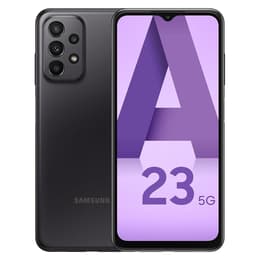
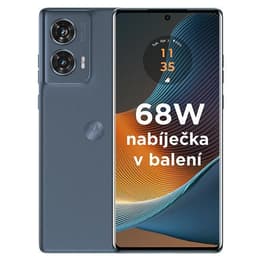

Galaxy A23 5G vs Motorola Edge 50 Fusion

Galaxy A23 5G
Galaxy A23 5G
Starting at

Refurbished price:A$219.00

Versus A$457.00 new

See options
Motorola Edge 50 Fusion
See options

The Samsung Galaxy A23 5G, released in late 2022, and the Motorola Edge 50 Fusion, launched in mid-2024, represent two distinct approaches to the modern smartphone experience. While both devices operate on the Android platform, they offer different strengths in terms of display technology, processing power, and overall feature sets. This comparison aims to highlight these practical differences to help users determine which device best aligns with their daily needs.

Scores

Durability

When considering the long-term usability of a smartphone, factors like release timeline, software support, and physical resilience are key. The Galaxy A23 5G and the Motorola Edge 50 Fusion offer varying levels of longevity and protection.

  • Release Timeline: The Galaxy A23 5G was introduced in late 2022, while the Motorola Edge 50 Fusion arrived in mid-2024. This two-year difference means the Edge 50 Fusion benefits from a more recent hardware foundation and a longer potential software support window.
  • Software Longevity: The Galaxy A23 5G launched with Android 12 and has received updates up to Android 14. Samsung typically provides several years of OS and security updates for its A-series devices. The Motorola Edge 50 Fusion, launching with Android 14, is expected to receive three years of OS updates and four years of security patches, offering a slightly more extended and current software experience from its release date.
  • Physical Durability: Both phones feature Corning Gorilla Glass 5 on their front displays for scratch resistance. However, the Motorola Edge 50 Fusion distinguishes itself with an IP68 rating, indicating robust dust and water resistance, capable of submersion in up to 1.5 meters of water for 30 minutes. The Galaxy A23 5G does not carry an official IP rating, suggesting less protection against environmental elements.

Release year

2022

2024

Compatible with latest Update

Yes

Yes

Operating system

Android

Android

Foldable

No

No

Performance

The responsiveness and capability of a smartphone's internal components significantly impact daily usage, from app loading to multitasking and gaming. The Galaxy A23 5G and the Motorola Edge 50 Fusion are equipped with different processing platforms.

  • Processing Power: The Motorola Edge 50 Fusion incorporates a newer generation processor, which generally translates to more efficient handling of demanding applications and smoother overall operation compared to the Galaxy A23 5G's processor. Users engaging in mobile gaming or extensive video editing may notice a more fluid experience on the Edge 50 Fusion.
  • Multitasking and Storage: The Galaxy A23 5G offers RAM configurations up to 8GB and includes a microSD card slot for expandable storage up to 1TB. The Motorola Edge 50 Fusion provides RAM options up to 12GB and internal storage up to 512GB, but it does not support expandable storage via a microSD card. This means the Edge 50 Fusion offers more built-in memory for smoother multitasking, while the A23 5G provides flexibility for users who prefer physical storage expansion.
  • System Responsiveness: Both devices are designed to handle everyday tasks efficiently. However, the Edge 50 Fusion's more recent processor and higher RAM options contribute to a generally snappier feel and better sustained performance during prolonged use or when running multiple applications simultaneously. Some users of the Edge 50 Fusion have noted that while it handles daily tasks with ease, it might struggle with very high-performance tasks like rapid photo taking.

Memory (GB)

4 GB

12 GB

Screen quality

The display is a primary interface for smartphone interaction, and both devices offer distinct visual experiences through their screen technologies and specifications.

  • Display Technology and Clarity: The Samsung Galaxy A23 5G features a 6.6-inch PLS LCD display with a resolution of 1080 x 2408 pixels. In contrast, the Motorola Edge 50 Fusion boasts a 6.7-inch P-OLED display with a resolution of 1080 x 2400 pixels. P-OLED technology typically delivers deeper blacks, higher contrast, and more vibrant colors compared to PLS LCD, enhancing the viewing experience for media consumption.
  • Refresh Rate and Smoothness: The Galaxy A23 5G offers a 120Hz refresh rate, providing smooth scrolling and a responsive feel. The Motorola Edge 50 Fusion elevates this with a 144Hz refresh rate, offering an even more fluid visual experience, particularly noticeable in fast-paced content or gaming.
  • Brightness and Outdoor Visibility: The Edge 50 Fusion also features a higher peak brightness of 1600 nits, which significantly improves outdoor visibility and the viewing of HDR content. While the Galaxy A23 5G's display is clear, it does not reach the same brightness levels, which might affect usability in direct sunlight.

Resolution

1080 x 2408

1080 x 2400

Screen type

PLS LCD

P-OLED

Audiovisual

For many users, the camera system is a crucial aspect of a smartphone. Both the Galaxy A23 5G and the Motorola Edge 50 Fusion offer versatile camera setups, but with differences in their capabilities.

  • Rear Camera Systems: The Galaxy A23 5G features a quad-camera setup with a 50MP main sensor with Optical Image Stabilization (OIS), a 5MP ultrawide lens, and two 2MP sensors for macro and depth. The Motorola Edge 50 Fusion has a dual-camera system, also with a 50MP main sensor with OIS, but it pairs this with a higher resolution 13MP ultrawide lens that also functions for macro shots. The Edge 50 Fusion's ultrawide camera offers a wider field of view and potentially more detailed images.
  • Photography and Video Quality: Both main 50MP sensors are capable of capturing detailed images in good lighting. The OIS on both devices helps in reducing blur from handshakes, particularly in lower light conditions. For video recording, the Galaxy A23 5G supports up to 1080p at 30 frames per second. The Motorola Edge 50 Fusion offers more advanced video capabilities, supporting 4K recording at 30 frames per second for both its main and front cameras.
  • Front Camera and Audio: The Galaxy A23 5G includes an 8MP front camera. The Motorola Edge 50 Fusion features a higher resolution 32MP front camera, which can result in more detailed selfies and clearer video calls. The Edge 50 Fusion also includes stereo speakers with Dolby Atmos support, enhancing the audio experience for media consumption.

Main camera

50 megapixels

50 megapixels

Front camera

8 megapixels

32 megapixels

Miscellaneous

Beyond core specifications, several practical features contribute to the overall user experience and daily convenience of a smartphone.

  • Connectivity and Ports: Both devices support 5G connectivity. The Galaxy A23 5G includes a 3.5mm headphone jack and a USB Type-C 2.0 port. The Motorola Edge 50 Fusion omits the headphone jack but offers a USB Type-C port, along with Wi-Fi 6 and Bluetooth 5.2 for enhanced wireless connectivity.
  • Biometric Security: The Galaxy A23 5G typically features a side-mounted fingerprint sensor. The Motorola Edge 50 Fusion incorporates an optical under-display fingerprint sensor, offering a more integrated and modern aesthetic. Both devices also support face recognition for unlocking.
  • Battery and Charging: Both smartphones are equipped with a substantial 5000 mAh battery, designed to provide all-day power for most users. However, their charging speeds differ significantly. The Galaxy A23 5G supports 25W fast charging, while the Motorola Edge 50 Fusion boasts 68W TurboPower fast charging, capable of reaching 50% charge in approximately 15 minutes.
  • Design and Handling: The Galaxy A23 5G measures 165.4 x 76.9 x 8.4 mm and weighs 197g. The Motorola Edge 50 Fusion is slightly more compact and lighter at 161.9 x 73.1 x 7.9 mm and weighing around 175g, potentially offering a more comfortable in-hand feel for some users.

Weight

197 oz

175 oz

Screen size (in)

6.6

6.7

Network

5G

5G

SIM card

Physical SIM

Dual Physical SIM

Carrier compatibility

Unlocked

Unlocked

Both the Samsung Galaxy A23 5G and the Motorola Edge 50 Fusion cater to users seeking capable Android smartphones, but they excel in different areas based on their respective release timelines and design philosophies.

The Galaxy A23 5G is often praised by users for its reliable performance, capable camera system, and long-lasting battery. Its inclusion of a 3.5mm headphone jack and expandable storage via microSD card are notable advantages for users who prioritize these features. The 120Hz LCD display provides a smooth viewing experience, and Samsung's software update policy for its A-series devices offers a reasonable expectation of continued support.

Conversely, the Motorola Edge 50 Fusion, being a newer device, brings several enhancements. Users frequently highlight its stylish design, vibrant P-OLED display with a higher 144Hz refresh rate, and robust IP68 dust and water resistance. The faster 68W charging is a significant convenience, allowing for quick power top-ups. Its more powerful processor generally handles daily tasks smoothly, though some users have observed it might not be ideal for the most intensive, sustained high-performance tasks. The higher resolution front camera and stereo speakers also contribute to an enhanced multimedia experience.

Users prioritizing a more modern display, faster charging, and greater physical durability with an IP68 rating may find the Motorola Edge 50 Fusion to be a more suitable choice. Those who value a traditional headphone jack, expandable storage, and a slightly more established software update track record from Samsung might lean towards the Galaxy A23 5G. Both devices offer a solid foundation for daily smartphone use, and considering a quality-assured refurbished option for either model can be an eco-friendly alternative to extend their lifecycle.


See all articles

Our recent comparisons