
Motorola Edge 30 Fusion vs Nokia X30

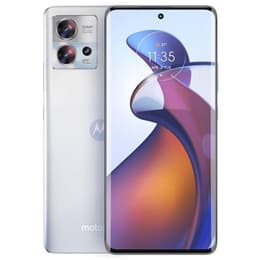
Motorola Edge 30 Fusion
Starting at

Refurbished price:A$257.46

Versus A$1,352.00 new

See options
Nokia X30
Nokia X30
Starting at

Refurbished price:A$298.00

Versus A$965.00 new

See options

The Motorola Edge 30 Fusion and the Nokia X30, both released in September 2022, are smartphones that offer distinct approaches to the user experience. While the Motorola Edge 30 Fusion emphasizes a powerful processor and a high refresh rate display, the Nokia X30 focuses on a durable, eco-conscious design and a commitment to software longevity. Both devices run on the Android operating system, providing users with a familiar and customizable interface, but they cater to different priorities in terms of hardware and long-term support.

Scores

Durability

When considering the long-term usability of these devices, their release timelines and software support policies are key differentiators. Both phones launched in September 2022, starting with Android 12.

  • Software Updates: The Motorola Edge 30 Fusion was promised two major Android OS updates and three years of security patches, and has since received Android 13 and Android 14. The Nokia X30 initially promised three major OS updates and three years of security updates. It has received Android 13 and Android 14, but there have been reports indicating that Android 15 may not be delivered, despite earlier commitments.
  • Physical Durability: The Nokia X30 features an IP67 rating for dust and water resistance, meaning it can withstand submersion in up to 1 meter of water for 30 minutes. It also incorporates a 100% recycled aluminum frame and a 65% recycled plastic back, with Gorilla Glass Victus protecting the display. The Motorola Edge 30 Fusion has an IP52 rating, offering protection against dust and dripping water, and uses Corning Gorilla Glass 5 for its display.
  • Repairability: While specific repairability scores for these models are not widely available, Nokia as a brand generally ranks well for fix rates based on real repair data. The Motorola Edge 30 Fusion's construction includes an aluminum frame and glass back.

Release year

2022

2022

Compatible with latest Update

Yes

No

Operating system

Android

Android

Foldable

No

No

Performance

The performance capabilities of these two smartphones are notably different, primarily due to their internal processing hardware.

  • Processing Power: The Motorola Edge 30 Fusion is equipped with a powerful processor, which allows it to handle demanding applications and multitasking smoothly. This results in a responsive user experience, making it well-suited for intensive tasks like high-fidelity gaming and heavy app usage. In contrast, the Nokia X30 features a mid-range processor. While capable of providing a smooth experience for everyday tasks and general navigation, users might notice occasional lags when running many apps simultaneously or engaging in graphically intensive gaming.
  • Multitasking and Storage: Both devices offer various storage configurations, typically starting from 128GB, with the Motorola Edge 30 Fusion commonly featuring 8GB of RAM and the Nokia X30 available in 6GB or 8GB RAM variants. Neither device supports expandable storage via a microSD card.
  • Battery Performance: The Motorola Edge 30 Fusion houses a 4400 mAh battery, which generally provides a full day of moderate to heavy use. It supports 68W fast charging, allowing for rapid power replenishment. The Nokia X30 has a 4200 mAh battery, offering solid endurance for a day of typical usage. It supports 33W fast charging, though the charging adapter is not always included.

Memory (GB)

8 GB

8 GB

Screen quality

The visual experience on both devices is delivered through high-quality displays, though with some key distinctions.

  • Display Technology and Size: The Motorola Edge 30 Fusion features a 6.55-inch pOLED display, known for its deep blacks and vibrant colors. The Nokia X30 comes with a slightly smaller 6.43-inch AMOLED display, also offering rich colors and good contrast.
  • Refresh Rate and Smoothness: A significant difference lies in the refresh rates. The Edge 30 Fusion boasts a 144Hz refresh rate, providing exceptionally smooth scrolling and fluid animations, which enhances the overall user interaction and gaming experience. The Nokia X30 offers a 90Hz refresh rate, which is smoother than standard 60Hz displays but not as fluid as the Motorola's higher rate.
  • Brightness and Clarity: Both displays offer Full HD+ resolution (1080x2400 pixels), ensuring clear and sharp visuals for everyday content consumption. The Motorola Edge 30 Fusion can reach a peak brightness of 1100 nits, making it highly visible even in bright outdoor conditions. The Nokia X30 has a peak brightness of 700 nits, which is sufficient for most environments.

Resolution

1080 x 2400

1080 x 2400

Screen type

P-OLED

AMOLED

Audiovisual

Both smartphones offer capable camera systems, designed to capture various moments, though with different strengths and features.

  • Rear Camera Systems: The Motorola Edge 30 Fusion features a triple camera setup with a 50MP main sensor that includes optical image stabilization (OIS), a 13MP ultrawide camera with autofocus that also functions for macro shots, and a 2MP depth sensor. The Nokia X30 sports a dual-camera system, comprising a 50MP main sensor with OIS and a 13MP ultrawide lens.
  • Photography Performance: The main camera on the Edge 30 Fusion delivers detailed photos with good contrast and natural colors in well-lit conditions. Its ultrawide camera also performs well, especially for macro photography. In low light, the main camera holds up effectively, with a dedicated night mode enhancing results. The Nokia X30's main camera also produces good daylight images with natural colors and impressive detail. Its low-light performance is a strong point, utilizing features like Night Mode 2.0 and Dark Vision for sharp and vivid photos even in very dim conditions.
  • Video Recording: The Motorola Edge 30 Fusion offers versatile video recording, capable of up to 8K resolution at 30 frames per second from its main camera, and 4K from both its ultrawide and front cameras. The Nokia X30's video capabilities are more modest, recording at up to 1080p at 30 frames per second for both its rear and front cameras.
  • Front Camera: For selfies, the Edge 30 Fusion has a 32MP front-facing camera with autofocus, producing detailed and natural-looking portraits. The Nokia X30 features a 16MP front camera, which also delivers good results for selfies.

Main camera

50 megapixels

50 megapixels

Front camera

32 megapixels

16 megapixels

Miscellaneous

Beyond core specifications, several practical elements contribute to the overall user experience of these devices.

  • Connectivity and Ports: Both phones support 5G connectivity, ensuring access to faster mobile networks. The Motorola Edge 30 Fusion supports Wi-Fi 6E and Bluetooth 5.2, while the Nokia X30 supports Wi-Fi 6 and Bluetooth 5.1. Both devices feature a USB-C port for charging and data transfer, but neither includes a traditional 3.5mm headphone jack.
  • Biometric Security: For secure unlocking, both the Motorola Edge 30 Fusion and the Nokia X30 incorporate an in-display fingerprint sensor.
  • Design and Handling: The Motorola Edge 30 Fusion has a slim profile at 7.45mm thick and weighs 175g, contributing to a comfortable in-hand feel. It features an aluminum frame and a glass back. The Nokia X30 is slightly thicker at 7.99mm and weighs 185g, with a design that emphasizes sustainability through its use of recycled materials for the aluminum frame and plastic back.
  • Additional Features: The Motorola Edge 30 Fusion includes NFC for contactless payments. The Nokia X30 also supports NFC.

Weight

168 oz

185 oz

Screen size (in)

6,55

6.43

Network

5G

5G

SIM card

Dual Physical SIM

Dual Physical SIM

Carrier compatibility

Unlocked

Unlocked

Users frequently praise the Motorola Edge 30 Fusion for its strong performance, vibrant 144Hz OLED display, and rapid 68W fast charging. Its design and build quality are often highlighted as premium, offering a comfortable and lightweight feel. However, some users note that while its camera system is improved, it may not consistently match the performance of top-tier flagships, and its IP52 water resistance is less robust than some competitors. Thermal management during extended heavy use, such as gaming, has also been mentioned as a point of concern.

The Nokia X30 receives commendation for its eco-friendly construction, featuring recycled materials and a more substantial IP67 dust and water resistance rating. Its compact size and sturdy build are appreciated, along with a good AMOLED display and reliable battery life for daily use. The camera's low-light performance is often cited as a strong feature for its category. A frequent criticism, however, revolves around the controversy surrounding its software update policy, with reports suggesting a shorter update lifespan than initially promised. Its mid-range processor, while capable for general use, is also noted as less powerful compared to some alternatives in its segment, and video recording is limited to 1080p.

Users prioritizing high performance, a very smooth display, and fast charging for demanding applications and gaming may find the Motorola Edge 30 Fusion well-suited to their needs. Those who value environmental considerations, robust water and dust protection, and a reliable camera for low-light photography might lean towards the Nokia X30. Both devices offer a quality-assured refurbished option, providing an eco-friendly alternative for consumers.
See all articles

Our recent comparisons