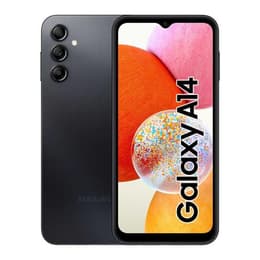


Galaxy A14 vs Oppo Find X5 Pro

Galaxy A14
Galaxy A14
Starting at

Refurbished price:A$215.00

Versus A$390.00 new

See options
Oppo Find X5 Pro
Oppo Find X5 Pro
Starting at

Refurbished price:A$641.00

Versus A$1,769.00 new

See options

Ratings

The Samsung Galaxy A14, released in early 2023, and the Oppo Find X5 Pro, launched in early 2022, represent distinct offerings in the smartphone market. While the Galaxy A14 focuses on delivering essential smartphone capabilities, the Find X5 Pro aims for a premium experience with advanced features. Both devices operate on the Android platform, but they cater to different user priorities through their hardware and software implementations.

Scores

Durability

The longevity of a smartphone is influenced by its release timeline, software support, and physical durability.

  • Release Timeline: The Oppo Find X5 Pro was released in February 2022, making it an earlier model compared to the Samsung Galaxy A14, which launched in early 2023. This difference in release dates impacts their respective software support cycles.
  • Software Support: The Galaxy A14 is expected to receive two major Android OS updates and four years of security updates, extending its software relevance. The Oppo Find X5 Pro was promised four years of software support from its release.
  • Physical Durability: The Find X5 Pro features a ceramic back and Gorilla Glass Victus on its display, along with an IP68 rating for dust and water resistance, indicating a robust build. The Galaxy A14 uses a plastic back and sides with an unspecified glass front and does not carry an official IP rating.

Release year

2023

2022

Compatible with latest Update

No

Yes

Operating system

Android

Android

Foldable

No

No

Performance

Performance differences between these two devices are notable, impacting how smoothly they handle various tasks.

  • Processor Capabilities: The Oppo Find X5 Pro is equipped with a high-performance processor, enabling it to manage demanding applications, intensive multitasking, and graphic-heavy games with fluidity. The Galaxy A14 features a processor designed for everyday tasks, providing a satisfactory experience for general use and lighter applications.
  • Multitasking and Responsiveness: Users of the Find X5 Pro can expect quick app loading and seamless transitions between multiple applications due to its substantial RAM configurations. The Galaxy A14, with its more modest RAM options, is suitable for users with less intensive multitasking needs.
  • Storage Options: The Find X5 Pro offers internal storage options up to 512GB, without expandable storage. The Galaxy A14 provides internal storage up to 128GB, but it supports microSD cards for expansion up to 1TB, offering flexibility for users who require additional space for media and files.

Memory (GB)

4 GB

12 GB

Screen quality

The visual experience on these smartphones differs significantly due to their display technologies and specifications.

  • Display Technology and Clarity: The Oppo Find X5 Pro features a 6.7-inch LTPO2 AMOLED display with a QHD+ resolution (1440 x 3216 pixels), offering sharp details, deep blacks, and vibrant colors. The Samsung Galaxy A14 has a 6.6-inch PLS LCD display with a Full HD+ resolution (1080 x 2408 pixels), providing clear visuals suitable for general content consumption.
  • Refresh Rate and Smoothness: The Find X5 Pro boasts an adaptive refresh rate that can scale from 1Hz to 120Hz, contributing to smooth scrolling and a responsive feel, while also conserving battery life. The Galaxy A14 offers either a 60Hz or 90Hz refresh rate depending on the model, which provides a standard or slightly smoother viewing experience for everyday interactions.
  • Brightness and Outdoor Visibility: With a peak brightness of 1300 nits, the Find X5 Pro's display performs well in bright outdoor conditions. The Galaxy A14's LCD panel is generally less bright, which may result in some glare and reduced visibility under direct sunlight.

Resolution

1080 x 2408

1440 x 3216

Screen type

PLS LCD

LTPO2 AMOLED

Audiovisual

Camera capabilities are a key differentiator, with both devices offering distinct photographic experiences.

  • Rear Camera System: The Oppo Find X5 Pro features a versatile triple-camera setup, including a 50MP main sensor with optical image stabilization, a 50MP ultrawide lens, and a 13MP telephoto lens with 2x optical zoom. It also incorporates a dedicated imaging neural processing unit for enhanced image processing. The Samsung Galaxy A14 has a 50MP main camera, a 2MP macro lens, and a 2MP depth sensor, with some 5G variants lacking an ultrawide lens.
  • Photography Performance: The Find X5 Pro excels in capturing detailed and vibrant images across various lighting conditions, including impressive low-light performance, and offers good video stabilization. The Galaxy A14 performs well in bright daylight, producing decent photos, but its low-light performance is less consistent, and it may sometimes over-saturate colors.
  • Video Recording and Front Camera: The Find X5 Pro supports 4K video recording at up to 60 frames per second, along with a 32MP front camera for detailed selfies. The Galaxy A14 records video at 1080p at 30 frames per second and includes a 13MP front camera.

Main camera

50 megapixels

50 megapixels

Front camera

13 megapixels

32 megapixels

Miscellaneous

Beyond core features, several practical elements contribute to the overall user experience.

  • Connectivity and Ports: The Oppo Find X5 Pro supports advanced connectivity standards like Wi-Fi 6/6E and Bluetooth 5.2, along with 5G capabilities and NFC. It features a USB-C 3.1 port but lacks a 3.5mm headphone jack. The Galaxy A14 also offers 5G (on its 5G model), Wi-Fi 5, Bluetooth 5.2, and NFC, and includes both a USB-C port and a 3.5mm headphone jack.
  • Biometrics and Build: The Find X5 Pro integrates an in-display fingerprint scanner for secure unlocking and features a premium ceramic build with IP68 dust and water resistance. The Galaxy A14 typically uses a side-mounted fingerprint sensor and has a plastic construction without an official water resistance rating.
  • Dimensions and Handling: The Oppo Find X5 Pro measures 163.7 x 73.9 x 8.5 mm and weighs 218g, offering a substantial feel. The Samsung Galaxy A14 is slightly larger at 167.7 x 78 x 9.1 mm and weighs around 205g (for the 5G model), providing a larger footprint.

Weight

201 oz

218 oz

Screen size (in)

6.6

6.7

Network

4G

5G

SIM card

Physical SIM

Physical SIM + eSIM

Carrier compatibility

Unlocked

Unlocked

User feedback indicates that the Oppo Find X5 Pro is frequently praised for its premium design, vibrant and smooth display, powerful performance, and exceptionally fast charging capabilities. Its main camera is often highlighted for producing high-quality images, particularly in challenging lighting conditions. Common criticisms sometimes point to its telephoto camera, which offers a more limited optical zoom compared to some competitors, and occasional software quirks.

The Samsung Galaxy A14 is generally well-regarded for its impressive battery life, which can extend to two days with moderate use, and its capable main camera in well-lit environments. Users appreciate its expandable storage option and the inclusion of a 3.5mm headphone jack. However, some common concerns include its slower charging speed, the display's visibility in direct sunlight, and less consistent camera performance in low light.

Users prioritizing a high-end visual experience, robust performance for demanding applications, and rapid charging will find the Oppo Find X5 Pro well-suited to their needs. Its advanced camera system, particularly the main and ultrawide lenses, caters to those who value photography. Conversely, users who prioritize extended battery life, expandable storage, and a more budget-conscious approach to smartphone ownership may lean toward the Samsung Galaxy A14. It serves as a reliable device for everyday communication and media consumption.

Both models are available as quality-assured refurbished options, providing an eco-friendly alternative for consumers seeking to make informed and sustainable choices.


See all articles

Our recent comparisons