
Galaxy A14 vs Motorola Edge 30 Pro

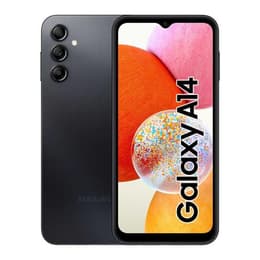
Galaxy A14
Galaxy A14
Starting at

Refurbished price:A$215.00

Versus A$390.00 new

See options
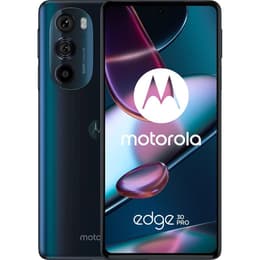
Motorola Edge 30 Pro
Starting at

Refurbished price:A$289.72

Versus A$2,709.00 new

See options

The Samsung Galaxy A14, released in early 2023, and the Motorola Edge 30 Pro, launched in early 2022, are both Android smartphones designed for different user segments. While the Galaxy A14 focuses on essential smartphone functionalities, the Motorola Edge 30 Pro offers a more advanced feature set. Both devices run on the Android operating system, providing access to a wide ecosystem of applications and services.

Scores

Durability

When considering the long-term usability of these devices, their release timelines and software support are key factors. The Motorola Edge 30 Pro, released in February 2022, typically receives major Android updates for a period of two to three years, with security updates extending beyond that. The Samsung Galaxy A14, launched in early 2023, benefits from a slightly newer release, potentially offering an additional year of software support compared to the Edge 30 Pro.

  • Software Longevity: The Galaxy A14, being a newer device, is likely to receive Android version updates for a longer duration than the Motorola Edge 30 Pro, extending its software lifespan.
  • Build Durability: The Motorola Edge 30 Pro features Gorilla Glass 3 on the front and Gorilla Glass 5 on the back, offering enhanced scratch and drop resistance, along with an IP52 rating for splash resistance. The Galaxy A14 utilizes a glass front with a plastic frame and back, and does not specify any particular glass protection or official IP rating.
  • Repairability: Both devices are designed with modern smartphone construction, meaning repairs typically involve specialized tools and expertise. The availability of parts and repair guides can vary, but neither is noted for exceptional ease of repair.

Release year

2023

2022

Compatible with latest Update

No

Yes

Operating system

Android

Android

Foldable

No

No

Performance

Performance is a significant area of distinction between these two smartphones, impacting how smoothly they handle various tasks and applications.

  • Processing Power: The Motorola Edge 30 Pro is equipped with a high-end processor, enabling it to handle demanding applications, intensive multitasking, and graphic-heavy games with fluidity. Users can expect quick app loading times and seamless transitions between tasks. The Samsung Galaxy A14 features a processor designed for everyday tasks, providing reliable performance for general use such as browsing, social media, and light gaming.
  • Storage and Responsiveness: The Edge 30 Pro offers faster UFS 3.1 storage options, contributing to quicker app installations and file transfers, with configurations up to 12GB of RAM for robust multitasking. The Galaxy A14 comes with up to 8GB of RAM and UFS 2.2 storage in its 5G variant, which is suitable for typical smartphone usage, and offers expandable storage via a microSD card up to 1TB.
  • Battery Behavior: The Galaxy A14 houses a 5000 mAh battery, providing extended usage on a single charge, often lasting through a full day for many users. The Motorola Edge 30 Pro has a 4800 mAh battery, which, despite being slightly smaller, is optimized for its powerful components and supports 68W wired fast charging and 15W wireless charging for quick power-ups.

Memory (GB)

4 GB

8 GB

Screen quality

The visual experience offered by each device's display technology presents a clear difference, catering to varying user preferences.

  • Display Technology and Clarity: The Motorola Edge 30 Pro features a 6.7-inch pOLED display, which delivers deep blacks, high contrast, and vibrant colors, enhancing the viewing experience for media consumption. The Samsung Galaxy A14 comes with a 6.6-inch PLS LCD panel, offering good color reproduction and viewing angles suitable for general use.
  • Resolution and Refresh Rate: Both phones offer Full HD+ resolution (1080 x 2400 pixels for Edge 30 Pro, 1080 x 2408 pixels for A14), providing clear visuals. However, the Edge 30 Pro boasts a high 144Hz refresh rate, resulting in exceptionally smooth scrolling and animations, particularly noticeable in gaming and fast-paced content. The Galaxy A14 5G model has a 90Hz refresh rate, while the LTE version is 60Hz, offering a less fluid experience compared to the Edge 30 Pro.
  • Brightness and Features: The Edge 30 Pro's pOLED display supports HDR10+, contributing to a more dynamic range in compatible content. While the Galaxy A14's LCD screen provides adequate brightness for indoor and outdoor viewing, it does not feature HDR support.

Resolution

1080 x 2408

1080 x 2400

Screen type

PLS LCD

OLED

Audiovisual

The camera systems on both smartphones are designed to capture different levels of detail and offer distinct photographic capabilities.

  • Rear Camera System: The Motorola Edge 30 Pro features a versatile triple camera setup with a 50MP main sensor that includes optical image stabilization (OIS), a 50MP ultrawide sensor, and a 2MP depth sensor. This configuration allows for detailed wide-angle shots and improved low-light performance on the main sensor. The Samsung Galaxy A14 also has a triple camera array, typically consisting of a 50MP main sensor, a 2MP macro lens, and a 2MP depth sensor (for the 5G model) or a 5MP ultrawide lens (for the LTE model).
  • Photography and Video Quality: The Edge 30 Pro is capable of recording video at up to 8K resolution at 24 frames per second, or 4K at 60 frames per second, with HDR10+ support, providing high-quality video capture. Its 50MP ultrawide camera also offers a high-resolution option for expansive scenes. The Galaxy A14 records video at Full HD (1080p) at 30 frames per second for both its rear and front cameras.
  • Front Camera and Audio: For selfies and video calls, the Motorola Edge 30 Pro is equipped with a high-resolution 60MP front-facing camera. The Galaxy A14 features a 13MP front camera. The Edge 30 Pro also includes stereo speakers with Dolby Atmos tuning for an enhanced audio experience, while the Galaxy A14 has a single loudspeaker.

Main camera

50 megapixels

50 megapixels

Front camera

13 megapixels

60 megapixels

Miscellaneous

Beyond core performance and display, several practical elements contribute to the overall user experience of these devices.

  • Connectivity and Ports: Both devices support 5G connectivity, ensuring access to faster mobile networks. The Motorola Edge 30 Pro features Wi-Fi 6E and Bluetooth 5.2, along with a USB-C 3.1 port that supports DisplayPort 1.4 for external display output. The Samsung Galaxy A14 supports Wi-Fi 5 (802.11 a/b/g/n/ac) and Bluetooth 5.2, with a USB-C 2.0 port. The Galaxy A14 retains a 3.5mm headphone jack, which is absent on the Edge 30 Pro.
  • Biometric Security and Sensors: Both smartphones include a side-mounted fingerprint sensor for secure unlocking. They also feature standard sensors like accelerometers, proximity sensors, and compasses. The Edge 30 Pro additionally includes a gyroscope and ambient light sensor.
  • Design and Handling: The Motorola Edge 30 Pro has a glass front and back with a plastic frame, weighing 196g and measuring 8.79mm thick. The Samsung Galaxy A14 has a glass front with a plastic frame and back, weighing 202g and measuring 9.1mm thick, making it slightly heavier and thicker.

Weight

201 oz

196 oz

Screen size (in)

6.6

6,7

Network

4G

5G

SIM card

Physical SIM

Dual Physical SIM

Carrier compatibility

Unlocked

Unlocked

User feedback for the Motorola Edge 30 Pro often praises its powerful performance, smooth 144Hz OLED display, and capable camera system, especially the high-resolution ultrawide and front cameras. Some users appreciate its near-stock Android experience and fast charging capabilities. Criticisms sometimes point to its IP52 splash resistance being less robust than some competitors, and the absence of a headphone jack.

The Samsung Galaxy A14 is frequently lauded for its long-lasting 5000 mAh battery, expandable storage, and the inclusion of a 3.5mm headphone jack. Users generally find it a reliable device for everyday tasks. Common feedback includes its LCD display technology and 90Hz (or 60Hz for LTE) refresh rate being less premium than higher-end alternatives, and its camera performance being adequate for its segment but not exceptional.

Users prioritizing a highly responsive display, strong processing power for demanding applications, and advanced camera features, including high-resolution video recording and OIS, may find the Motorola Edge 30 Pro better suited to their needs. Its faster charging and wireless charging capabilities also cater to those seeking convenience. Conversely, users who value extended battery life, expandable storage, and the traditional headphone jack, while performing everyday smartphone tasks, will likely find the Samsung Galaxy A14 to be a practical choice. Both devices offer a quality-assured refurbished option, providing an eco-friendly alternative for consumers.


See all articles

Our recent comparisons