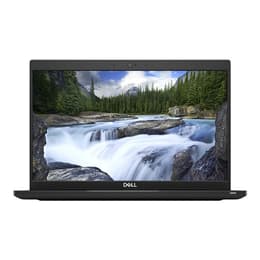
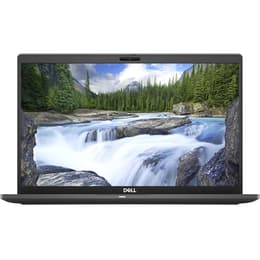
Dell Latitude 7390 13" vs Dell Latitude 7410 14"

Dell Latitude 7390 13"
See options
Dell Latitude 7410 14"
Starting at

Refurbished price:A$716.00

Versus A$839.00 new

See options

The Dell Latitude 7390 13 and the Dell Latitude 7410 14 are business-oriented laptops designed for productivity and reliability. The Latitude 7390 13 was released in 2018, while the Latitude 7410 14 followed in 2020. Both devices operate on the Windows platform, offering a familiar user experience. Key differentiators between these two models include their screen size, the generation of their internal components, and the integration of more modern features in the newer 7410 model.

Scores

Durability

When considering the practical lifespan of these devices, several factors come into play, primarily their release timelines and the duration of software support.

  • Release Timeline and Age: The Dell Latitude 7390 13, released in 2018, is an older model compared to the Dell Latitude 7410 14, which debuted in 2020. This two-year difference means the 7410 benefits from more recent hardware and design principles.
  • OS Support and Longevity: Both laptops run Windows, and while they continue to receive updates, the newer Latitude 7410 14 is expected to receive official Windows updates and driver support from Dell for a longer period. This extended support contributes to a longer practical lifespan, ensuring compatibility with future software and security patches.
  • Durability: Both models are built to business-grade standards, often featuring materials like carbon fiber, magnesium alloy, or aluminum. They are typically subjected to MIL-STD 810G testing, indicating a robust design capable of withstanding various environmental conditions, such as shock, vibration, and extreme temperatures.

Release year

2017

2020

Last Os Compatibility

Yes

Yes

Operating system

Windows 11

Windows 11

Performance

The performance capabilities of these laptops are largely influenced by their internal components, particularly their processors and memory configurations, which impact daily usage and multitasking efficiency.

  • Processor Capabilities: The Latitude 7390 13 is equipped with an 8th Generation Intel Core processor, providing solid performance for general office tasks, web browsing, and light content creation. The Latitude 7410 14, featuring 10th Generation Intel Core processors, offers enhanced responsiveness and smoother handling of more demanding applications and complex multitasking scenarios.
  • Memory and Storage: The Latitude 7390 13 typically supports up to 16GB of RAM, which is sufficient for most business users. The Latitude 7410 14 can be configured with up to 32GB of RAM, providing more headroom for intensive multitasking and specialized software, though RAM is often soldered in this model, limiting future upgrades. Both models utilize Solid State Drives (SSDs) for storage, ensuring fast boot times and quick application loading.
  • Battery Behavior: The Latitude 7390 13 generally comes with a 60 Whr battery, offering a full workday's power for typical use. The Latitude 7410 14 offers various battery options, including 42 Whr, 52 Whr, and 68 Whr. Certain configurations of the 7410, especially those with low-power display panels, are noted for providing extended battery life, often lasting a full workday or longer. The 7410 also supports ExpressCharge, allowing for rapid recharging.

Memory (GB)

16 GB

16 GB

Processor

Core i7 - Gen 8 (U)

Core i7 - Gen 10 (U)

Graphic card

Integrated Graphics

Intel UHD Graphics

Screen quality

The visual experience on these laptops differs primarily in screen size, available display technologies, and overall brightness, catering to various user preferences and work environments.

  • Display Technology and Resolution: Both the Latitude 7390 13 and Latitude 7410 14 offer Full HD (1920x1080) IPS display panels, providing clear visuals and wide viewing angles suitable for productivity tasks. The Latitude 7410 14 also introduces an optional 4K UHD (3840x2160) display, which delivers significantly sharper images and greater detail, beneficial for tasks requiring high visual fidelity.
  • Brightness and Clarity: The Latitude 7390 13 typically features a display with a brightness of around 300 nits, which is adequate for indoor use and most office environments. The Latitude 7410 14 can achieve up to 400 nits of brightness, particularly with its 4K display options, improving visibility in brighter conditions and outdoor settings. Both models offer anti-glare finishes to reduce reflections.
  • Screen Size and Viewing Experience: The Latitude 7390 13 has a 13.3-inch display, offering a compact form factor. The Latitude 7410 14 features a slightly larger 14-inch display. Despite the larger screen, the 7410 often incorporates narrower bezels, contributing to a more modern aesthetic and a more immersive viewing experience without significantly increasing the overall footprint of the device.

Resolution

1600 x 1200

1920 x 1080

Screen type

IPS

LCD

Audiovisual

For communication and multimedia, both laptops provide essential audio and visual components, with the newer model offering some enhancements for a more refined experience.

  • Camera and Video Quality: Both the Latitude 7390 13 and Latitude 7410 14 are equipped with 720p HD webcams, which are standard for business laptops and suitable for video conferencing and online meetings. The video quality is generally clear enough for everyday virtual communication.
  • Microphone and Speaker Performance: Both models feature dual microphones, designed to capture clear audio and reduce background noise during calls. The Latitude 7410 14's speakers are noted for providing good audio output, with distinct sounds and effective stereo separation, enhancing the media consumption experience.
  • Additional Features: The Latitude 7410 14 often includes infrared (IR) facial recognition capabilities, allowing for secure and convenient login via Windows Hello. This feature provides an alternative to traditional password entry or fingerprint scanning, which can also be present on both models.

Miscellaneous

Beyond core performance and display, several practical elements differentiate these two business laptops, impacting connectivity, physical design, and user convenience.

  • Connectivity Options: The Latitude 7390 13 supports Wi-Fi 5 (802.11ac) and Bluetooth 4.2, providing reliable wireless connections. The Latitude 7410 14 upgrades to Wi-Fi 6 (802.11ax) and Bluetooth 5.1, offering faster speeds and improved performance in congested network environments. The 7410 also has optional LTE mobile broadband for enhanced portability.
  • Port Selection: Both laptops offer a comprehensive selection of ports. The Latitude 7390 13 includes USB-A, USB-C (with optional Thunderbolt 3), HDMI 1.4, Ethernet, a microSD card reader, and an audio jack. The Latitude 7410 14 typically features two Thunderbolt 3 (USB-C) ports, two USB-A ports, HDMI 2.0, a microSD card slot, and an audio jack. The 7410's dual Thunderbolt 3 ports offer greater versatility for connecting external displays and high-speed peripherals.
  • Physical Design and Durability: The Latitude 7390 13 weighs around 1.17 to 1.3 kg, while the 14-inch Latitude 7410 can range from approximately 1.3 kg to 1.63 kg, depending on the configuration. Both models are built with premium materials like carbon fiber or aluminum and are MIL-STD 810G tested for durability, ensuring they can withstand the rigors of daily business travel. The 7410 features a more modern design with narrower display bezels.

Weight

1500 oz

1330 oz

Screen size

13

14

User feedback for the Dell Latitude 7390 13 often praises its robust build quality and reliable performance for everyday business tasks, especially considering its release year. Users appreciate its compact size and the inclusion of essential ports. However, some common criticisms include its slightly older design aesthetic and, in some configurations, a keyboard that might not offer the most comfortable typing experience for extended periods. Its battery life, while solid for its generation, may not match newer models.

The Dell Latitude 7410 14 generally receives positive remarks for its more refined design, improved display options—including a low-power 4K panel that maintains good battery life—and faster wireless connectivity with Wi-Fi 6. Users also highlight its comprehensive port selection, including dual Thunderbolt 3 ports, and enhanced security features like IR facial recognition. Some users note that while its performance is strong for business applications, it might not always lead in raw power benchmarks compared to some competitors, and certain configurations can be heavier.

Users prioritizing a compact, proven workhorse for general productivity and who do not require the absolute latest in display technology or wireless speeds may find the Dell Latitude 7390 13 well-suited to their needs. Conversely, users who value a more modern design, a slightly larger screen with advanced display options, faster wireless connectivity, and extended software longevity for demanding business tasks will likely lean towards the Dell Latitude 7410 14. Both devices offer a reliable computing experience, and choosing a quality-assured refurbished option can provide an eco-friendly alternative for either model.


See all articles

Our recent comparisons