Compare models

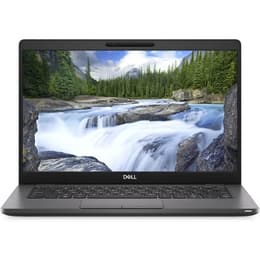
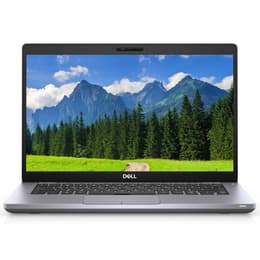
Dell Latitude 5300 13" vs Dell Latitude 5410 14"

  • 1-year warranty
  • Free standard shipping
  • Free 30-day returns
Dell Latitude 5300 13"
Starting at

Refurbished price:A$463.00

Versus A$750.00 new

See options
Dell Latitude 5410 14"
Starting at

Refurbished price:A$617.00

Versus A$1,425.00 new

See options

Differences at a glance

The Dell Latitude 5300 13 (released in 2019) and the Dell Latitude 5410 14 (released in 2020) are business-oriented laptops designed for productivity and reliability. While both models offer a robust computing experience, the Latitude 5410 14 introduces a slightly larger display and a newer generation of internal components, offering an incremental update over its predecessor. Both devices operate on the Windows operating system, providing a familiar environment for most users.

Available Models

Storage (GB)

Processor

Memory (GB)

Scores

Durability

When considering the long-term usability of these devices, several factors come into play, including their release dates and Dell's typical support cycles.

  • Release Timeline: The Latitude 5300 13 was introduced in 2019, making it a slightly older model compared to the Latitude 5410 14, which launched in 2020. This difference means the 5410 14 will likely receive software and driver updates for a longer period.
  • Software Longevity: Dell generally provides driver and firmware support for its business laptops for approximately 5-7 years from their release date. Consequently, the Latitude 5410 14 can be expected to have an additional year of official support compared to the 5300 13, extending its practical lifespan for users who rely on the latest updates.
  • Repairability: Both Latitude models are designed with business use in mind, often featuring accessible internal components for maintenance and upgrades. User reviews and service manuals indicate that components like RAM and storage are generally user-upgradeable, contributing to their overall practical lifespan.

Release year

2019

2020

Last Os Compatibility

Yes

Yes

Operating system

Windows 11

Windows 11

Performance

The performance of these laptops is primarily influenced by their internal hardware, affecting how smoothly they handle daily tasks and more demanding applications.

  • Processor Capabilities: The Latitude 5300 13 typically features 8th generation processors, while the Latitude 5410 14 comes equipped with 10th generation processors. This generational difference means the 5410 14 generally offers improved efficiency and responsiveness for everyday computing, multitasking, and handling modern software.
  • Storage and RAM: Both models support ample memory for multitasking, with the Latitude 5300 13 configurable up to 32GB of DDR4 RAM and the Latitude 5410 14 supporting up to 64GB of DDR4 RAM across two SO-DIMM slots. Both also offer solid-state drive (SSD) storage options up to 1TB, contributing to fast boot times and application loading.
  • Battery Behavior: The Latitude 5300 13 is available with 42Wh or 60Wh battery options, with the 60Wh variant offering up to 15 hours of web browsing or 16 hours of video playback. The Latitude 5410 14 typically features a larger 68Wh battery, which can provide over 10 hours of use, with some reports indicating up to 19 hours of web browsing.

Graphic card

Integrated Graphics

Integrated Graphics

Screen quality

The visual experience on these laptops is shaped by their display technology and specifications.

  • Display Technology and Size: The Latitude 5300 13 features a 13.3-inch Full HD (1920x1080) IPS panel, often with a matte finish. The Latitude 5410 14 offers a slightly larger 14.0-inch Full HD (1920x1080) IPS panel, also typically with an anti-glare finish.
  • Brightness and Color: The Latitude 5300 13's optional Full HD IPS display can reach around 300 nits of brightness and cover approximately 95% of the sRGB color gamut, providing vibrant colors and good visibility. The base IPS panel on the Latitude 5410 14 typically offers around 220 nits of brightness and covers about 52% of the sRGB gamut, though brighter options may be available.
  • Refresh Rate and Viewing Experience: Both laptops feature a standard 60Hz refresh rate, suitable for general productivity tasks. The IPS technology in both ensures wide viewing angles, making them comfortable for collaborative work or viewing content from various positions. Some configurations of the Latitude 5410 14's display may use aggressive Pulse-Width Modulation (PWM) for brightness control at lower levels, which some users might find noticeable.

Resolution

1920 x 1080

1920 x 1080

Screen type

LED

IPS

Camera

Audiovisual

For communication and media consumption, both laptops include integrated audio and visual components.

  • Webcam Quality: Both the Latitude 5300 13 and Latitude 5410 14 are equipped with a 0.9-megapixel (720p) webcam, suitable for standard video conferencing. The Latitude 5410 14's webcam often includes a privacy shutter for enhanced security.
  • Microphone and Speakers: Both models feature integrated microphones for clear voice capture during calls. The speaker output on both is designed for business use, providing adequate sound for video calls and general audio playback.
  • Media Consumption: While not designed as multimedia powerhouses, both laptops offer a satisfactory experience for watching videos and listening to audio, with the 5410's slightly larger screen providing a marginally more immersive viewing area.

Miscellaneous

Beyond core performance and display, practical features like connectivity, physical design, and security options differentiate these business laptops.

  • Connectivity Options: The Latitude 5300 13 supports Wi-Fi 5 (802.11ac) and Bluetooth 5.0, with optional LTE. The Latitude 5410 14 offers newer Wi-Fi 6 (802.11ax) and Bluetooth 5.1, providing potentially faster and more stable wireless connections. Both include an RJ45 Ethernet port for wired networking.
  • Port Selection: Both laptops offer a comprehensive selection of ports. The Latitude 5300 13 includes USB 3.1 Gen 2 Type-C (with Power Delivery and optional Thunderbolt 3), two USB 3.1 Gen 1 Type-A, HDMI 1.4b, and a microSD card reader. The Latitude 5410 14 provides three USB 3.2 Gen1 Type-A (one with PowerShare), one USB 3.2 Gen2 Type-C (with DisplayPort Alt Mode and optional Thunderbolt 3), HDMI 1.4b, and a microSD card reader.
  • Dimensions and Portability: The Latitude 5300 13 is designed to be more compact and lighter, with a starting weight of approximately 1.24 kg (2.73 lbs) and a thickness of 16.9-19.3 mm. The Latitude 5410 14 is slightly heavier, starting around 1.47 kg (3.24 lbs) to 1.595 kg (3.52 lbs), and is a bit thicker at 20.26-21.18 mm. The 5300 13 is better suited for users prioritizing maximum portability.

Weight

1240 oz

7500 oz

Screen size

13

14

What the community thinks

The Dell Latitude 5300 13 and Latitude 5410 14 both serve as reliable business laptops, each with distinct advantages. Users often praise the Latitude 5300 for its compact dimensions and robust build quality, frequently highlighting its portability as a key benefit. Some criticisms for the 5300 have occasionally pointed to its battery life not always matching its capacity in certain configurations, and its older generation processor compared to newer models.

The Latitude 5410, being a newer model, generally receives positive feedback for its improved performance due to its 10th generation processors and its significantly longer battery life, especially with the larger 68Wh option. Its upgradeability is also a common point of praise. However, some users have noted that the base display options on the 5410 might not be as bright or color-accurate as some competitors, and its slightly increased weight and thickness compared to the 5300 make it less portable.

Users prioritizing maximum portability and a slightly more compact form factor may find the Dell Latitude 5300 13 well-suited to their needs. Its sturdy carbon fiber build and good repairability contribute to its appeal for those on the go. Conversely, users who require more processing power for demanding applications, desire extended battery life for long workdays, and prefer a slightly larger screen will likely lean toward the Dell Latitude 5410 14. Its newer connectivity standards like Wi-Fi 6 also offer a more future-ready experience. Both models offer quality-assured refurbished options, providing a sustainable choice for consumers looking to make an informed decision.


See all articles

Our recent comparisons