
Asus Zenfone 9 vs Galaxy S25 Ultra

Asus Zenfone 9
Asus Zenfone 9
See options
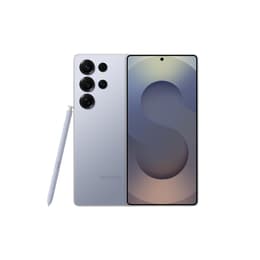
Galaxy S25 Ultra
Galaxy S25 Ultra
Starting at

Refurbished price:A$1,122.00

Versus A$2,149.00 new

See options

The Asus Zenfone 9, released in July 2022, and the Samsung Galaxy S25 Ultra, launched in February 2025, represent distinct philosophies in the smartphone market. While the Zenfone 9 focuses on delivering a powerful experience in a compact form factor, the Galaxy S25 Ultra offers a comprehensive, large-screen device with advanced features. Both devices run on the Android operating system, but they cater to different user preferences regarding size, performance, and camera capabilities.

Scores

Durability

The practical lifespan of a smartphone is influenced by its build quality, software support, and the availability of repairs.

  • Release Timeline: The Asus Zenfone 9 was released in 2022, making it a device that has been on the market for a longer period compared to the Galaxy S25 Ultra, which debuted in early 2025. This difference in release dates directly impacts their respective software support cycles.
  • Software Longevity: The Galaxy S25 Ultra offers an extended software support period, guaranteeing seven years of Android operating system upgrades and security updates, meaning support is expected until 2032. In contrast, the Asus Zenfone 9 typically receives two major OS updates and four years of security updates, which means its software support would likely conclude around mid-2026.
  • Durability Features: Both devices feature an IP68 rating for dust and water resistance, providing protection against environmental elements. The Zenfone 9 incorporates Gorilla Glass Victus on its front for screen protection, while the Galaxy S25 Ultra utilizes Corning Gorilla Armor 2 for both its front and back glass, along with a titanium frame, contributing to its overall robustness.

Release year

2022

2025

Operating system

Android

Android

Foldable

No

No

Performance

Performance in a smartphone is about how smoothly it handles daily tasks, from opening applications to running demanding games and multitasking.

  • Processing Power: The Galaxy S25 Ultra is equipped with a current-generation processor, designed to deliver top-tier performance for complex applications, intensive gaming, and seamless multitasking. The Asus Zenfone 9, while featuring a high-end processor for its release year, provides a very fast and responsive experience for general use and gaming, though it may not match the raw computational power of a device released several years later.
  • Multitasking and Responsiveness: With its advanced processor and ample RAM options, the Galaxy S25 Ultra handles numerous applications running simultaneously without noticeable slowdowns, ensuring a fluid user experience. The Zenfone 9 also offers capable multitasking, with users reporting a clean software experience that contributes to its overall responsiveness.
  • Storage Capabilities: The Galaxy S25 Ultra provides a range of internal storage options, including configurations up to 1TB, utilising UFS 4.0 technology for faster data access. The Zenfone 9 offers storage options up to 256GB with UFS 3.1, which provides quick app loading and file transfers.
  • Battery Behavior: The Zenfone 9 is noted for its impressive battery longevity for a compact device, often lasting a day and a half to two days with moderate use. The Galaxy S25 Ultra, despite its larger screen and more powerful components, also delivers excellent all-day battery life, with some tests indicating it can last over 17 hours on a single charge.

Memory (GB)

6 GB

12 GB

Screen quality

The display is a primary interface for smartphone interaction, and its quality significantly impacts the user experience.

  • Display Technology and Clarity: Both devices feature AMOLED display technology, known for deep blacks and vibrant colors. The Galaxy S25 Ultra boasts a 6.9-inch Dynamic LTPO AMOLED 2X display with a QHD+ resolution (1440 x 3120 pixels), offering exceptional clarity and detail. The Asus Zenfone 9 has a more compact 5.9-inch AMOLED screen with an FHD+ resolution (2400x1080 pixels), providing a sharp and clear viewing experience for its size.
  • Brightness and Outdoor Visibility: The Galaxy S25 Ultra's display can reach a peak brightness of 2600 nits, ensuring excellent visibility even in bright outdoor conditions. The Zenfone 9 offers a peak brightness of 1100 nits, which is sufficient for most outdoor scenarios, though it may not be as bright as the S25 Ultra in direct sunlight.
  • Refresh Rate and Smoothness: Both phones feature a 120Hz adaptive refresh rate, which contributes to smooth scrolling, fluid animations, and a responsive touch experience. The Galaxy S25 Ultra's LTPO technology allows for a more dynamic adjustment of the refresh rate, potentially contributing to power efficiency.
  • Screen Size and Viewing Experience: The larger 6.9-inch display of the Galaxy S25 Ultra provides an expansive canvas for media consumption, productivity tasks, and gaming, making it well-suited for users who prefer a more immersive visual experience. The Zenfone 9's 5.9-inch screen is designed for comfortable one-handed use and pocketability, appealing to users who prioritize a compact form factor.

Resolution

1080 x 2400

1440x3120

Audiovisual

The camera systems on both smartphones offer distinct capabilities for capturing photos and videos.

  • Rear Camera Systems: The Galaxy S25 Ultra features a versatile quad-camera setup, including a 200 MP main sensor with optical image stabilization (OIS), a 50 MP ultrawide lens, a 10 MP telephoto lens with 3x optical zoom, and a 50 MP periscope telephoto lens with 5x optical zoom. This configuration provides extensive zoom capabilities and flexibility for various photographic scenarios. The Asus Zenfone 9 has a dual-camera system, comprising a 50 MP main sensor with a 6-axis gimbal stabilization system and a 12 MP ultrawide lens. It lacks a dedicated telephoto lens.
  • Photography Performance: The Galaxy S25 Ultra excels in capturing detailed images with natural colors in daylight, offers strong zoom performance, and performs well in low-light conditions with minimal noise. User reviews highlight its reliability across different scenarios. The Zenfone 9's main camera, with its gimbal stabilization, captures detailed images with accurate colors in well-lit environments and performs strongly in low light. However, some users have noted occasional over-processing and the absence of a telephoto lens as limitations.
  • Video Recording Quality: Both devices are capable of recording video at up to 8K resolution. The Galaxy S25 Ultra supports 10-bit HDR video and offers reliable stabilization. The Zenfone 9's 6-axis gimbal stabilization system is particularly effective for smooth handheld video capture, even at higher resolutions.
  • Front Camera and Audio: Both phones feature a 12 MP front-facing camera, capable of capturing clear selfies and supporting video calls. The Galaxy S25 Ultra's microphone quality is generally good, though it can pick up background noise in crowded environments. The Zenfone 9 offers good stereo sound output with Dirac tuning and includes a 3.5mm headphone jack, which is a notable feature for wired audio enthusiasts.

Miscellaneous

Beyond core performance, several practical features contribute to the overall user experience and device utility.

  • Connectivity Standards: The Galaxy S25 Ultra supports Wi-Fi 7 and Bluetooth 5.4, offering advanced wireless connectivity for faster speeds and improved efficiency. The Asus Zenfone 9 supports Wi-Fi 6E and Bluetooth 5.2, providing robust and fast wireless connections for most current needs. Both devices support 5G cellular networks.
  • Ports and Biometrics: The Galaxy S25 Ultra features a USB-C port and an ultrasonic in-screen fingerprint sensor for secure and convenient unlocking. It also integrates the S Pen stylus, enhancing productivity and creative input. The Zenfone 9 includes a USB-C port and a 3.5mm headphone jack, a feature appreciated by users with wired audio accessories. Its side-mounted fingerprint sensor is integrated into the power button and offers gesture controls.
  • Physical Characteristics: The Zenfone 9 is designed as a compact device, weighing 169g and measuring 146.5 x 68.1 x 9.1 mm, making it easy for one-handed operation and pocketability. The Galaxy S25 Ultra is a larger and heavier device, at 218g and 162.8 x 77.6 x 8.2 mm, offering a more expansive screen experience.
  • Build Materials: The Zenfone 9 features an aluminum frame and a textured polymer back, which provides a secure grip and fends off fingerprints. The Galaxy S25 Ultra utilizes a titanium frame with Corning Gorilla Armor 2 glass on both the front and back, contributing to a premium feel and enhanced durability.

Weight

169 oz

218 oz

Screen size (in)

5.9

6.9

Network

5G

5G

SIM card

Dual Physical SIM

Physical SIM + eSIM

Carrier compatibility

Unlocked

Unlocked

The Asus Zenfone 9 and the Samsung Galaxy S25 Ultra cater to different user priorities, each excelling in its own domain. User sentiment for the Zenfone 9 often praises its compact size, exceptional battery life for its form factor, and the inclusion of a 3.5mm headphone jack. Criticisms sometimes point to the lack of a telephoto camera and the absence of wireless charging. The Galaxy S25 Ultra is frequently lauded for its expansive and vibrant display, its highly versatile and powerful camera system with strong zoom capabilities, and its integrated S Pen for productivity. Its long-term software support is also a significant advantage. Some users, however, might find its size and weight less convenient for one-handed use.

Users prioritizing a compact, easy-to-handle smartphone with excellent battery life and a traditional headphone jack will find the Asus Zenfone 9 well-suited to their needs. It offers a powerful experience in a smaller package, ideal for those who value portability and a clean Android interface. Conversely, users who require a large, immersive display, a highly advanced and versatile camera system with extensive zoom, and integrated productivity tools like the S Pen will likely prefer the Samsung Galaxy S25 Ultra. Its extended software support also makes it a compelling choice for those seeking long-term device longevity.

For consumers considering either of these devices, exploring quality-assured refurbished options can provide an eco-friendly alternative to purchasing new, offering a sustainable choice without compromising on functionality.


See all articles

Our recent comparisons