
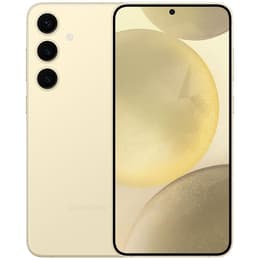

Asus Zenfone 9 vs Galaxy S24+

Asus Zenfone 9
Asus Zenfone 9
See options
Galaxy S24+
Galaxy S24+
Starting at

Refurbished price:A$639.00

Versus A$1,833.00 new

See options

The Asus Zenfone 9, released in 2022, and the Samsung Galaxy S24 Plus, launched in early 2024, represent distinct approaches to the modern smartphone experience. While both are Android devices, the Zenfone 9 focuses on a compact form factor with robust performance, whereas the Galaxy S24 Plus offers a larger display, a more comprehensive camera system, and extended software support. These differences cater to varying user preferences, from portability to advanced features and longevity.

Scores

Durability

The expected lifespan of a smartphone is influenced by its release timeline, software support, and physical durability. These two devices, released two years apart, offer different projections in these areas.

  • Release Timeline and Age: The Asus Zenfone 9 was released in July 2022, making it an older model compared to the Samsung Galaxy S24 Plus, which launched in January 2024. This age difference inherently impacts the remaining period of official software and security updates.
  • OS Support Duration: The Galaxy S24 Plus benefits from Samsung's commitment to seven years of operating system and security updates, offering a significantly longer support window. The Asus Zenfone 9, while receiving updates, typically has a shorter support cycle, having launched with Android 12 and being upgradable to Android 14.
  • Physical Durability: Both devices feature an IP68 rating for dust and water resistance, indicating protection against immersion in water up to 1.5 meters for 30 minutes. The Zenfone 9 uses Corning Gorilla Glass Victus for display protection, while the Galaxy S24 Plus features the newer Corning Gorilla Glass Victus 2 on both its front and back, along with an Armor Aluminum 2 frame, suggesting enhanced resistance to drops and scratches.

Release year

2022

2024

Operating system

Android

Android

Foldable

No

No

Performance

Performance in smartphones is determined by the internal processing components, influencing how smoothly applications run, how quickly tasks are completed, and the overall responsiveness of the device. Both phones are equipped with high-end processors for their respective release periods.

  • Processor Capabilities: The Asus Zenfone 9 is powered by a processor from the Snapdragon 8+ Gen 1 series, which was a top-tier chip at its release, enabling smooth operation for demanding applications and multitasking. The Samsung Galaxy S24 Plus features a newer generation processor, either the Snapdragon 8 Gen 3 for Galaxy in some regions or the Exynos 2400 in others. This newer hardware generally translates to faster processing speeds and improved power efficiency, particularly noticeable in intensive tasks like high-fidelity gaming or complex AI computations.
  • RAM and Storage: The Zenfone 9 offers configurations with 8GB or 16GB of RAM and 128GB or 256GB of internal storage. The Galaxy S24 Plus comes with 12GB of RAM as standard and storage options of 256GB or 512GB. The higher base RAM in the S24 Plus can contribute to more seamless multitasking and app switching, especially with a greater number of applications open simultaneously.
  • Overall System Responsiveness: Both devices offer a highly responsive user experience. The Zenfone 9's clean Android interface contributes to its perceived speed. The Galaxy S24 Plus, with its more recent and powerful processor, provides a fluid experience across its One UI interface, handling demanding applications and gaming with ease.

Memory (GB)

6 GB

12 GB

Screen quality

The display is a primary interface for smartphone interaction, and differences in technology, resolution, and brightness significantly impact the visual experience.

  • Display Technology and Resolution: Both phones utilize AMOLED display technology, known for vibrant colors and deep blacks. The Asus Zenfone 9 features a 5.9-inch Super AMOLED display with a 1080 x 2400 pixel (FHD+) resolution. The Samsung Galaxy S24 Plus has a larger 6.7-inch Dynamic AMOLED 2X display with a higher 1440 x 3120 pixel (QHD+) resolution, offering greater clarity and detail.
  • Brightness and Refresh Rate: The Zenfone 9's display can reach a peak brightness of 1100 nits and supports a 120Hz refresh rate. The Galaxy S24 Plus significantly surpasses this with a peak brightness of 2600 nits, making it exceptionally visible in bright outdoor conditions. It also features an adaptive refresh rate that can scale from 1Hz to 120Hz, optimizing for both smooth scrolling and battery efficiency.
  • Viewing Experience: The Zenfone 9's smaller screen size makes it suitable for one-handed use and those who prefer a more compact device. The larger, higher-resolution display of the Galaxy S24 Plus provides a more expansive and immersive viewing experience for media consumption and productivity tasks.

Resolution

1080 x 2400

1440x3120

Audiovisual

Camera capabilities are a key consideration for many users, encompassing hardware, software processing, and overall image and video quality.

  • Camera System Configuration: The Asus Zenfone 9 features a dual-camera setup on the rear: a 50MP main sensor with a 6-axis gimbal stabilization system and a 12MP ultrawide lens that also supports macro photography. The Galaxy S24 Plus offers a triple-camera system: a 50MP main sensor with optical image stabilization (OIS), a 12MP ultrawide lens, and a 10MP telephoto lens with 3x optical zoom and OIS. Both have a 12MP front-facing camera, with the Zenfone 9's offering autofocus.
  • Photography Performance: The Zenfone 9's main camera is praised for its low-light performance and the effectiveness of its gimbal stabilization for both photos and videos. However, some users note occasional over-sharpening and inconsistency in image processing. The Galaxy S24 Plus delivers consistently good image quality in various situations, with its dedicated telephoto lens providing versatility for zoomed shots without digital degradation. Its image processing has also seen improvements, and it includes AI-powered editing features.
  • Video Recording Quality: Both devices are capable of recording 8K video at 24fps and 4K video at 30/60fps. The Zenfone 9's gimbal stabilization provides very stable video footage, even at higher resolutions. The Galaxy S24 Plus also offers strong video capabilities with OIS on its main and telephoto lenses, and features like Super Steady video on its ultrawide camera.

Miscellaneous

Beyond core performance and display, several practical elements contribute to the overall user experience, including connectivity, physical design, and additional features.

  • Connectivity Options: The Asus Zenfone 9 supports Wi-Fi 6/6E and Bluetooth 5.2. The Samsung Galaxy S24 Plus offers more advanced connectivity with Wi-Fi 6E/7 and Bluetooth 5.3, providing potentially faster and more stable wireless connections. Both support 5G cellular networks and NFC for mobile payments.
  • Port Types and Audio: A notable difference is the inclusion of a 3.5mm headphone jack on the Asus Zenfone 9, catering to users who prefer wired audio. The Galaxy S24 Plus, like many modern flagships, omits the 3.5mm jack, relying on USB-C or wireless audio solutions. Both devices feature stereo speakers, with the Zenfone 9's tuned by Dirac and the S24 Plus's tuned by AKG.
  • Physical Characteristics: The Zenfone 9 is a compact device, weighing 169g and measuring 146.5 x 68.1 x 9.1 mm. This makes it easy for one-handed use and pocketability. The Galaxy S24 Plus is a larger phone, weighing 195-196g and measuring 158.5 x 75.9 x 7.7 mm, offering a more expansive screen but requiring a two-handed grip for many tasks. The Zenfone 9 has a side-mounted fingerprint scanner integrated into the power button, while the S24 Plus uses an in-display ultrasonic fingerprint sensor.

Weight

169 oz

196 oz

Screen size (in)

5.9

6.7

Network

5G

5G

SIM card

Dual Physical SIM

Physical SIM + eSIM

Carrier compatibility

Unlocked

Unlocked

User feedback for the Asus Zenfone 9 frequently highlights its appeal as a powerful, compact Android phone, a rare offering in a market dominated by larger devices. Users appreciate its strong performance for its size and generally good battery life. The inclusion of a 3.5mm headphone jack is also a common point of praise. Criticisms often revolve around the camera's inconsistent image processing and the absence of wireless charging. Some users also note that it can get warm under heavy load.

The Samsung Galaxy S24 Plus is widely praised for its exceptional display, offering high resolution and brightness, and its robust performance. Its long battery life and Samsung's commitment to extended software updates are significant advantages. While the camera system is considered solid, some users feel it's an incremental update from previous generations, and some have reported that the internal speaker quality is not as good as older Samsung models.

Users prioritizing a compact form factor, easy one-handed use, and the convenience of a 3.5mm headphone jack may find the Asus Zenfone 9 well-suited to their needs. Its strong performance for its size makes it a capable daily driver for many. Conversely, users who value a larger, higher-resolution display, a more versatile camera system with a telephoto lens, faster wireless connectivity, and a longer software support commitment will likely lean towards the Samsung Galaxy S24 Plus. For those considering either device, exploring quality-assured refurbished options can provide an eco-friendly alternative to new purchases.


See all articles

Our recent comparisons