Motorola Razr 40 Ultra vs Oppo Find X5

Motorola Razr 40 Ultra
See options
Oppo Find X5
Oppo Find X5
See options

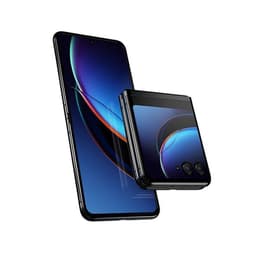
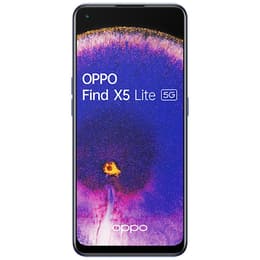
The Motorola Razr 40 Ultra, released in June 2023, is a clamshell foldable smartphone that prioritizes a large, functional external display. In contrast, the Oppo Find X5, launched in February 2022, is a traditional slab-style smartphone focusing on a premium camera experience and overall performance. Both devices run on the Android operating system, offering distinct form factors and user experiences.

Scores

Durability

The expected practical lifespan of a smartphone is influenced by its build quality, software support, and the availability of repair options. These two devices present different approaches to longevity.

  • Release Timeline: The Motorola Razr 40 Ultra was released in June 2023, making it a newer device compared to the Oppo Find X5, which launched in February 2022. This difference in release date means the Razr 40 Ultra will generally receive software updates for a longer period into the future.
  • OS Support Duration: The Motorola Razr 40 Ultra is expected to receive three major Android OS upgrades and four years of bi-monthly security updates, with support anticipated to end around June 2027. The Oppo Find X5, having launched with Android 12, is expected to receive up to Android 15, with security updates generally provided until February 2026. [7, 9, 14, 15, 22, 28, 33, 34]
  • Repairability: The Oppo Find X5 has a repairability score of 8.1 out of 10, indicating a relatively straightforward repair process with good availability of parts. [12] The Motorola Razr 40 Ultra, being a foldable device, presents more complexity; the similar Razr 40 model received a repairability score of 4 out of 10, suggesting more challenges in repair. [32]

Release year

2023

2022

Compatible with latest Update

Yes

Yes

Operating system

Android

Android

Foldable

Yes

No

Performance

Performance in smartphones is determined by the efficiency of their internal components, impacting how smoothly applications run and how effectively the device handles demanding tasks.

  • Processor Capabilities: The Motorola Razr 40 Ultra is equipped with a processor that handles demanding applications and multitasking smoothly, providing a responsive experience for everyday use and gaming. [3, 21] The Oppo Find X5 features a processor that delivers strong performance for general use, gaming, and multimedia consumption, though it may show its age slightly with the most intensive modern applications compared to newer chipsets. [1, 19, 23]
  • Storage and RAM: Both devices offer various configurations, typically including 8GB or 12GB of RAM and 256GB of internal storage, with some variants offering 128GB or 512GB. These capacities are generally sufficient for extensive multitasking and storing a large number of applications and media. [3, 4, 11]
  • Battery Behavior: The Motorola Razr 40 Ultra features a 3800 mAh battery, which users report can last through a full day of moderate use, though heavy usage might require a top-up. [16, 18, 21, 29] The Oppo Find X5 comes with a larger 4800 mAh battery, often providing enough power to last a full day and sometimes into a second day for many users. [10, 17, 23]

Memory (GB)

8 GB

8 GB

Screen quality

The display is a primary interface for user interaction, and its quality significantly impacts the visual experience, from casual browsing to multimedia consumption.

  • Main Display Technology: The Motorola Razr 40 Ultra features a 6.9-inch pOLED foldable display, offering deep blacks and vibrant colors, characteristic of OLED technology. [8, 11, 20] The Oppo Find X5 has a 6.55-inch AMOLED display, also providing rich colors and excellent contrast. [4, 7, 10]
  • Resolution and Clarity: Both devices offer Full HD+ resolutions, with the Razr 40 Ultra at 2640 x 1080 pixels and the Find X5 at 2400 x 1080 pixels. This results in sharp images and clear text for typical viewing distances. [4, 8, 20]
  • Refresh Rate and Brightness: The Razr 40 Ultra boasts a high 165Hz refresh rate on its main display, contributing to very smooth scrolling and animations. [11, 20] The Find X5 offers a 120Hz refresh rate, also providing a fluid visual experience. [4, 7] The Find X5 can reach a peak brightness of 1000 nits, ensuring good visibility in various lighting conditions. [4, 10]

Resolution

1080 x 2640

1080 x 2400

Screen type

Foldable LTPO AMOLED

AMOLED

Audiovisual

Camera systems are a key differentiator, with varying capabilities for capturing photos and videos in diverse environments.

  • Rear Camera Systems: The Motorola Razr 40 Ultra features a dual-camera setup with a 12 MP wide-angle main sensor (f/1.5, OIS) and a 13 MP ultrawide sensor (f/2.2, AF). [3, 18, 20] The Oppo Find X5 offers a triple-camera system, including a 50 MP wide-angle main sensor (f/1.8, OIS), a 13 MP telephoto lens with 2x optical zoom, and a 50 MP ultrawide sensor. [4, 7, 17]
  • Photography Performance: The Razr 40 Ultra's main camera performs well in good lighting, capturing decent photos, but may struggle with motion. [21, 27] The Find X5's main camera is praised for capturing realistic, detailed, and vibrant shots, even performing well in low light, though its ultrawide can sometimes produce washed-out images and the telephoto is limited to 2x optical zoom. [6, 13, 17, 19, 23]
  • Video Recording and Features: Both phones are capable of recording 4K video at 60 frames per second. [10, 18] The Oppo Find X5 benefits from Hasselblad Color Calibration and an O1 Ultra Vision Engine chip, which enhances visual effects and video quality, particularly for low-light video. [6, 13, 23]

Main camera

12 megapixels

50 megapixels

Front camera

32 megapixels

32 megapixels

Miscellaneous

Beyond core specifications, several practical elements contribute to the overall user experience, from connectivity to physical design.

  • Connectivity and Ports: Both devices support 5G connectivity, modern Wi-Fi standards (Razr 40 Ultra with Wi-Fi 6E), and Bluetooth (Razr 40 Ultra with Bluetooth 5.3). [8, 29, 35] Both utilize a USB-C port for charging and data transfer, and neither includes a traditional 3.5mm headphone jack. [5, 29]
  • Design and Handling: The Motorola Razr 40 Ultra is a foldable phone, offering a compact form factor when closed (88.4 x 74 x 15.1 mm) and a larger screen when unfolded (170.8 x 74 x 7 mm). It weighs around 184.5-188.5 grams. [3, 29] The Oppo Find X5 is a traditional slab phone, measuring 160.3 x 72.6 x 8.7 mm and weighing 196 grams, offering a comfortable in-hand feel. [4, 17] The Razr 40 Ultra features a large 3.6-inch external pOLED display that is highly functional, allowing users to interact with apps without opening the phone. [20, 21, 27]
  • Durability Features: The Razr 40 Ultra has an IP52 water-repellent design, offering splash resistance. [29] The Oppo Find X5 does not have an official IP rating for water and dust resistance. [17] Both devices use Gorilla Glass Victus for screen protection, with the Razr 40 Ultra using it on its cover screen. [4, 27, 29]

Weight

1 oz

196 oz

Screen size (in)

6.9

6.55

Network

5G

5G

SIM card

Dual Physical SIM

Dual Physical SIM

Carrier compatibility

Unlocked

Unlocked

The Motorola Razr 40 Ultra and the Oppo Find X5 cater to different preferences within the smartphone market. Users generally praise the Razr 40 Ultra for its innovative foldable design, particularly its large and highly functional external display, which allows for quick interactions without unfolding the device. [21, 27] Its premium build and smooth Android experience are also frequently highlighted. [16, 21] However, some users note its smaller battery capacity compared to traditional smartphones and that its camera system, while capable, may not match the performance of top-tier non-foldable flagships, especially in challenging conditions or with fast-moving subjects. [18, 21, 27]

The Oppo Find X5 is often commended for its vibrant AMOLED display, robust overall performance, and impressive battery life that can comfortably last a full day. [17, 19, 23] Its main camera is generally well-regarded for producing detailed and color-accurate photos, and its fast wired and wireless charging capabilities are a significant advantage. [6, 13, 17, 19] Criticisms sometimes point to the limitations of its 2x optical zoom and the occasional inconsistency of its ultrawide camera. [17, 23]

Users prioritizing a compact, stylish, and innovative form factor with a highly interactive external screen may find the Motorola Razr 40 Ultra well-suited to their needs. Those who prefer a traditional smartphone experience with a strong emphasis on display quality, battery endurance, and a versatile main camera system might lean towards the Oppo Find X5. Both devices offer compelling features, and considering a quality-assured refurbished option for either model can be an eco-friendly alternative for consumers seeking value and sustainability.
See all articles

Our recent comparisons