Motorola Moto E32 vs Nokia X30

Motorola Moto E32
Motorola Moto E32
See options
Nokia X30
Nokia X30
Starting at

Refurbished price:A$299.00

Versus A$965.00 new

See options

The Motorola Moto E32 and the Nokia X30 are smartphones released in 2022, targeting different segments of the market. While the Moto E32, launched in May 2022, focuses on essential smartphone functionalities, the Nokia X30, introduced in September 2022, offers a more refined experience with enhanced display technology and camera capabilities. Both devices run on the Android operating system, but they diverge significantly in their core specifications and intended user experiences.

Scores

Durability

When considering the long-term usability of these devices, their release timelines and software support policies are key differentiators.

  • Release Timeline and Age: The Motorola Moto E32 was released in May 2022, while the Nokia X30 followed in September 2022. This four-month difference means the Nokia X30 benefits from a slightly newer starting point for software support.
  • OS Support Duration: The Moto E32 launched with Android 11 and received an update to Android 12, with security updates reportedly ceasing around June 2024, indicating limited further major OS upgrades. In contrast, the Nokia X30 launched with Android 12 and has been updated to Android 14, with security patches continuing into 2025. However, despite initial promises, HMD Global has confirmed that the Nokia X30 will not receive Android 15, limiting its major OS update cycle to two versions.
  • Durability Features: The Nokia X30 features Corning Gorilla Glass Victus for display protection and an IP67 rating for dust and water resistance, allowing it to withstand submersion in up to 1 meter of water for 30 minutes. The Moto E32 offers a water-repellent design with an IP52 rating, providing protection against splashes and limited dust ingress. The Nokia X30 also incorporates a frame made from 100% recycled aluminum, highlighting its sustainable construction.

Release year

2022

2022

Compatible with latest Update

No

No

Operating system

Android

Android

Foldable

No

No

Performance

The performance of these two smartphones varies, impacting how smoothly they handle daily tasks and more demanding applications.

  • Processor Capabilities: The Motorola Moto E32 is equipped with a processor suitable for everyday tasks like browsing, social media, and light applications. Users generally find it adequate for basic use, though some report occasional lag during multitasking or with more intensive apps. The Nokia X30 features a more capable processor, which provides a smoother overall experience, handling demanding apps and multitasking with greater responsiveness.
  • Memory and Storage: The Moto E32 typically comes with 4GB of RAM and 64GB of internal storage, which can be expanded significantly via a microSD card. The Nokia X30 offers more generous configurations, with 6GB or 8GB of RAM and 128GB or 256GB of internal storage, utilizing faster UFS storage technology. However, it lacks a microSD card slot for expansion.
  • System Responsiveness: Users of the Nokia X30 generally report a fluid user interface and quick app loading times, even with multiple applications running simultaneously. The Moto E32, while offering a clean Android interface, may exhibit slower app launches and less seamless transitions, particularly when the device is under heavier load.

Memory (GB)

4 GB

8 GB

Screen quality

The visual experience on these devices is distinct, primarily due to differences in display technology and resolution.

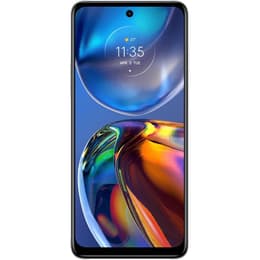
  • Display Technology and Resolution: The Motorola Moto E32 features a 6.5-inch IPS LCD display with a resolution of 720x1600 pixels (HD+), resulting in a pixel density of approximately 268 PPI. The Nokia X30, on the other hand, boasts a 6.43-inch AMOLED display with a sharper 1080x2400 pixel (FHD+) resolution, offering a higher pixel density of around 409 PPI. This difference means the Nokia X30 provides clearer text and more detailed images.
  • Refresh Rate and Smoothness: Both smartphones offer a 90Hz refresh rate, which contributes to smoother scrolling and a more fluid visual experience compared to standard 60Hz displays.
  • Brightness and Color: The Nokia X30's AMOLED panel delivers vibrant colors and deep blacks, with a peak brightness of 700 nits, making it generally suitable for outdoor visibility, though some users note it can be challenging in very bright sunlight. The Moto E32's IPS LCD provides respectable colors and brightness for its class, but it may not offer the same contrast levels or outdoor legibility as the AMOLED display.

Resolution

720 x 1600

1080 x 2400

Screen type

IPS LCD

AMOLED

Audiovisual

The camera systems on the Moto E32 and Nokia X30 offer different capabilities for capturing photos and videos.

  • Rear Camera System: The Motorola Moto E32 typically includes a 50-megapixel main camera, often accompanied by a 2-megapixel macro lens. Some regional variants may feature a 16-megapixel main sensor with additional 2-megapixel macro and depth sensors. The Nokia X30 features a dual-camera setup with a 50-megapixel main sensor that includes Optical Image Stabilization (OIS) and a 13-megapixel ultrawide lens with a 123-degree field of view.
  • Photography Performance: The Nokia X30's main camera is noted for its strong performance, particularly in low-light conditions, with features like Night mode and Dark Vision. The ultrawide camera also performs well, though some users observe color inconsistencies between the main and ultrawide lenses. The Moto E32's camera is considered basic, capable of decent photos in good lighting but struggling with detail and color accuracy in more challenging situations.
  • Video Recording: Both devices support video recording up to 1080p at 30 frames per second. The Nokia X30 also offers 1080p at 60 frames per second, but neither device supports 4K video recording. The Nokia X30's OIS can contribute to more stable video footage.

Main camera

16 megapixels

50 megapixels

Front camera

8 megapixels

16 megapixels

Miscellaneous

Beyond the core features, several practical elements distinguish the Motorola Moto E32 and Nokia X30.

  • Connectivity and Ports: The Nokia X30 supports 5G connectivity, Wi-Fi 6, and Bluetooth 5.1, along with NFC for contactless payments. It uses a USB-C 2.0 port but lacks a 3.5mm headphone jack. The Moto E32 is a 4G device, featuring Wi-Fi 802.11 b/g/n and Bluetooth 5.0 or 5.1. It includes a 3.5mm headphone jack and a USB-C 2.0 port, but it does not have NFC.
  • Biometric Security: The Nokia X30 incorporates an optical in-display fingerprint sensor, while the Moto E32 uses a side-mounted fingerprint sensor. Both also offer face recognition.
  • Design and Handling: Both phones weigh around 185 grams. The Nokia X30 has dimensions of 158.9 x 73.9 x 8mm, while the Moto E32 measures 163.95 x 74.94 x 8.49mm. The Nokia X30's use of recycled aluminum for its frame and a matte plastic back contributes to a sturdy and tactile feel. The Moto E32 features a plastic build with a water-repellent design.

Weight

184 oz

185 oz

Screen size (in)

6,5

6.43

Network

4G

5G

SIM card

Dual Physical SIM

Dual Physical SIM

Carrier compatibility

Unlocked

Unlocked

The Motorola Moto E32 and Nokia X30 cater to different user priorities, reflecting their distinct feature sets and performance levels. The Moto E32 is often praised for its long battery life and a clean, near-stock Android user interface, making it a straightforward option for users seeking essential smartphone functions without unnecessary complexities. However, common criticisms include its limited software update policy, basic camera performance, and the absence of NFC, which can be a drawback for those who rely on contactless payments.

The Nokia X30, on the other hand, receives commendation for its vibrant AMOLED display, robust build quality with recycled materials, and IP67 water and dust resistance. Its main camera, particularly in low-light conditions, is a strong point, and its overall performance is generally smooth for daily use. Criticisms often revolve around the lack of 4K video recording, the quality of its single speaker, and the disappointment regarding its software update policy, which did not extend to Android 15 as initially implied.

Users prioritizing a long-lasting battery, expandable storage, and a simple Android experience for everyday communication and light media consumption may find the Motorola Moto E32 well-suited to their needs. Conversely, users who value a superior display, enhanced camera capabilities, a more durable and eco-conscious build, and smoother performance for a wider range of applications might lean towards the Nokia X30. Both devices offer a quality-assured refurbished option, providing an eco-friendly alternative for consumers.

See all articles

Our recent comparisons