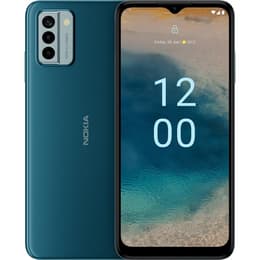
Motorola Moto E32 vs Nokia G22

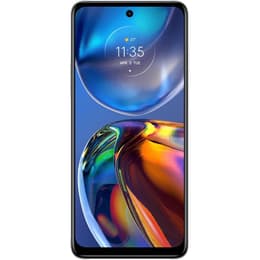
Motorola Moto E32
Motorola Moto E32
See options
Nokia G22
Nokia G22
See options

The Motorola Moto E32 (released May 2022) and the Nokia G22 (released February 2023) are both smartphones designed to offer essential features for everyday use. While both devices run on the Android operating system, the Nokia G22 distinguishes itself with a focus on user repairability and a slightly newer software foundation, whereas the Moto E32 offers a comparable experience with a slightly earlier release.

Scores

Durability

When considering the long-term usability of these devices, their release timelines and software support are key factors. The Nokia G22, launched in early 2023, benefits from a more recent starting point for software updates compared to the Motorola Moto E32, which was released in mid-2022.

  • Software Longevity: The Nokia G22 launched with Android 12 and is expected to receive two major OS upgrades, reaching Android 14, along with three years of security updates until April 2026. In contrast, the Motorola Moto E32 typically launched with Android 11 and is not expected to receive the Android 12 update, with security updates generally extending until May 2024.
  • Repairability: The Nokia G22 is specifically designed for easier self-repair, with parts and guides available through partnerships, allowing users to replace components like the battery, screen, and charging port. The Motorola Moto E32 does not emphasize user repairability to the same extent.
  • Practical Lifespan: Users prioritizing extended software support and the ability to perform basic repairs themselves may find the Nokia G22 offers a longer practical lifespan. The Moto E32, while durable, relies more on professional servicing for repairs and has a shorter guaranteed software update period.

Release year

2022

2023

Compatible with latest Update

No

No

Operating system

Android

Android

Foldable

No

No

Performance

Both the Motorola Moto E32 and the Nokia G22 are equipped with processors suitable for general smartphone tasks, though their real-world performance can vary based on usage patterns.

  • Everyday Responsiveness: Both devices handle common applications like web browsing, social media, and email smoothly. Users report that the Moto E32 provides a responsive experience for daily tasks. The Nokia G22 also feels snappy for general interactions, with menus appearing promptly and quick unlocking.
  • Multitasking and Demanding Apps: For more intensive applications or extensive multitasking, both phones may exhibit some slowdowns. The Moto E32 can be slow when running demanding apps, but generally performs well. The Nokia G22's processor is noted to be slow, causing heavier apps to take a second or two longer to open and load content.
  • Storage and RAM: Both devices typically come with 4GB of RAM and 64GB of internal storage, with options for expansion via a microSD card. The Nokia G22 supports microSD cards up to 2TB, while the Moto E32 supports up to 1TB.
  • Battery Behavior: Both phones feature large 5000mAh or 5050mAh batteries. The Moto E32 is reported to offer good battery life, lasting 2-3 days with light usage or a full day with heavy use. The Nokia G22 also provides excellent battery life, often lasting two to three days on a single charge for many users.

Memory (GB)

4 GB

4 GB

Screen quality

The display experience on both the Motorola Moto E32 and the Nokia G22 offers similar specifications, catering to everyday viewing needs.

  • Display Technology and Resolution: Both smartphones feature a 6.5-inch IPS LCD display with a resolution of 720x1600 pixels, commonly referred to as HD+. This resolution provides clear visuals for general content consumption, though it may not be as sharp as higher-resolution displays found on other devices.
  • Refresh Rate and Smoothness: Both the Moto E32 and Nokia G22 incorporate a 90Hz refresh rate. This higher refresh rate contributes to smoother scrolling and a more fluid visual experience compared to standard 60Hz displays, enhancing the perception of responsiveness during navigation and light gaming.
  • Brightness and Protection: The Nokia G22's display is protected by Corning Gorilla Glass 3, offering some resistance against scratches and minor impacts. The Moto E32 also mentions Gorilla Glass protection in some specifications. Both screens offer adequate brightness for indoor use, with the Nokia G22 rated at 500 nits, providing reasonable visibility outdoors.

Resolution

720 x 1600

720 x 1600

Screen type

IPS LCD

IPS LCD

Audiovisual

The camera systems on the Motorola Moto E32 and Nokia G22 are designed for casual photography, with differences in their main sensor capabilities and overall performance.

  • Rear Camera System: The Nokia G22 features a triple rear camera setup with a 50MP main sensor (f/1.8), accompanied by 2MP macro and 2MP depth sensors. The Motorola Moto E32 typically comes with a 16MP main sensor (f/2.2), also paired with 2MP macro and 2MP depth sensors.
  • Photography Performance: In good lighting conditions, both phones can capture decent images. The Nokia G22's 50MP main sensor can produce reasonable detail, but its camera performance is noted to be uninspiring in low light and can be slow to launch. The Moto E32's camera is considered good for its segment, taking high-quality photos in good light.
  • Video Recording and Front Camera: Both devices support video recording at 1080p resolution at 30 frames per second from both their rear and front cameras. For selfies, both phones are equipped with an 8MP front-facing camera.
  • Audio Experience: Both phones include a 3.5mm headphone jack. User reviews indicate that the Moto E32 offers clear call quality and good audio, though earphones are recommended in noisy environments. The Nokia G22 also takes phone calls well.

Main camera

16 megapixels

50 megapixels

Front camera

8 megapixels

8 megapixels

Miscellaneous

Beyond core functionalities, several practical elements differentiate the Motorola Moto E32 and Nokia G22, impacting daily convenience and user interaction.

  • Connectivity and Ports: Both devices support 4G LTE networks, Wi-Fi, and Bluetooth. The Nokia G22 offers Wi-Fi 802.11 a/b/g/n/ac (dual-band) and Bluetooth 5.0, with NFC available on some models. The Moto E32 typically features Wi-Fi 802.11 b/g/n and Bluetooth 5.0 or 5.1. Both include a USB-C 2.0 port for charging and data transfer, and a 3.5mm headphone jack.
  • Security and Sensors: Both phones incorporate a side-mounted fingerprint sensor for secure unlocking. They also include essential sensors like an accelerometer and proximity sensor. The Nokia G22 adds an ambient light sensor and face unlock.
  • Build Materials and Durability Features: Both devices feature a glass front, plastic frame, and plastic back. The Nokia G22's back casing is made from recycled plastic and has an IP52 rating for dust and splash resistance, meaning it's protected against rain. The Moto E32 also has an IP52 water-repellent design.
  • Physical Characteristics: The Motorola Moto E32 weighs around 184-185 grams and measures 164 x 75 x 8.5 mm. The Nokia G22 is slightly heavier at 195-196.2 grams and measures 165 x 76.2 x 8.5 mm.

Weight

184 oz

196 oz

Screen size (in)

6,5

6.5

Network

4G

4G

SIM card

Dual Physical SIM

Dual Physical SIM

Carrier compatibility

Unlocked

Unlocked

The Motorola Moto E32 and Nokia G22 both cater to users seeking functional smartphones for everyday tasks, each with distinct advantages. User feedback for the Moto E32 often praises its generally smooth performance for routine activities, good battery life, and a clear display, making it a reliable choice for those who need a straightforward device. Criticisms sometimes point to its performance with more demanding applications and its camera capabilities in challenging lighting conditions.

The Nokia G22 receives significant praise for its innovative focus on repairability, allowing users to easily replace common components like the battery and screen, which is a notable step towards product longevity. Its long battery life is also a frequently highlighted positive. However, common concerns include its slower processor performance, which can affect the speed of app loading and overall responsiveness, and a camera system that, despite a higher megapixel count, may not consistently deliver high-quality results, especially in low light.

Users prioritizing the ability to maintain and repair their device themselves, coupled with extended battery endurance and a slightly longer software update commitment, may find the Nokia G22 well-suited to their needs. For those who value consistent performance for basic daily tasks and a slightly lighter build, the Motorola Moto E32 remains a strong contender. Both devices represent practical choices, and considering a quality-assured refurbished option for either model can be an eco-friendly alternative to extend their lifecycle.

See all articles

Our recent comparisons