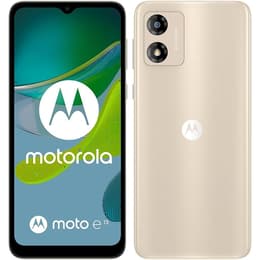

Motorola Moto E13 vs Nokia X30

Motorola Moto E13
Motorola Moto E13
Starting at

Refurbished price:A$121.29

Versus A$244.00 new

See options
Nokia X30
Nokia X30
Starting at

Refurbished price:A$299.00

Versus A$965.00 new

See options

The Motorola Moto E13 and the Nokia X30 are two distinct smartphones, released in early 2023 and late 2022 respectively, catering to different segments of the market. While the Moto E13 focuses on delivering essential smartphone functionality with its Android 13 Go Edition, the Nokia X30 offers a more premium experience with a focus on durability, camera capabilities, and a commitment to software updates. The primary differentiators lie in their display technology, processing power, and overall build quality.

Scores

Durability

The expected practical lifespan of these devices varies significantly due to their differing build qualities and software support policies.

  • Release Timeline and OS Support: The Motorola Moto E13 was released in January 2023, running Android 13 Go Edition, and has not received major Android updates since its launch. The Nokia X30, released in September 2022, launched with Android 12 and has received updates up to Android 14, with a promise of three years of OS upgrades, though some users report that Android 15 may not be released for the device.
  • Durability Features: The Moto E13 features a plastic body with an IP52 water-repellent design, offering basic protection against splashes and dust. In contrast, the Nokia X30 boasts a more robust construction with an aluminum frame, a plastic back made from 65% recycled plastic, a Gorilla Glass Victus front, and an IP67 rating for dust and water resistance, meaning it can withstand submersion in up to 1 meter of water for 30 minutes.
  • Repairability: While specific repairability scores are not readily available for both, the Nokia X30's use of recycled materials and its more premium construction might suggest a design intended for a longer lifecycle, aligning with Nokia's emphasis on sustainability.

Release year

2023

2022

Compatible with latest Update

No

No

Operating system

Android

Android

Foldable

No

No

Performance

The performance capabilities of the Moto E13 and Nokia X30 are tailored to different user expectations, reflecting their respective hardware configurations.

  • Processing Power: The Moto E13 is equipped with an entry-level processor, which handles basic tasks and light applications adequately. Users may experience slower app loading times and occasional lag when multitasking or running more demanding applications. The Nokia X30, on the other hand, features a mid-range processor that provides a smoother experience for everyday use, multitasking, and even some moderate gaming.
  • Storage and RAM: The Moto E13 is available with up to 8GB of RAM and 128GB of internal storage, with some configurations offering as little as 2GB RAM, which can limit its multitasking capabilities. The Nokia X30 typically comes with 6GB or 8GB of RAM and 128GB or 256GB of internal storage, providing more headroom for applications and data.
  • Battery Behavior: The Moto E13 houses a larger 5000 mAh battery, which, combined with its less demanding hardware and Android Go Edition, often translates to extended usage times, with some users reporting up to a day and a half on a single charge. The Nokia X30 has a 4200 mAh battery, which, despite being smaller, is generally reported to last a full day of moderate to heavy use, supported by 33W fast charging capabilities.

Memory (GB)

4 GB

8 GB

Screen quality

The display experience offered by these two smartphones presents a clear distinction in terms of visual fidelity and responsiveness.

  • Display Technology and Resolution: The Motorola Moto E13 features a 6.5-inch IPS LCD display with HD+ resolution (720 x 1600 pixels). This provides adequate clarity for general content consumption. The Nokia X30 sports a 6.43-inch AMOLED display with a Full HD+ resolution (1080 x 2400 pixels), offering deeper blacks, higher contrast, and more vibrant colors.
  • Refresh Rate and Brightness: The Moto E13 has a standard 60Hz refresh rate, which is typical for its segment. The Nokia X30 elevates the viewing experience with a 90Hz refresh rate, resulting in smoother scrolling and more fluid animations. The Nokia X30 also offers higher peak brightness, improving outdoor visibility compared to the Moto E13.
  • Screen Size and Viewing Experience: Both devices offer ample screen real estate for media consumption and browsing. The Moto E13's slightly larger screen size might appeal to those who prioritize maximum viewing area, while the Nokia X30's superior display technology and higher refresh rate provide a more immersive and visually appealing experience.

Resolution

720 x 1600

1080 x 2400

Screen type

IPS LCD

AMOLED

Audiovisual

The camera systems on the Moto E13 and Nokia X30 are designed for different levels of photographic capability, from basic snapshots to more detailed imaging.

  • Rear Camera System: The Motorola Moto E13 is equipped with a single 13MP main camera. This setup is suitable for basic photography in good lighting conditions, though users have noted that the camera app can be slow to launch and process images. The Nokia X30 features a dual-camera system with a 50MP main sensor that includes Optical Image Stabilization (OIS) and a 13MP ultrawide lens. This combination allows for more versatile shooting, improved detail, and better performance in challenging lighting.
  • Low-Light and Video Performance: The Moto E13's camera performs adequately in well-lit environments, but its low-light capabilities are limited. Video recording is available at 1080p at 30 frames per second. The Nokia X30 excels in low-light photography due to its larger sensor and OIS, producing clearer images with less noise. It also offers enhanced video recording quality.
  • Front Camera and Audio: For selfies, the Moto E13 has a 5MP front camera. The Nokia X30 features a 16MP front camera, providing higher resolution for selfies and video calls. In terms of audio, the Moto E13 includes a 3.5mm headphone jack and Dolby Atmos support for its speaker. The Nokia X30's loudspeaker is generally clear, though some users have reported it can sound hollow at times.

Main camera

13 megapixels

50 megapixels

Front camera

5 megapixels

16 megapixels

Miscellaneous

Beyond the core specifications, several practical elements differentiate the user experience of the Moto E13 and Nokia X30.

  • Connectivity and Ports: The Motorola Moto E13 supports 4G LTE, Wi-Fi 5, and Bluetooth 5.0, and includes a USB-C port along with a 3.5mm headphone jack. The Nokia X30 offers more advanced connectivity with 5G support, Wi-Fi 6, and Bluetooth 5.1, featuring a USB-C port but omitting the traditional headphone jack.
  • Sensors and Biometrics: The Moto E13 relies on traditional PIN/pattern/password security and does not include a fingerprint sensor. The Nokia X30 provides enhanced security and convenience with an in-display fingerprint sensor.
  • Physical Design and Handling: The Moto E13 has a plastic construction, weighing 179.5g and measuring 8.47mm thick. The Nokia X30, with its aluminum frame and recycled plastic back, weighs 185g and is slightly thinner at 8mm, offering a more premium in-hand feel.

Weight

179 oz

185 oz

Screen size (in)

6.5

6.43

Network

4G

5G

SIM card

Dual Physical SIM

Dual Physical SIM

Carrier compatibility

Unlocked

Unlocked

User feedback for the Motorola Moto E13 often praises its large battery capacity and its ability to run Android 13 Go Edition, making it a functional choice for essential smartphone tasks. However, common criticisms point to its limited performance, particularly with multitasking and demanding applications, and the slow speed of its camera. Users generally consider it a suitable option for those transitioning from feature phones or for individuals with very basic smartphone needs.

The Nokia X30 receives commendation for its robust build quality, including an IP67 rating and Gorilla Glass Victus, as well as its vibrant AMOLED display and capable camera system, especially in low light. Its commitment to software updates has been a strong selling point, though recent user discussions indicate potential concerns regarding the promised Android 15 update. Some users have noted that while its performance is smooth for daily use, the processor might not match the expectations for its segment, and the loudspeaker quality could be improved.

Users prioritizing extended software support, a more durable and premium build, and a superior camera experience, particularly in low light, will find the Nokia X30 well-suited to their needs. Conversely, individuals seeking a straightforward smartphone for communication, light browsing, and long battery life, without requiring advanced features or high performance, may lean toward the Motorola Moto E13. Both devices offer distinct advantages, and for those looking for an eco-friendly alternative, quality-assured refurbished options are available for both models.


See all articles

Our recent comparisons