
Motorola Edge 50 Fusion vs Motorola Moto G14

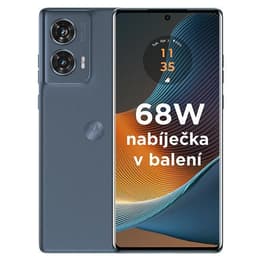
Motorola Edge 50 Fusion
See options
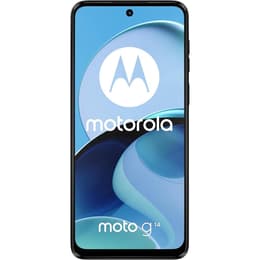
Motorola Moto G14
Motorola Moto G14
Starting at

Refurbished price:A$182.00

Versus A$271.00 new

See options

The Motorola Edge 50 Fusion (released April 2024) and the Motorola Moto G14 (released August 2023) are both Android smartphones from Motorola, targeting different segments of the market. While the Edge 50 Fusion offers a more refined experience with a focus on display quality, camera capabilities, and overall performance, the Moto G14 provides a more budget-conscious option with essential smartphone functionalities. Both devices run on the Android operating system, with the Edge 50 Fusion launching with a newer version and a longer update commitment.

Scores

Durability

The practical lifespan of a smartphone is often influenced by its release date, software support, and physical durability. The Motorola Edge 50 Fusion, being the newer device, generally offers a longer expected period of software updates and potentially a more robust build.

  • Release Timeline and Age: The Motorola Edge 50 Fusion was released in April 2024, making it newer than the Motorola Moto G14, which launched in August 2023. This difference in release dates means the Edge 50 Fusion will likely receive software support for a longer duration.
  • OS Support Duration: The Edge 50 Fusion launched with Android 14 and is promised three major Android OS upgrades, extending its support to Android 17, along with four years of security updates. The Moto G14 launched with Android 13 and has received an update to Android 14, but its long-term update policy is less extensive, typically receiving fewer major OS upgrades and security patches compared to the Edge series.
  • Physical Durability: The Edge 50 Fusion features IP68 dust and water resistance, indicating a higher level of protection against environmental elements, and has Corning Gorilla Glass 5 on its display for scratch resistance. The Moto G14 has a splash-resistant design with an IP52 rating and Panda Glass for display protection, offering a more basic level of defense against water and scratches. The repairability score for the Moto G14 is noted as 5.0 out of 10, suggesting moderate ease of repair, though some components may be difficult to access due to adhesive use.

Release year

2024

2023

Compatible with latest Update

Yes

Yes

Operating system

Android

Android

Foldable

No

No

Performance

Performance in smartphones is determined by the internal processing components, affecting how smoothly applications run, how quickly tasks are completed, and the overall responsiveness of the device. The Motorola Edge 50 Fusion generally offers a more capable hardware configuration for demanding use compared to the Moto G14.

  • Processor Capabilities: The Edge 50 Fusion is equipped with a processor that handles demanding applications and multitasking smoothly, providing a responsive user experience. The Moto G14 features a processor suitable for everyday tasks and casual use, though it may show limitations with more intensive applications or heavy multitasking.
  • RAM and Storage: The Edge 50 Fusion offers configurations with 8GB or 12GB of RAM and storage options up to 512GB, contributing to efficient multitasking and ample space for applications and media. The Moto G14 typically comes with 4GB of RAM and 128GB of internal storage, which is sufficient for basic smartphone usage but can be a limiting factor for power users. The Edge 50 Fusion uses UFS 2.2 storage, which is generally efficient, while the Moto G14 also uses UFS 2.2 storage.
  • Battery Behavior: Both devices are equipped with a 5000 mAh battery. The Edge 50 Fusion supports 68W fast charging, allowing for quicker recharges. The Moto G14 supports 15W fast charging, which is slower but still provides a full day of use for many users.

Memory (GB)

12 GB

4 GB

Screen quality

The display is a primary interface for smartphone interaction, and differences in technology, resolution, and refresh rate can significantly impact the visual experience. The Motorola Edge 50 Fusion offers a more advanced display compared to the Moto G14.

  • Display Technology and Size: The Edge 50 Fusion features a 6.7-inch pOLED display, known for deep blacks, vibrant colors, and excellent contrast. The Moto G14 has a 6.5-inch IPS LCD screen, which provides good colors and viewing angles but does not offer the same level of contrast as an OLED panel.
  • Resolution and Refresh Rate: Both phones offer Full HD+ resolution (1080 x 2400 pixels), providing clear and sharp visuals. However, the Edge 50 Fusion boasts a 144Hz refresh rate, resulting in smoother scrolling and more fluid animations, especially noticeable in gaming and fast-paced content. The Moto G14 has a standard 60Hz refresh rate, which is adequate for everyday use but less fluid than higher refresh rate displays.
  • Brightness and Outdoor Visibility: The Edge 50 Fusion offers a peak brightness of 1600 nits, ensuring good visibility even in bright outdoor conditions. The Moto G14's display has a peak brightness of 563 nits, which is generally sufficient for indoor use but may be less comfortable to view under direct sunlight.

Resolution

1080 x 2400

1080 x 2400

Screen type

P-OLED

IPS LCD

Audiovisual

Camera capabilities are a significant factor for many users, encompassing the quality of photos and videos, as well as specialized features. The Motorola Edge 50 Fusion generally provides a more versatile and higher-performing camera system.

  • Rear Camera System: The Edge 50 Fusion features a dual-camera setup with a 50 MP main sensor with Optical Image Stabilization (OIS) for clearer photos and videos, and a 13 MP ultrawide camera that also functions for macro shots. The Moto G14 also has a 50 MP main camera, but it is accompanied by a 2 MP macro sensor, offering less versatility than the ultrawide lens on the Edge 50 Fusion.
  • Front Camera and Video Recording: The Edge 50 Fusion is equipped with a 32 MP front camera, capable of capturing detailed selfies and supporting 4K video recording at 30 frames per second from both front and rear cameras. The Moto G14 has an 8 MP front camera and supports 1080p video recording at 30 frames per second from both its front and rear cameras.
  • Low-Light Performance and Features: The Edge 50 Fusion's OIS on its main camera contributes to better low-light performance by reducing blur. User reviews suggest its camera performs well for its segment, even in lower light settings. The Moto G14's camera is considered good for casual photography in daylight, with HDR support, but its low-light performance is more limited.

Main camera

50 megapixels

50 megapixels

Front camera

32 megapixels

8 megapixels

Miscellaneous

Beyond core specifications, various practical elements contribute to the overall user experience, including connectivity, physical design, and additional features. The Motorola Edge 50 Fusion offers more advanced connectivity and a more premium build.

  • Connectivity and Ports: The Edge 50 Fusion supports 5G connectivity and Wi-Fi 6E, offering faster internet speeds and more reliable connections. It features a USB-C 2.0 port. The Moto G14 supports 4G connectivity and Wi-Fi 5, which are standard for everyday use. It includes both a USB-C 2.0 port and a 3.5mm headphone jack.
  • Sensors and Biometrics: The Edge 50 Fusion incorporates an in-display optical fingerprint sensor for secure and convenient unlocking. The Moto G14 features a side-mounted fingerprint sensor integrated into the power button.
  • Design and Handling: The Edge 50 Fusion has a slim profile, measuring 7.9mm in thickness and weighing around 175 grams, contributing to comfortable one-handed use. It is available in various finishes, including vegan leather and plastic options. The Moto G14 has an 8mm thickness and weighs 177 grams, with an all-plastic body and some versions offering a vegan leather texture.

Weight

175 oz

177 oz

Screen size (in)

6.7

6.5

Network

5G

4G

SIM card

Dual Physical SIM

Dual Physical SIM

Carrier compatibility

Unlocked

Unlocked

Connector

USB-C

USB-C + Jack 3.5mm

The Motorola Edge 50 Fusion and Motorola Moto G14 cater to distinct user needs, with each device presenting a unique set of strengths. User feedback for the Edge 50 Fusion often highlights its vibrant pOLED display, capable camera system with OIS, and robust IP68 water and dust resistance as significant advantages. Some users appreciate its fast charging and smooth performance for daily tasks and light gaming. Criticisms sometimes point to the lack of expandable storage in some configurations and the update policy, which, while improved, may not match the longevity offered by some competitors.

For the Moto G14, common praise revolves around its solid battery life, clear Full HD+ display for its category, and the inclusion of a 3.5mm headphone jack and stereo speakers with Dolby Atmos, which are valued features for multimedia consumption. Users generally find it suitable for basic smartphone functions and casual use. Frequent criticisms include its 60Hz refresh rate, which is less fluid than higher refresh rate displays, and its more modest processing power, which can lead to slower performance with demanding applications. The update policy is also a point of consideration for users seeking extended software support.

Users prioritizing a more premium experience with a superior display, enhanced camera capabilities, faster performance, and greater durability will find the Motorola Edge 50 Fusion well-suited to their needs. Its longer software support also makes it a compelling choice for those who keep their devices for several years. Conversely, individuals seeking a reliable and functional smartphone for everyday communication, media consumption, and light tasks, without requiring the latest performance or advanced camera features, may lean towards the Motorola Moto G14. Both devices, especially when considering quality-assured refurbished options, represent eco-friendly alternatives for consumers looking to make informed and sustainable choices in the smartphone market.

See all articles

Our recent comparisons