Motorola Edge 30 Pro vs Nokia X30

Motorola Edge 30 Pro
Starting at

Refurbished price:A$291.72

Versus A$2,709.00 new

See options
Nokia X30
Nokia X30
Starting at

Refurbished price:A$298.00

Versus A$965.00 new

See options

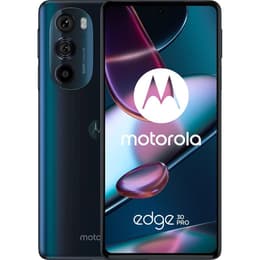
The Motorola Edge 30 Pro, released in February 2022, and the Nokia X30, launched in September 2022, are both Android smartphones offering distinct experiences. While the Motorola Edge 30 Pro focuses on high-end performance and a fluid display, the Nokia X30 emphasizes a durable, eco-conscious design and a commitment to software longevity. Both devices run on the Android operating system, providing users with a familiar interface and access to a wide range of applications.

Scores

Durability

When considering the long-term usability of these devices, their release timelines and software support policies are key factors. The Motorola Edge 30 Pro, launched in early 2022, typically receives two major Android OS updates and three years of security updates from its release date. The Nokia X30, released several months later in late 2022, initially promised three major OS upgrades and three years of security updates. However, user reports indicate that Android 15 will not be released for the Nokia X30, meaning it will likely receive two major OS updates, similar to the Motorola Edge 30 Pro.

  • Software Longevity: The Motorola Edge 30 Pro is expected to receive major Android updates up to Android 14, with security patches extending into early 2025. The Nokia X30, despite initial promises, is also expected to conclude its major OS updates with Android 14, with security updates continuing into late 2025.
  • Physical Durability: The Motorola Edge 30 Pro features Gorilla Glass 3 on both its front and back, with a plastic frame, and carries an IP52 water-repellent rating, offering basic protection against splashes. The Nokia X30 boasts a more robust build with Gorilla Glass Victus on the front, a recycled plastic frame, and a recycled plastic back, alongside an IP67 rating for dust and water resistance, allowing submersion in up to 1 meter of water for 30 minutes.
  • Repairability: While specific repairability scores can vary, both devices are designed with modern smartphone construction, which often involves specialized tools for component replacement. The use of recycled materials in the Nokia X30's construction highlights an eco-friendly approach to its lifecycle.

Release year

2022

2022

Compatible with latest Update

Yes

No

Operating system

Android

Android

Foldable

No

No

Performance

The performance capabilities of the Motorola Edge 30 Pro and the Nokia X30 cater to different user demands, primarily due to their internal processing hardware and battery configurations.

  • Processing Power: The Motorola Edge 30 Pro is equipped with a high-performance processor, enabling it to handle demanding applications, intensive multitasking, and graphic-heavy gaming with considerable fluidity and responsiveness. Users report a very fast and smooth experience for everyday tasks and heavy usage. The Nokia X30 features a mid-range processor, which provides a smooth experience for daily tasks, web browsing, and moderate app usage, but may show limitations with the most graphically intense games or very heavy multitasking.
  • Battery Behavior: The Motorola Edge 30 Pro houses a 4800 mAh battery, generally providing a full day of use for most users, even with its high refresh rate display. It also supports fast wired charging at up to 68W and wireless charging. The Nokia X30 comes with a 4200 mAh battery, which users find sufficient for a full day of moderate use, with some reporting up to two days with lighter usage. It supports 33W fast charging.
  • Storage and Responsiveness: Both devices offer various storage and RAM configurations, impacting how many applications can run simultaneously and how quickly data can be accessed. The Motorola Edge 30 Pro often comes with higher RAM options, contributing to its overall responsiveness in demanding scenarios.

Memory (GB)

8 GB

8 GB

Screen quality

The visual experience on both smartphones is delivered through high-quality displays, though with distinct characteristics that influence clarity, smoothness, and outdoor visibility.

  • Display Technology and Clarity: Both the Motorola Edge 30 Pro and the Nokia X30 feature OLED or AMOLED displays, which are known for producing deep blacks and vibrant colors. Both offer Full HD+ resolutions, ensuring sharp text and detailed images for typical viewing distances.
  • Refresh Rate and Smoothness: The Motorola Edge 30 Pro stands out with a 144Hz refresh rate, providing exceptionally smooth scrolling and a highly responsive feel, particularly beneficial for gaming and fast-paced content. The Nokia X30 offers a 90Hz refresh rate, which is a noticeable improvement over standard 60Hz displays, resulting in smoother animations and a more fluid user interface experience.
  • Brightness and Viewing Experience: Both displays offer sufficient brightness for indoor use, with the Motorola Edge 30 Pro supporting HDR10+ for enhanced contrast and color in compatible content. While both are generally legible outdoors, the Motorola Edge 30 Pro's display can reach higher peak brightness levels, which may offer a slight advantage in direct sunlight. The Nokia X30's display is protected by Gorilla Glass Victus, offering enhanced scratch and drop resistance.

Resolution

1080 x 2400

1080 x 2400

Screen type

OLED

AMOLED

Audiovisual

The camera systems on the Motorola Edge 30 Pro and the Nokia X30 offer different photographic capabilities, catering to varying user preferences for image and video capture.

  • Rear Camera Systems: The Motorola Edge 30 Pro features a versatile triple-camera setup with a 50 MP main sensor with optical image stabilization (OIS), a 50 MP ultrawide sensor, and a 2 MP depth sensor. It is capable of recording video at up to 8K resolution. The Nokia X30 includes a dual-camera system with a 50 MP main sensor with OIS and a 13 MP ultrawide sensor. It records video at up to 1080p resolution.
  • Photography Performance: The Motorola Edge 30 Pro generally produces detailed photos with good color reproduction in well-lit conditions, though some users note inconsistencies in low-light performance and overall camera optimization. The Nokia X30's main camera performs well in daylight, capturing natural colors, and its night mode features like 'Dark Vision' can produce surprisingly good results in very low light. However, its ultrawide camera may not always match the main sensor's quality.
  • Front Camera and Audio: The Motorola Edge 30 Pro boasts a high-resolution 60 MP front camera, capable of detailed selfies and 4K video recording. The Nokia X30 has a 16 MP front camera, which delivers pleasant color rendition for selfies. Both phones offer stereo speakers, with the Motorola Edge 30 Pro supporting Dolby Atmos for an enhanced audio experience.

Main camera

50 megapixels

50 megapixels

Front camera

60 megapixels

16 megapixels

Miscellaneous

Beyond core performance and display, several practical elements differentiate the Motorola Edge 30 Pro and the Nokia X30, influencing daily usability and connectivity.

  • Connectivity and Ports: Both smartphones support 5G connectivity, ensuring access to faster mobile networks. The Motorola Edge 30 Pro includes Wi-Fi 6E and Bluetooth 5.2, offering advanced wireless performance. The Nokia X30 supports Wi-Fi 6 and Bluetooth 5.1. Both devices utilize a USB-C port for charging and data transfer.
  • Biometric Security: The Motorola Edge 30 Pro features a side-mounted fingerprint sensor integrated into the power button, alongside face unlock. The Nokia X30 incorporates an under-display fingerprint sensor for convenient unlocking, also complemented by face recognition.
  • Design and Handling: The Motorola Edge 30 Pro weighs 196g and has dimensions of 163.06 x 75.95 x 8.79 mm, offering a substantial feel. The Nokia X30 is slightly lighter at 185g and more compact with dimensions of 158.9 x 73.2 x 8 mm, potentially making it easier for one-handed use. The Nokia X30's construction with recycled materials is a notable aspect for environmentally conscious users.

Weight

196 oz

185 oz

Screen size (in)

6,7

6.43

Network

5G

5G

SIM card

Dual Physical SIM

Dual Physical SIM

Carrier compatibility

Unlocked

Unlocked

The Motorola Edge 30 Pro and the Nokia X30 cater to different user priorities, each excelling in specific areas. User feedback for the Motorola Edge 30 Pro frequently praises its powerful performance, vibrant 144Hz OLED display, and rapid charging capabilities, making it a strong contender for users who prioritize speed and a smooth visual experience. Criticisms often point to inconsistencies in camera performance, particularly in challenging lighting, and a software update policy that, while improved, may not match the longevity offered by some competitors.

Conversely, the Nokia X30 receives commendation for its robust and eco-friendly build, including an IP67 water and dust resistance rating, and its commitment to a clean Android experience. Users appreciate its compact form factor and reliable battery life for moderate usage. However, some users note that its mid-range processor may not satisfy those requiring top-tier performance for intensive applications or gaming, and its camera, while capable, may not always deliver flagship-level results. The initial promise of three OS updates for the Nokia X30 has also been a point of discussion, with reports indicating that Android 15 will not be released, limiting its major OS updates to two.

Users prioritizing raw processing power, a very high refresh rate display, and fast charging for demanding tasks may find the Motorola Edge 30 Pro well-suited to their needs. Those who value a more durable, eco-conscious device with a compact design, strong water resistance, and a consistent software experience for everyday use might lean towards the Nokia X30. Both devices offer quality-assured refurbished options, providing an eco-friendly alternative for consumers looking to make informed and sustainable choices.


See all articles

Our recent comparisons