iPhone SE (2020) vs Motorola Razr 40

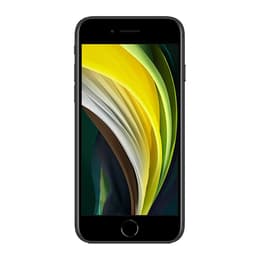
iPhone SE (2020)
iPhone SE (2020)
Starting at

Refurbished price:A$162.00

Versus A$529.00 new

See options
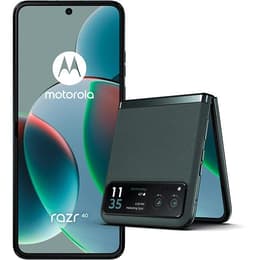
Motorola Razr 40
Motorola Razr 40
See options

Ratings

The iPhone SE 2020, released in April 2020, is a traditional smartphone from Apple, known for its compact design and iOS ecosystem. In contrast, the Motorola Razr 40, launched in June 2023, represents a modern foldable smartphone running on the Android operating system. These devices cater to different user preferences, primarily distinguished by their form factor, software environment, and the three-year gap in their release timelines.

Scores

Durability

The expected practical lifespan of a smartphone is influenced by its physical resilience and the duration of software support it receives.

  • Release Timeline and Software Support: The iPhone SE 2020, released in April 2020, benefits from Apple's extended software update policy, typically receiving iOS updates for five to six years from its launch. This suggests a longer period of security patches and feature enhancements. The Motorola Razr 40, launched in June 2023, typically receives two to three major Android OS updates and three to four years of security updates.
  • Physical Durability: The iPhone SE 2020 features an IP67 rating for water and dust resistance, indicating it can withstand submersion in up to 1 meter of water for 30 minutes. It has a glass front and back with an aluminum frame. The Motorola Razr 40 has an IP52 water-repellent design, offering splash resistance. Its foldable nature introduces a hinge mechanism, and it uses a glass front (unfolded), plastic front (folded), aluminum frame, and a vegan leather back.
  • Long-term Use: Users prioritizing a device with a longer guaranteed software update cycle may find the iPhone SE 2020 more aligned with their needs. The Razr 40's foldable screen introduces a different set of durability considerations compared to a traditional, rigid smartphone.

Performance

Performance in daily use is a key differentiator, impacting how smoothly applications run and how efficiently tasks are handled.

  • Processing Power: The iPhone SE 2020 is equipped with a capable processor that handles everyday applications, multitasking, and moderate gaming with efficiency. The Motorola Razr 40 features a newer-generation processor designed for mid-range performance, providing smooth operation for daily tasks and capable handling of more demanding applications and gaming.
  • Multitasking and Responsiveness: The iPhone SE 2020 comes with 3GB of RAM, which supports typical smartphone usage. The Motorola Razr 40 offers 8GB or 12GB of RAM, contributing to more fluid multitasking and quicker app switching, especially with multiple applications open simultaneously.
  • Battery Behavior: The iPhone SE 2020 generally provides average battery life for a device of its size. The Motorola Razr 40, despite its foldable design, is noted for offering good battery life in typical use cases.

Memory (GB)

3 GB

8 GB

Screen quality

The display is a primary interface for user interaction, and both devices offer distinct visual experiences.

  • Display Technology and Size: The iPhone SE 2020 features a 4.7-inch Retina IPS LCD, providing clear visuals with a resolution of 1334 x 750 pixels. The Motorola Razr 40 boasts a larger 6.9-inch Foldable LTPO AMOLED main display, offering deeper blacks and more vibrant colors.
  • Clarity and Smoothness: The iPhone SE 2020 has a pixel density of 326 pixels per inch (PPI) and a standard 60Hz refresh rate. The Razr 40's main display offers a higher resolution of 2640 x 1080 pixels, resulting in 413 PPI, and a significantly smoother 144Hz refresh rate, enhancing the visual fluidity of scrolling and animations.
  • Brightness and External Display: With a typical brightness of 625 nits, the iPhone SE 2020's screen is suitable for most indoor and outdoor conditions. The Motorola Razr 40's main display can reach up to 1400 nits peak brightness, improving visibility in bright sunlight. Additionally, the Razr 40 includes a 1.5-inch AMOLED cover display for quick access to notifications and basic functions without unfolding the device.

Audiovisual

The camera systems on both devices offer different capabilities for capturing photos and videos.

  • Rear Camera System: The iPhone SE 2020 features a single 12-megapixel wide camera with optical image stabilization (OIS), capable of Portrait mode and Smart HDR. The Motorola Razr 40 offers a dual-camera setup, including a 64-megapixel wide lens with OIS and a 13-megapixel ultrawide lens that also functions for macro photography.
  • Photography Performance: The iPhone SE 2020 performs well in bright lighting conditions, producing detailed and color-accurate photos, but it lacks a dedicated night mode and can struggle in low-light environments. The Motorola Razr 40 generally produces good images in well-lit conditions, with its OIS and pixel-binning technology contributing to decent low-light performance. However, some users have noted occasional inconsistencies with skin tones and HDR processing.
  • Video Recording and Front Camera: The iPhone SE 2020 supports 4K video recording at up to 60 frames per second and has a 7-megapixel front camera. The Motorola Razr 40 records 4K video at up to 30 frames per second and features a higher-resolution 32-megapixel front camera.

Miscellaneous

Beyond core features, several practical elements contribute to the overall user experience and device utility.

  • Connectivity: The iPhone SE 2020 supports Wi-Fi 6 and Bluetooth 5.0. The Motorola Razr 40 offers more advanced connectivity with Wi-Fi 6E and Bluetooth 5.3, providing potentially faster and more stable wireless connections. Both devices support 4G LTE, with the Razr 40 also supporting 5G networks.
  • Ports and Biometrics: The iPhone SE 2020 uses Apple's proprietary Lightning port and features Touch ID for secure fingerprint authentication. The Motorola Razr 40 utilizes a USB-C port for charging and data transfer and incorporates a side-mounted fingerprint sensor for unlocking.
  • Form Factor and Handling: The iPhone SE 2020 is a compact and lightweight device, measuring 138.4 x 67.3 x 7.3 mm and weighing 148 grams, making it easy for one-handed use. The Motorola Razr 40's foldable design allows it to be compact when closed (88.2 x 74 x 15.8 mm) and expand to a larger screen when open (170.8 x 74 x 7.4 mm), weighing 188.6 grams. This offers a balance between portability and screen real estate.

Screen size (in)

4.7

6,9

Network

4G

5G

SIM card

Physical SIM + eSIM

Dual Physical SIM + eSIM

Carrier compatibility

Unlocked

Unlocked

The iPhone SE 2020 and Motorola Razr 40 cater to distinct user preferences, reflecting their different design philosophies and target audiences. Users often praise the iPhone SE 2020 for its familiar, compact form factor, reliable performance for everyday tasks, and Apple's consistent software support, which ensures a long functional life. However, common criticisms include its dated design with prominent bezels, the use of an LCD display, and its camera's limitations in low-light conditions due to the absence of a dedicated night mode.

The Motorola Razr 40, on the other hand, is frequently lauded for its innovative foldable design, offering a large, fluid main display that folds into a highly portable device. Its modern aesthetic and the utility of its external cover screen are also points of appreciation. Criticisms sometimes revolve around the camera's performance, with some users noting inconsistencies in image processing, particularly with skin tones and dynamic range, and a shorter commitment to software updates compared to some competitors.

Users prioritizing a traditional, compact smartphone experience with a long software support lifespan and a focus on the iOS ecosystem may find the iPhone SE 2020 to be a suitable choice. Conversely, individuals seeking a modern, eye-catching design, a large and smooth display that folds for enhanced portability, and the flexibility of the Android operating system will likely lean towards the Motorola Razr 40. Both devices offer compelling features for their respective user bases, and for those considering a more sustainable option, quality-assured refurbished versions of both models are available as an eco-friendly alternative.
See all articles

Our recent comparisons