
Compare models
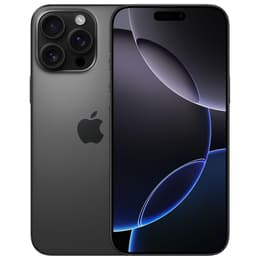
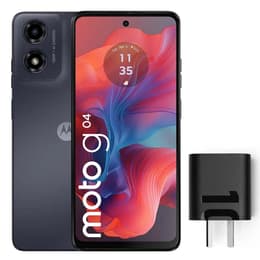
iPhone 16 Pro Max vs Motorola Moto G04
- 1-year warranty
- Free standard shipping
- Free 30-day returns
Differences at a glance
The Apple iPhone 16 Pro Max (2024) and the Motorola Moto G04 (2024) are smartphones designed for entirely different user segments and usage expectations. While the iPhone 16 Pro Max operates on iOS as a top-tier flagship device with advanced computing capabilities, the Motorola Moto G04 runs on Android as an entry-level device focused on core daily communication needs. These two models diverge significantly in processing power, build materials, camera sophistication, and operating systems.
Available Models
Colour
Storage (GB)
Scores
Durability
Both devices offer distinct hardware lifespans and software support timelines shaped by their respective market tiers and release schedules.
- Software Support: The iPhone 16 Pro Max benefits from Apple's extended multi-year operating system updates, whereas the Motorola Moto G04 receives a more concise cycle of security patches typical of entry-level Android devices.
- Build Durability: The iPhone features a grade-5 titanium frame and scratch-resistant glass front, while the Motorola Moto G04 utilizes a lightweight polymer body construction.
- Expected Lifespan: High-capacity internal components and robust processing headroom allow the iPhone to maintain rapid functionality over many years, while the Moto G04 serves well for straightforward, short-to-medium-term communication tasks.
Release year
2024
2024
Compatible with latest Update
Yes
Yes
Foldable
No
No
Performance
System responsiveness and everyday multitasking capabilities differ substantially between these two smartphones based on their hardware architecture.
- Multitasking and App Loading: The iPhone 16 Pro Max handles intensive 3D gaming, complex video editing, and rapid app switching effortlessly, whereas the Motorola Moto G04 manages standard web browsing, messaging, and lighter applications smoothly.
- Storage Capacity: The iPhone offers high-tier storage configurations starting at larger capacities, while the Moto G04 provides modest internal storage supplemented by a dedicated memory card slot for expanded media storage.
- Battery Behavior: The Moto G04 benefits from modest hardware demands that help sustain power efficiently through standard daily use, while the iPhone balances its large display and high-performance tasks with an energy-efficient system design.
Screen quality
Viewing experiences vary widely due to contrasting display technologies, resolutions, and refresh rate implementations.
- Display Technology: The iPhone 16 Pro Max utilizes an advanced OLED panel with deep contrast levels and high peak outdoor brightness, compared to the Moto G04's standard IPS LCD screen.
- Motion and Refresh Rate: The iPhone features adaptive refresh technology scaling up to 120Hz for fluid scrolling, while the Motorola device employs a fixed 90Hz refresh rate for basic visual transitions.
- Screen Dimensions: The iPhone provides a very large immersive canvas for media consumption, while the Moto G04 offers a slightly more compact display size that remains comfortable for single-handed navigation.
Resolution
1320 x 2868
720 x 1612
Screen type
LTPO Super Retina XDR OLED
IPS LCD
Audiovisual
Media capture and audio output capabilities reflect the specialized photography suites and speaker assemblies built into each model.
- Camera Versatility: The iPhone 16 Pro Max incorporates a flexible multi-lens system including ultra-wide and optical zoom capabilities alongside advanced low-light processing, while the Motorola Moto G04 features a single rear camera suited for casual daylight snapshots.
- Video and Audio: The iPhone supports high-resolution video recording formats with studio-quality microphone arrays, whereas the Moto G04 handles standard high-definition video recording and includes a convenient 3.5mm headphone jack.
- Media Playback: The iPhone delivers rich stereo sound across built-in speakers, while the Motorola device utilizes a single speaker enhanced with spatial audio processing for everyday listening.
Main camera
48 megapixels
16 megapixels
Front camera
12 megapixels
5 megapixels
Miscellaneous
Connectivity standards, physical dimensions, and daily handling characteristics establish distinct practical use cases for each phone.
- Network Connectivity: The iPhone 16 Pro Max includes 5G cellular compatibility and rapid Wi-Fi standards, whereas the Motorola Moto G04 is restricted to 4G LTE networks.
- Physical Dimensions: The iPhone is heavier and wider due to its larger screen and metal chassis, while the Moto G04 features a lighter, thinner profile that reduces hand fatigue during long phone calls.
- Biometric Security: Apple relies on secure facial recognition technology, while Motorola utilizes a side-mounted fingerprint sensor integrated into the power button.
Weight
227 oz
179 oz
Screen size (in)
6.9
6.56
Network
5G
4G
SIM card
eSIM
Dual Physical SIM
Carrier compatibility
Unlocked
Unlocked
Connector
USB-C (USB 3)
micro USB + Jack 3.5mm
What the community thinks
User discussions across public forums frequently highlight the iPhone 16 Pro Max for its premium build, sophisticated camera flexibility, and long-term processing power, though some users note its large footprint and considerable weight. Conversely, users appreciate the Motorola Moto G04 for its lightweight handling, inclusion of a traditional headphone jack, and straightforward operating system, while pointing out limitations in heavy gaming performance and low-light photography. Choosing a quality-assured refurbished option provides a sustainable choice for consumers looking to balance advanced features with environmental responsibility. Users prioritizing top-tier photography, demanding applications, and extended software lifespans will find the iPhone 16 Pro Max well-suited to their needs. Meanwhile, users seeking a simple, lightweight device for basic communication and media playback will lean toward the Motorola Moto G04. Evaluating these core differences helps ensure an informed decision that matches individual daily habits.